Get Full Government Meeting Transcripts, Videos, & Alerts Forever!
Get email alerts on the Mental Health Fees topic
No spam. Unsubscribe anytime.
Senate panel advances bill to put mental-health fee rules into statute
Summary
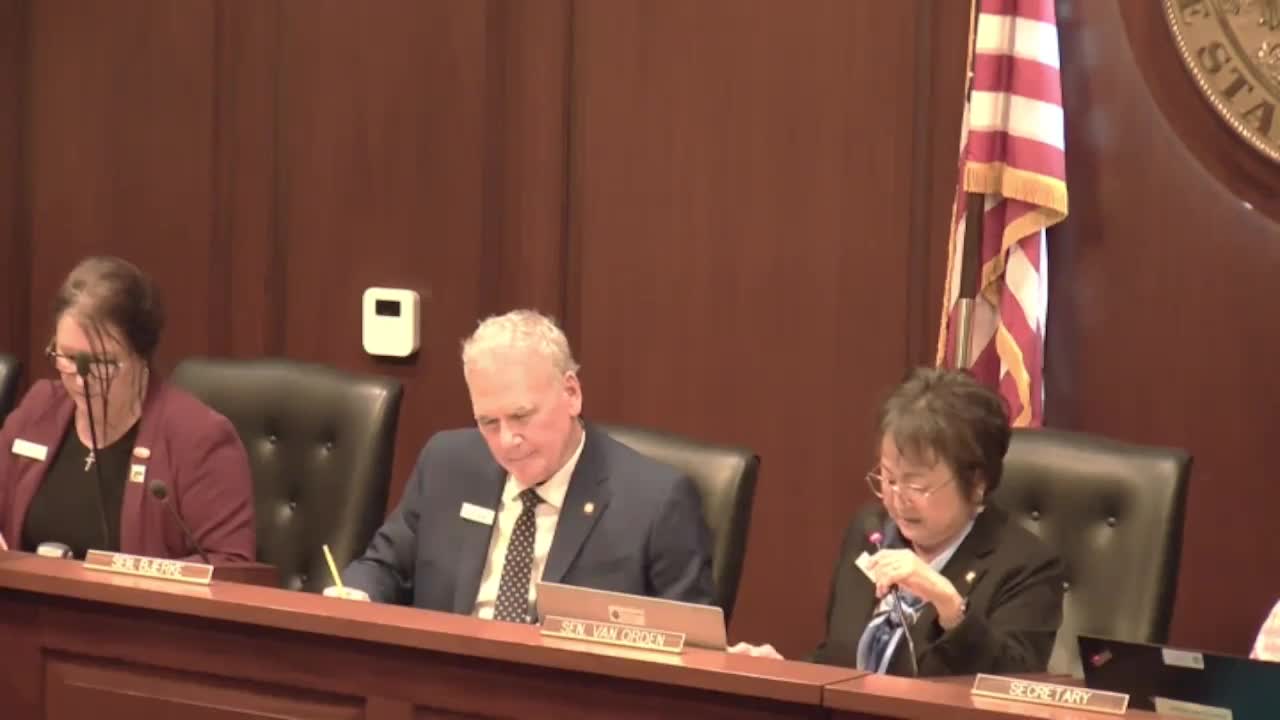
The Senate Health and Welfare Committee voted to send House Bill 220 to the floor with a "do pass" recommendation after the Department of Health and Welfare explained the bill would move a dormant sliding fee schedule from rule into statute, retain a 5% income cap, and preserve a requirement that no one be denied services for inability to pay.
The Senate Health and Welfare Committee voted to send House Bill 220 to the Senate floor with a "do pass" recommendation after a department official described the measure as a technical change to align payment rules with a new contractor model.
Jared Larson, legislative and regulatory affairs chief at the Idaho Department of Health and Welfare, told the committee the bill moves provisions from agency rule into statute so contractors — rather than the department as a direct service provider — can implement them. "We have in regulation a basically a dormant fee schedule ... and nobody's been paying anything since 2020, but we do retain ... the 5% cap on income to determine how much someone should pay, but we also maintain the requirement that nobody is denied services for an inability to pay," Larson said.
Larson described the bill as budget neutral and called it a clarification for implementation now that some services are being provided by a contractor under the Magellan contract that took effect July 1. He told the committee the sliding-scale fee schedule in rule has proved "unwieldy for contractors to carry out." The committee heard no public testimony on the bill.
Sen. Karen Blaylock moved to send the bill to the floor with a due-pass recommendation; the motion was seconded by Sen. Harris. The committee approved the motion by voice vote with no opposition recorded.
The measure now goes to the full Senate for consideration.