Get Full Government Meeting Transcripts, Videos, & Alerts Forever!
Get email alerts on the University Budget Research DEI topic
No spam. Unsubscribe anytime.
University of Idaho reports improved finances, outlines DEI restructuring and Phoenix talks; highlights INL partnership
Summary
University of Idaho President C. Scott Green told the Joint Finance‑Appropriations Committee on Jan. 27 that the university’s financial position has "greatly improved" since a $26 million base reduction, but that accounting items and legacy obligations continue to affect certain reserve measures.
University of Idaho President C. Scott Green told the Joint Finance‑Appropriations Committee on Jan. 27 that the university’s financial position has "greatly improved" since a $26 million base reduction, but that unusual accounting items and legacy obligations continue to affect certain reserve measures.
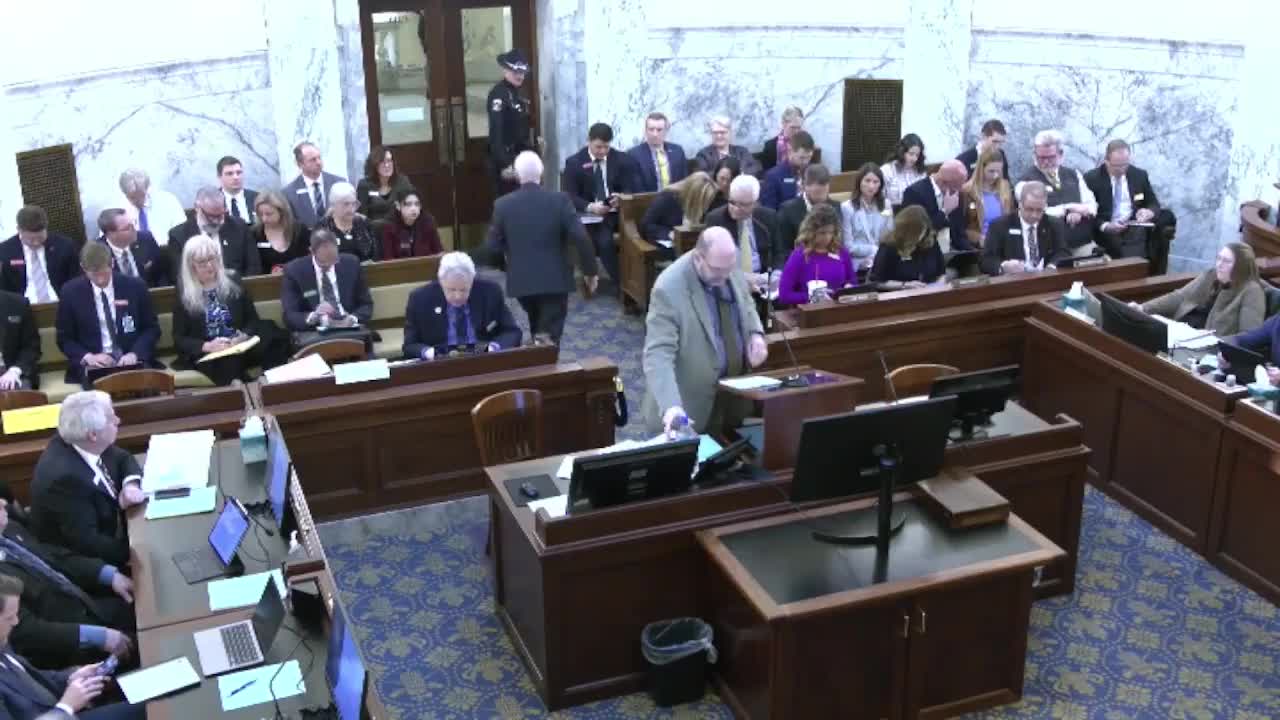
Green and Legislative Services Office analyst Kevin Campbell presented an overview of the university’s budget, enrollment and recent policy changes during a hearing that also covered questions about a potential affiliation with the private University of Phoenix, restructuring of diversity and equity offices, and partnerships with Idaho National Laboratory (INL).
Why it matters: The University of Idaho is the state’s land‑grant research university and the only public four‑year institution in Idaho with a broad research and medical‑education role. Budget and policy decisions for the institution influence statewide research capacity, medical training pipelines, workforce development, and local economies across Idaho.
Budget overview
Campbell told the committee the university has an enrollment of about 12,286 students, about 1,352 full‑time equivalent employees supporting instruction and services, and a base General Fund appropriation of roughly $196,300,000. He said about 68.5% of the university’s budget is personnel costs and about 29.3% is operating expenditures.
Campbell and Green described recent budget actions: the university implemented a $26 million base reduction in FY‑21, largely through voluntary separations, and later received enhancements, including a FY‑24 ‘‘governor’s initiative’’ amount noted at about $1.8 million and an FY‑25 OCE allocation of $2.1 million. Campbell explained again that tuition and fee dollars are reappropriated across fiscal cycles and that several endowment funds tied to the institution have specific legislative purposes.
Financial position and OPEB accounting
Green said the university has "moved towards a positive unrestricted net position" and maintains sufficient cash to meet short‑ and long‑term obligations, but he also acknowledged that certain accounting changes still show an unfavorable unrestricted measure. He explained that the university recorded a large one‑time charge related to retiree medical benefits (OPEB) in prior years; those funds now appear as restricted assets that cannot be used for general purposes.
He summarized: "We are in a much, much better position than we were, but we still have work to do." Green provided an overall positive total net position figure in committee remarks and noted the restricted/unrestricted split when committee members asked why the university’s reserve percentages differed from other institutions.
DEI offices and reorganization
Green told the committee the university dismantled several named offices in late 2024 after the State Board of Education set a deadline for changes in statewide policy. Offices he said were closed or restructured include the Office of Equity and Diversity, the Office of Multicultural Affairs, the Black/African American Cultural Center, the LGBTQA office and the Women’s Center. Green said affected staff were reassigned to roles serving all students and that the chief diversity officer position was repurposed to serve as executive director of tribal relations.
He said some positions were not refilled and others were moved into the Dean of Students office. "Our goal throughout this process is to lead with care and intentionality," Green said, and he described new programs, including Vandal Success and a first‑generation student unit, as the primary services for student support going forward.
University of Phoenix agreement and potential breakup fee
Green described an agreement with the University of Phoenix sellers that extends a deadline through June 10 for a transaction and allows the sellers to continue discussions with others. He said the contract includes a breakup fee of up to $20 million to reimburse expenses if the deal does not proceed and that the university has already received $5 million to cover incurred costs. Green said those funds have been used to offset expenses to date and any additional breakup fee proceeds would be used to support high‑priority academic programs if received.
Medical education: WWAMI and the University of Utah
The committee discussed the WWAMI (regional medical‑education) program and a possible expanded partnership with the University of Utah School of Medicine. Green said he and university leaders spoke with multiple partners and that the University of Utah appeared to be "the best fit" culturally and operationally for an expanded arrangement. He said any change would require State Board review and approval and possibly legislative engagement.
Research, INL partnership and water research
Green highlighted the university’s longstanding research partnership with Idaho National Laboratory and said the institutions will sign a renewed agreement emphasizing three focus areas: nuclear materials and fuel cycle engineering, nuclear integrated energy systems, and power engineering with secure cyber‑physical systems. He described examples of collaborative work, including 3‑D printing for reactor parts, projects on nuclear waste reduction, hydrogen supply‑chain work, and cyber‑physical system resilience for electric utilities.
On water, Green said the university recently hired leadership for the Idaho Water Resources Research Institute and is coordinating research on priority state water issues, including recharge, water quality, and searchable adjudication records.
Federal grants and pass‑throughs
Committee members asked for a list of subrecipients tied to federal awards that the university administers and passes through to partners. Green said the university will provide additional detail and noted the research portfolio includes multiple subawards to other institutions and organizations.
What was not decided
No formal committee votes occurred. Committee members asked for follow‑up documents, including job descriptions for staff moved after the DEI restructuring and lists of pass‑through federal subrecipients; university staff agreed to provide those items.
Ending
Green closed by restating the university’s land‑grant mission, citing economic impact numbers the institution has produced, and asking the committee for continued support for the university’s workforce, research and veterans programs.