Get Full Government Meeting Transcripts, Videos, & Alerts Forever!
Get email alerts on the Governors Office Budget topic
No spam. Unsubscribe anytime.
Governor’s office seeks to restore emergency fund cash, plans America250 participation; committee probes personnel transfers and constituent software
Summary
The governor’s office requested a transfer to restore its $2 million emergency fund cash balance and proposed funding for event participation tied to a federal executive order. Lawmakers pressed the administration on personnel‑cost reimbursements and the constituent‑management software plan.
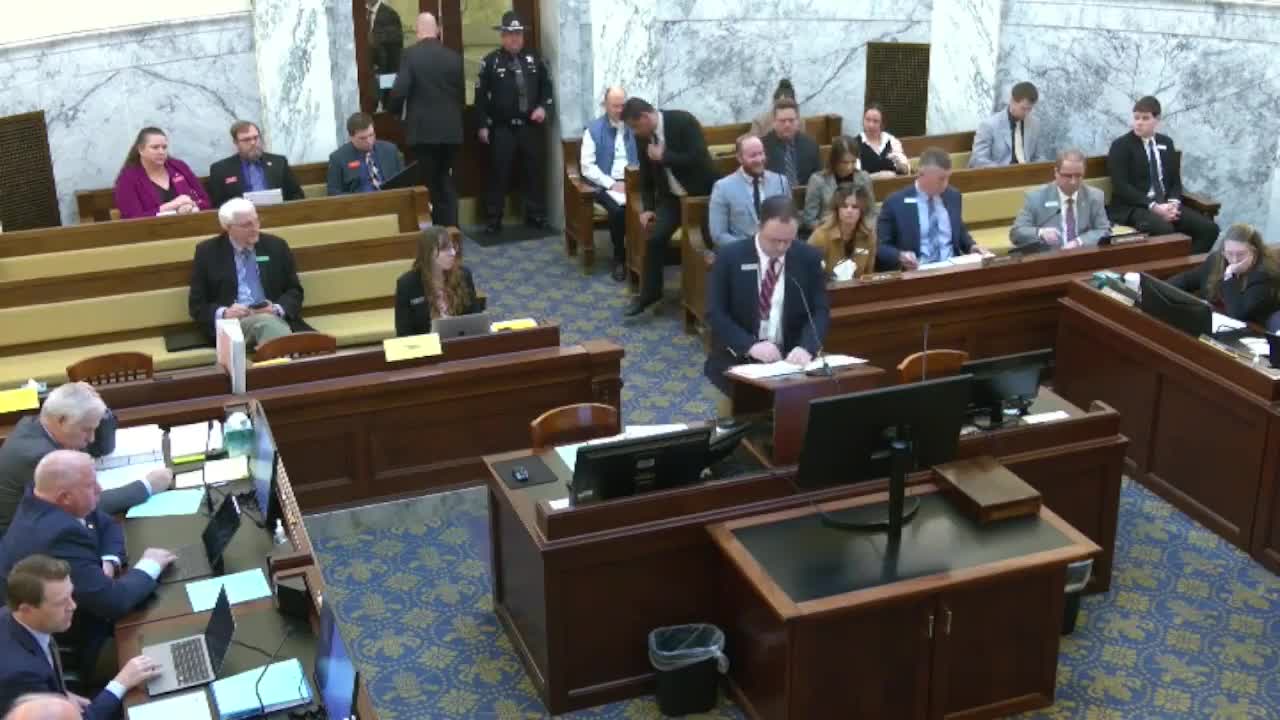
The Executive Office of the Governor outlined enhancement requests and fielded questions Tuesday about personnel reimbursements, a constituent‑services platform and emergency‑fund spending.
Christopher Lahoset, a budget and policy analyst with the Legislative Services Office, told the Joint Finance‑Appropriations Committee the governor recommends a one‑time cash transfer of $1,350,000 from the general fund to restore the governor's emergency fund cash balance to the statutory base appropriation of $2,000,000. Lahoset told the panel the fund has a current cash balance of roughly $650,000 after prior expenditures, including reimbursements for the Moscow murder investigations and a public‑education campaign described as Esto Perpetua or “Fight Fentanyl.”
The governor also recommended $250,000 one‑time from the general fund to implement objectives associated with the White House “America 250” initiative, which Lahoset said derives from a presidential executive order referenced in the presentation. The office separately requested $45,000 one‑time for ITS replacement hardware.
Committee members focused questions on three areas: the nature and timing of interagency personnel reimbursements to the governor’s office, how the office will use an appropriation for a constituent‑services platform and whether the Salesforce option examined by the office was the final plan.
Lori Wolf, administrator for the Division of Financial Management, defended longstanding personnel‑reimbursement practices, describing them as an established mechanism to reimburse agency personnel costs when staff perform work for another state office. “There is nothing being hidden or trying to offset budgets,” Wolf told the committee, and she said the state replicated an established reimbursement process in the new LUMA accounting system. Wolf said some transfers discussed by lawmakers reflected employees who split time between agencies during transitions.
Lawmakers pressed whether the governor’s office had purchased a Salesforce subscription; Wolf said the budget wording in the legislative book referenced Salesforce as an example but the vendor proved cost‑prohibitive and the office is still defining requirements and exploring less expensive options. She said the office had not yet expended the appropriation for a constituent‑services platform and that it was working with ITS and DFM to identify an affordable solution and possible reuse of existing state technology.
Senators asked for line‑item detail on travel and charter flights, and for spreadsheets that track emergency fund expenditures; Lahoset and DFM staff said they would provide those reports to the committee. Several senators also asked the controller and DFM to help the committee trace large transfers and the timing of personnel reimbursements tied to the governor’s office budget.
DFM emphasized the transparency of the reimbursement process and noted the state has longstanding practices and statutory guidance for the governor’s emergency fund. Lahoset and DFM staff said they would follow up with requested expenditure breakdowns and vehicle/hardware cost detail.