Get Full Government Meeting Transcripts, Videos, & Alerts Forever!
Get email alerts on the Higher Education Budget topic
No spam. Unsubscribe anytime.
Lewis‑Clark State College details budget pressure, credits LAUNCH and prison‑education gains
Summary
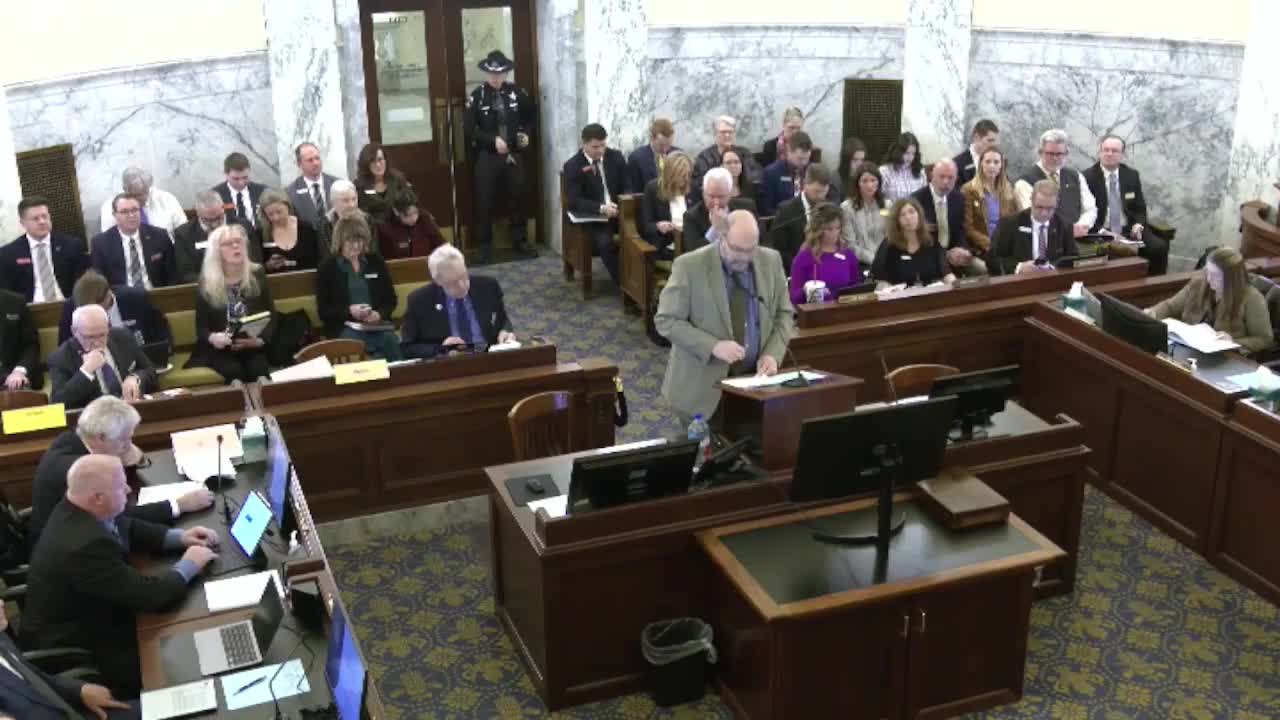
Lewis‑Clark State College President Dr. Cynthia Pemberton told the Joint Finance‑Appropriations Committee on Jan. 27 that the college — which enrolls about 3,881 students — expects a $102,500 reduction under the enrollment workload adjustment for fiscal 2026 and is seeking operational capacity enhancement funding to make progress on competitive employee compensation.
Lewis‑Clark State College President Dr. Cynthia Pemberton told the Joint Finance‑Appropriations Committee on Jan. 27 that the college — which enrolls about 3,881 students — expects a $102,500 reduction under the enrollment workload adjustment for fiscal 2026 and is seeking operational capacity enhancement funding to make progress on competitive employee compensation.
The college presented its FY‑25 base budget at $41,700,000 in General Fund appropriations, Kevin Campbell, a budget and policy analyst with the Legislative Services Office, told the committee. Campbell also explained how tuition and fee revenue is reappropriated between fiscal years and noted the Normal School Endowment Fund and student tuition/fees fund as significant non‑General Fund elements of the institution’s finances.
Why it matters: Lewis‑Clark is Idaho’s public small four‑year college and depends more heavily than some institutions on state appropriations and tuition. Changes in the enrollment‑weighting formula (the EWA) and on competitive employee compensation (CEC) affect the college’s ability to staff programs that feed regional workforce needs, college officials told the committee.
Budget details and requests
Campbell said the college’s FY‑24 total appropriation was $40,517,100 and that in FY‑24 the institution recorded roughly $23,700,000 in tuition and fee revenue that was reappropriated into FY‑25. He described the Normal School Income Fund as a legacy endowment whose distributions and uses are specified in Idaho code (as cited in the presentation).
Campbell and Pemberton provided the composition of the college’s budget: roughly 82.6% is personnel (faculty and supporting staff), 16.5% is operating expenses and library/maintenance items, and less than 1% is capital outlay. Enhancements received in FY‑24 and FY‑25 included a portion of a governor’s combined initiative that replaced multiple smaller requests (Lewis‑Clark’s share cited at $370,100), a small consolidation payment ($9,600 reported), and $440,200 in operational capacity enhancement (OCE) in FY‑25.
Pemberton summarized the FY‑26 effect of the EWA and other requests: "In FY 2026, Lewis‑Clark will receive a reduction of $102,500 due to the EWA formula," and the college has requested $287,000 in operational capacity enhancement, "which will be put to CEC," she said. She also said Lewis‑Clark expects $255,000 in endowment fund adjustments for FY‑26.
Enrollment, workforce and compensation
Pemberton described the EWA as a three‑year weighted credit‑hour formula that redistributes a fixed bucket of funding across institutions. She said Lewis‑Clark’s average credit‑hour weighting is about 1.85 compared with a 2.51 average among sister institutions, a structural difference she said has disadvantaged the college in formula outcomes.
On compensation, Pemberton gave comparative figures the college compiled: "an LC State instructor, on average, makes $9,000 less per year than the new average of K‑12," and an LC State assistant professor makes "$3,777 less per year than the K‑12 average," she told the committee. She and committee members said salary gaps have contributed to recruitment and retention pressures and asked for additional funding to close the gap. Pemberton said the college needs about $1.2 million to reach mid‑median targets and that the requested $287,000 would make incremental progress.
LAUNCH, career‑technical gains and prison education
Pemberton credited the state LAUNCH program with near‑term enrollment and completion gains. "About 240 different individual students were recipients of LAUNCH funds this fall," she said, and noted the largest LAUNCH impacts were in career‑technical education (CTE) programs. She said the college’s CTE enrollment rose 19% in the fall and another 10% in the spring, and that 10 of 11 industrial programs had students receiving LAUNCH support.
Pemberton also described workforce outcomes tied to LAUNCH funds: she said 36 of 54 fourth‑year electrical apprenticeship students completed their program with LAUNCH support and have entered the workforce.
On prison education, Pemberton said Lewis‑Clark completed federal and accreditor approvals and is now serving "nearly 200 incarcerated individuals" with sites in Orofino, Pocatello and Boise. She said Lewis‑Clark is the first Idaho institution to complete full transition approval from the experimental Pell program to a regular prison‑education program.
Questions and oversight requests
Committee members pressed for data: members asked for the college’s salary comparables and for the staff to provide the institution’s specific compensation tables; Pemberton said she would provide college‑level data by email. Committee members also asked for clarification of EWA mechanics and why Lewis‑Clark’s weighting differs from peer institutions.
What was not decided
The committee did not take a vote on Lewis‑Clark’s requests during the session. Committee members asked for follow‑up materials (salary comparables and more detailed enrollment/financial tables) and Pemberton offered to provide them.
Ending
Pemberton closed by restating the college’s mission and regional role: Lewis‑Clark positions itself as Idaho’s small public four‑year college and a regional workforce driver, she said, and asked the committee for continued legislative support to address salary gaps and operational needs.