Get Full Government Meeting Transcripts, Videos, & Alerts Forever!
Get email alerts on the Childcare Regulation Hb243 topic
No spam. Unsubscribe anytime.
Senate committee advances bill to move childcare ratios from statute to provider policy amid sharp testimony
Summary
The Idaho Senate Health and Welfare Committee voted to send House Bill 243 to the floor with a ‘do pass’ recommendation after hours of testimony for and against provisions that would remove numeric child‑to‑staff ratios from statute, require providers to set and publish ratios, and repeal some local childcare ordinances.
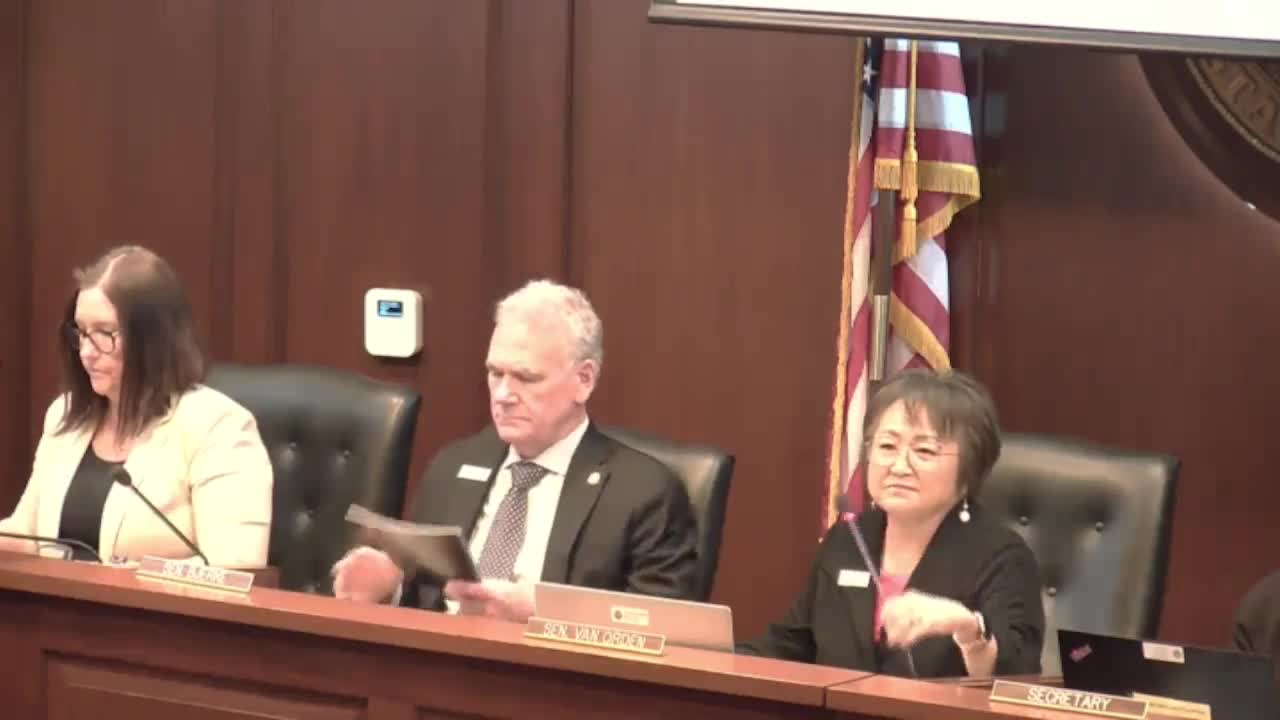
The Idaho Senate Health and Welfare Committee voted to send House Bill 243 to the Senate floor with a “do pass” recommendation after more than an hour of testimony that split business and civic groups against early‑childhood advocates and some local officials.
The bill would move several childcare requirements into state code, revise the definition of “active supervision,” remove numeric child‑to‑staff ratios from statute and direct each licensed facility to establish and publish an appropriate ratio policy for parents, and repeal a code section that allows some cities to maintain local childcare ordinances.
Supporters, including Representative Rod Furness (sponsor), told the committee the measure is aimed at expanding capacity for working parents and allowing market forces to create more childcare options. Representative Rod Furness said the bill “helps providers the Idaho way by reducing onerous regulations and helping parents and students find affordable daycare.” He and other proponents argued deregulation would lower costs and encourage more in‑home and small business providers to open and stay open.
Kate Hawes (identified in the hearing as representing bill proponents) told the committee the bill also clarifies supervision standards. “For a child of 5 years or younger, you must be within sight or normal hearing and near enough to render immediate assistance,” Hawes said, describing the proposal as a move from rule to statute that emphasizes active supervision.
Opponents — a mix of early‑childhood educators, child‑welfare advocates, city officials and law‑enforcement representatives — said removing numeric ratios from statute would reduce safety and transparency for families and could worsen outcomes for infants and toddlers. Christine Tiddens, executive director of Idaho Voices for Children, told the committee that “there is plenty of research showing that if ratios become too flexible or are not followed, children experience increased rates of abuse, neglect, and fatalities.”
Multiple providers and advocates recounted operational realities in small centers and home care. Mark Kirby testified the death of his nephew at a licensed facility was linked in the facility’s investigation to inadequate staffing and unsafe supervision practices; Kirby described arriving to find “her son Logan lying on a bed deceased by asphyxiation.” Pocatello Police Chief Roger Shy said in his jurisdiction inspections and licensing actions have removed unsafe providers; describing one center he said, “we discovered videos of physical abuse in the center,” and that staff and an owner were criminally charged and licenses revoked.
Local governments raised implementation concerns. Kathy Grismeyer, director of policy and government affairs for the city of Boise, opposed the bill and said Boise has used incentives, zoning changes and fee waivers to support in‑home providers while maintaining safety standards. She noted uncertainty about how the state would absorb licensing and inspection responsibilities for the cities that currently license daycares and questioned a fiscal note listed as $0.
The bill contains several specific provisions described during the hearing: moving a supervision definition from administrative rule into statute and requiring “active” supervision language; allowing facilities to set facility‑specific child‑to‑staff ratios that must be justified and made available to parents; maintaining criminal‑history checks and continuing the misdemeanor for operating without a license; and repealing certain local ordinance authority so the state would be the licensing authority in most cities. Witnesses and proponents said federal rules attached to subsidy programs would still apply where federal funds are used.
Committee debate focused on whether removing numeric ratios from statute would leave too much discretion to providers and expose children to harm, versus whether statutory, one‑size‑fits‑all ratios were preventing new providers from opening. Senator Blaylock offered a substitute motion to send the bill to the fourteenth order for possible amendment to restore prior numeric ratios; that substitute motion failed 4–5. The committee then approved a motion to send HB 243 to the floor with a do‑pass recommendation (mover: Senator Leddy; second: Senator Keiser).
The committee advance sends the bill to the full Senate for further debate and possible amendment. Lawmakers and advocates said they expect additional discussion about the bill’s ratio language and the transition of locally‑licensed facilities into state oversight.