Get Full Government Meeting Transcripts, Videos, & Alerts Forever!
Get email alerts on the Icbvi Programs Funding topic
No spam. Unsubscribe anytime.
Idaho Commission for the Blind briefs committee on programs, highlights reliance on federal funding
Summary
The Idaho Commission for the Blind and Visually Impaired described services from vocational rehabilitation to independent living, said it served roughly 2,000 people last year, and told the Senate committee about heavy federal funding (about 80 percent) and a modest state general fund appropriation.
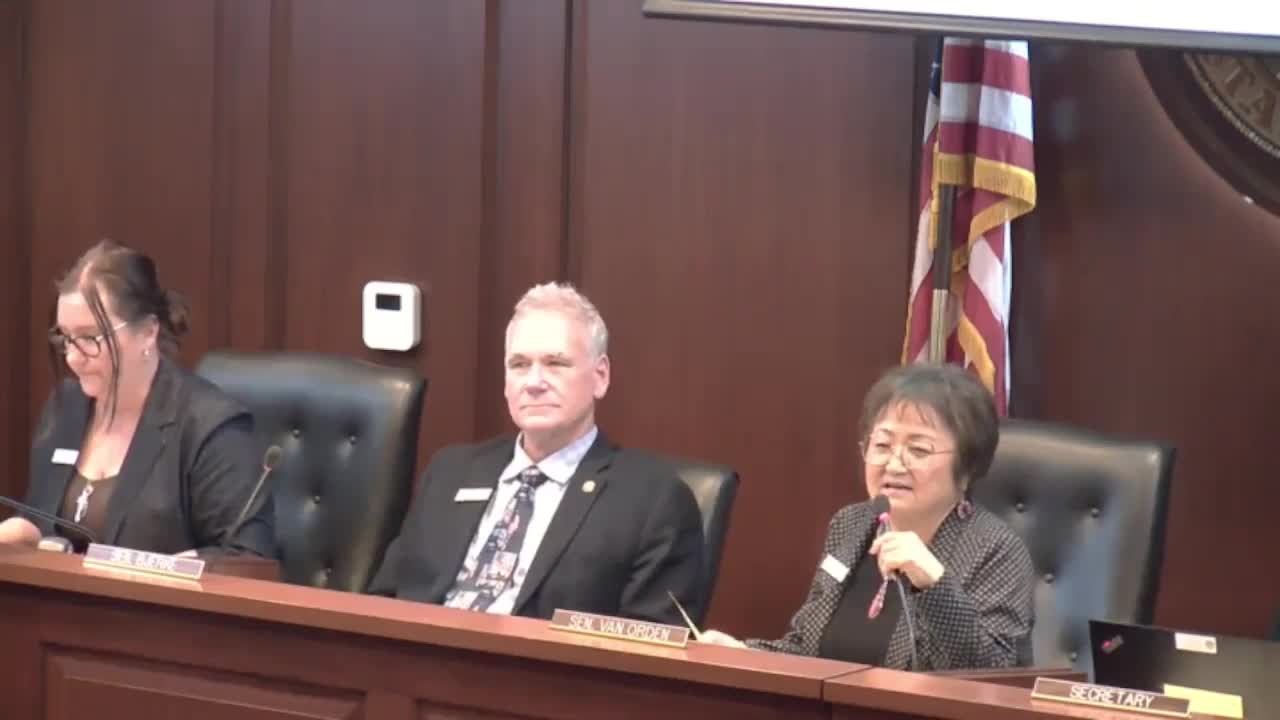
The Idaho Commission for the Blind and Visually Impaired (ICBVI) presented an overview of its programs to the Idaho Senate Health and Welfare Committee and emphasized that most of the commission's budget comes from federal grants.
"Our mission is to empower people with disabilities who are blind or visually impaired by providing vocational rehabilitation, skills training, and educational opportunities to achieve self fulfillment through quality employment and independent living," Administrator Beth Cunningham said. Cunningham and Steve Ochabal, the commission's independent living program coordinator, described services that serve adults, seniors and youth across Idaho.
ICBVI provides vocational rehabilitation services, school‑to‑work transition and three summer programs (Work Readiness, College Days and VIEW, which pairs job‑readiness training with paid work experience). The commission operates an Assessment and Training Center downtown in Boise with dorms for 10‑ to 12‑week sessions offering orientation and mobility, activities of daily living, braille, assistive technology, wood shop and job readiness training. The commission also manages a Business Enterprise Program under the federal Randolph‑Sheppard Act that enables blind vendors to operate vending and food services in public buildings.
Student and staff speakers described the summer programs. "College Days provides experiential and informational learning opportunities to clients interested in attending college, university, or technical training," a recorded program speaker said; one student, Carter Ray, told the committee the program "opens up your mind to how much you think you can do compared to how much you actually can do." Staff described the VIEW program as a week of classroom job readiness followed by four weeks of paid work experience and independent‑living practice.
Cunningham told senators ICBVI served approximately 2,000 people last fiscal year across its programs and emphasized the commission's funding mix. "Approximately 80 percent of our money is federal," she said, adding the commission receives about $1.8 million in the state general fund and roughly $6.27 million in total funding. The commission also receives an "older blind" grant (used for clients 55 and older) that Cunningham said is federally distributed at a lower allotment to Idaho because of state population; that grant is roughly $225,000.
Steve Ochabal outlined the commission's independent living services, including a site restoration program funded with state general funds that provides up to $5,000 lifetime assistance for procedures such as cataract surgery or glaucoma procedures for clients who meet financial criteria. The commission also runs periodic low‑vision clinics and regional outreach, and maintains equipment stores in its regional offices.
Committee members asked about the commission's placement within state government and its relationship to the Idaho Division of Vocational Rehabilitation. Cunningham said ICBVI is under the governor's office and that the Idaho Division of Vocational Rehabilitation sits in the Department of Education; both programs are federally funded through the Rehabilitation Services Administration but receive separate grant allocations. Senators pressed on the potential effects of federal funding changes; Cunningham said a significant federal funding cut would have a substantial impact on services across the state.
The presentation concluded without committee action; senators thanked the commission for the overview and asked follow‑up budget and demographic questions.