Get Full Government Meeting Transcripts, Videos, & Alerts Forever!
Get email alerts on the Juvenile Justice Budget topic
No spam. Unsubscribe anytime.
Juvenile Corrections requests radio upgrades, $300,000 to cover higher substance-use treatment costs
Summary
The Idaho Department of Juvenile Corrections asked the Joint Finance‑Appropriations Committee to approve one‑time and ongoing budget adjustments to upgrade radio systems, cover rising residential substance‑use treatment costs and realign IT staff. Agency leaders also described rising mental‑health needs and a modest increase in youth in custody.
The Idaho Department of Juvenile Corrections requested a mix of one‑time and ongoing funding on Tuesday as it outlined rising costs for residential substance‑use treatment, an equipment upgrade for facility radios and an internal IT reorganization.
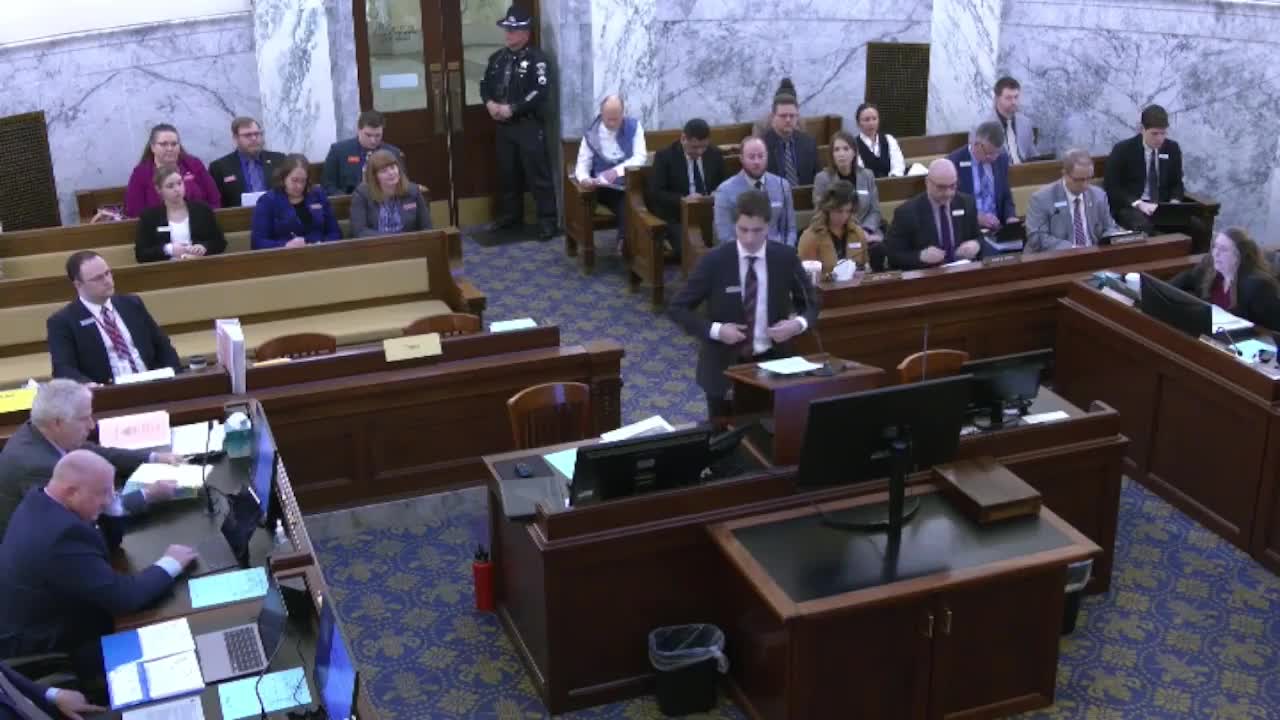
Noah Peterson, a budget and policy analyst with the Legislative Services Office, told the Joint Finance‑Appropriations Committee that the agency is asking for a $380,000 one‑time purchase from the Juvenile Corrections Endowment Income Fund “to replace and upgrade radio equipment across all 3 juvenile corrections facilities.” Peterson said a key feature of the upgraded radios is a “man down functionality that alerts staff to the location of an employee who is in need of assistance.”
Director Ashley Dowell said the radios would bring the Lewiston, Nampa and St. Anthony facilities to the same level of safety technology. “We have an amazing, passionate, dedicated staff,” Dowell said, adding that equipment that can signal staff location is a priority for institutional safety.
The department also requested a $300,000 ongoing appropriation from the general fund to cover increased costs of residential substance‑use disorder (SUD) treatment. Peterson told the committee that the cost per day for residential treatment rose from about $198 in 2021 to $399 in August 2021, and the average length of stay has increased from 31 days to 67 days. Peterson said those changes have raised annual program costs from roughly $1,260,000 in fiscal 2021 to about $2,700,000 in fiscal 2024. He said the Department of Health and Welfare had used federal ARPA funds to help cover some of the increase, and that the $300,000 request is intended to replace the portion Health and Welfare can no longer cover.
Dowell described rising clinical need inside the system. “I am concerned about just the level of mental health we're seeing in the youth with our facilities,” she said, and noted an increase in “suicidal ideation and self harming behavior.” Legislators pressed for more data about drivers of the trend and how to address it; Dowell said she would return with more information as the department studies causes and interventions.
On population, Dowell said the department's census reached an all‑time low of 137 youth in custody in May 2024 but had risen to 176 at the time of the hearing, a roughly 19% increase from the low point. Several lawmakers asked about the juvenile crisis centers set up as diversion points; Dowell said she did not have complete data at the hearing but that counties report crisis centers have diverted some children — including some younger than 10 — from detention settings.
The department proposed internal adjustments: a net‑zero shift of $675,100 from personnel to operating costs tied to consolidation of IT positions with the state's Office of Information Technology Services and a reduction of seven full‑time positions. Peterson also described a $232,500 IT replacement request recommended by OITS and a $145,100 request for replacement items from dedicated funds; line‑item detail is in the legislative budget book.
Committee members asked why length of stay in SUD treatment had more than doubled and whether the department could review community treatment providers' placement decisions. Dowell said placement and length decisions are made by community treatment providers and guided by placement criteria — Peterson and the director referenced the American Society for Addiction Medicine (ASAM) placement standards — and the department does not directly manage those providers' clinical decisions. Senators asked whether the state has capacity to perform utilization management of those placements; Dowell said that would require licensing and a business case to consider.
Peterson reviewed recent appropriation trends for the department, noting spikes in fiscal 2022 and 2023 tied to supplemental and one‑time appropriations for case‑management software, safety and reception centers, youth crisis centers and youth assessment centers, followed by reappropriation adjustments in subsequent years.
The director closed by thanking the committee and county partners for support and saying the department will continue to work on diversion, treatment and public‑safety goals.
Questions or follow‑up requests from the committee included: more detailed population and diversion data, a fiscal review of the SUD treatment cost increases, and line‑item detail on the IT consolidation and replacement purchases.