Get Full Government Meeting Transcripts, Videos, & Alerts Forever!
Get email alerts on the Medicaid Budget topic
No spam. Unsubscribe anytime.
JFAC reviews Medicaid budget increases, hospital assessment and behavioral health payment problems
Summary
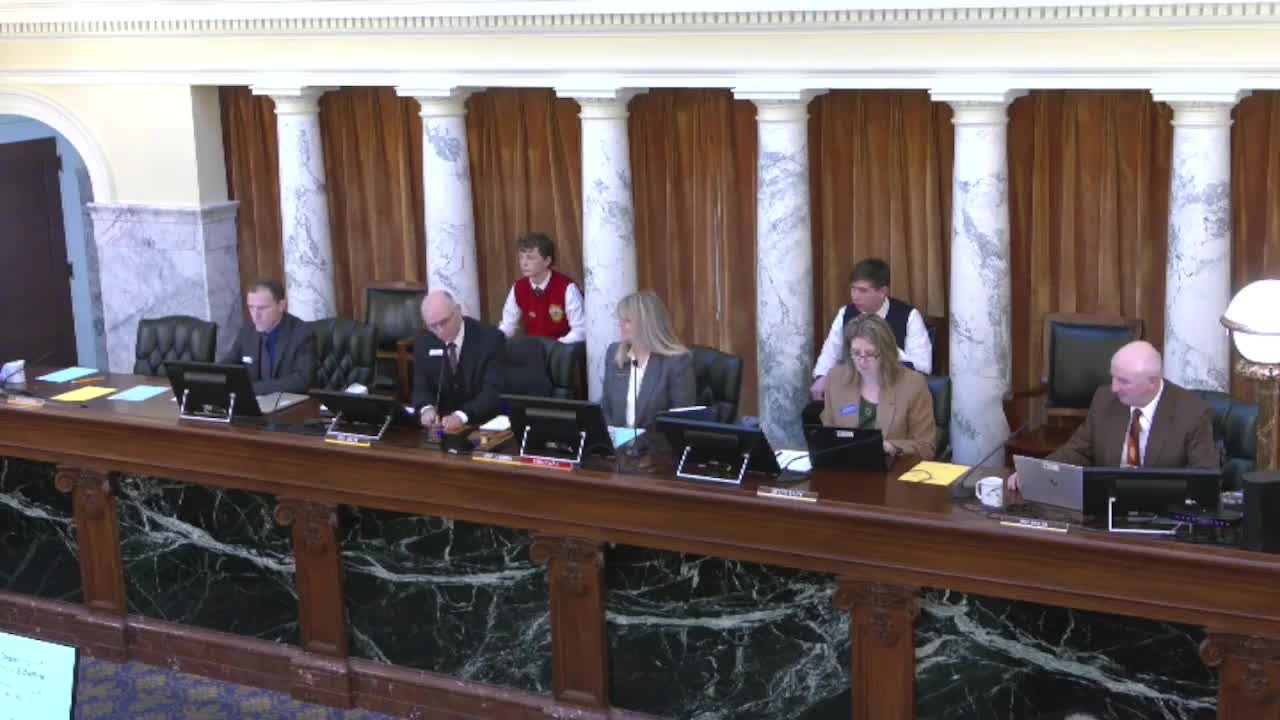
The Joint Finance-Appropriations Committee on Feb. 26 heard detailed testimony on the Division of Medicaid budget showing multi-year growth driven by caseload, provider rate increases, changes in hospital assessment methodology and the cost of managed-care transitions.
The Joint Finance-Appropriations Committee on Feb. 26 heard detailed testimony on the Division of Medicaid budget showing multi-year growth driven by caseload, provider rate increases, changes in hospital assessment methodology and the cost of managed-care transitions.
Legislative budget analyst Alex Williamson told the committee the division had $4.56 billion appropriated for fiscal 2024 and expended about $4.27 billion. “This will probably feel like information overload,” Williamson said as she outlined five supplementals and several 2026 enhancements included in the governor’s recommendation.
Why it matters: Medicaid is an entitlement program that covers low-income Idahoans, the elderly, people with disabilities and adults covered by expansion. Because federal rules set eligibility and many benefits, changes in utilization, provider rates or federal matching formulas quickly shift costs the state must fund.
Key budget drivers and requests - Expenditures and composition: Williamson told the committee trustee and benefit payments made up more than 98% of the division’s $4.27 billion expenditures in FY2024; personnel and operating for Medicaid administration totaled about $67 million. She contrasted the basic adult/child population (about 51% of participants but roughly 19% of expenditures) with coordinated/enhanced plans (about 20% of participants but roughly 57% of costs).
- Supplementals for FY2025: Williamson reviewed five supplementals the governor recommended, including $1.35 million for an external quality review (EQR) required by CMS for managed care plans; a supplemental to onboard a new vendor for the Idaho Behavioral Health Plan (IBHP); a capitation rate increase split across plans; and a $190 million request tied to the hospital assessment fund and changes made by Senate Bill 1350 (2022) to how upper payment limits (UPL) are calculated. Of that $190 million, she said about $77 million is from the dedicated hospital assessment fund and $113 million from federal funds.
- 2026 requests and MMIS: Williamson said the state is in year three of a five-year Medicaid Management Information System (MMIS) procurement. The department requested $11.7 million state share (already in an MMIS dedicated fund) and about $105 million federal. Ongoing requests include funding for actuarial services, the Consumer Assessment of Healthcare Providers and Systems (CAHPS) surveys and investments related to the KW lawsuit settlement’s resource allocation tool.
Behavioral health managed care implementation and payment problems Department director Alex Adams and Deputy Director Juliette Sharon addressed operational issues after the IBHP went live July 1. Sharon said, “these are costs that have already been incurred for system configuration changes made, and completed around the start of the new IBHP contract.” The department confirmed it had seen early provider payment problems after the contract’s start but said many issues have been resolved.
Adams said the state has imposed more than $100,000 in liquidated damages against the IBHP contractor and placed the vendor on corrective action plans. “They are back in compliance with timeliness requirements,” Adams said, while acknowledging some providers still report payment difficulties and the department continues to monitor and escalate problems.
Expansion, forecasting and FMAP changes Williamson reminded the committee that Medicaid expansion coverage began in January 2020 and reviewed the 2025 federal poverty guideline thresholds — for example, a single adult is eligible for expansion at or below $21,597 annual income. She said cost drivers include the pandemic’s timing with the expansion launch, provider rate increases enacted by the Legislature in 2022 and changes to upper payment limit calculations.
On the federal medical assistance percentage (FMAP), Adams explained small shifts in Idaho’s matching rate have budgetary effects: an approximate change from 69% to 68% in federal share moved roughly $45 million from federal funds to the state general fund in the department’s forecast. Adams warned that a longer taper of the enhanced expansion match could shift substantially more costs to the state over time.
Provider rates, hospital assessment and policy questions Several legislators pressed whether the hospital assessment functions as intended. Williamson described the assessment as tied to hospitals’ net patient revenue and said some assessment proceeds are retained by the state to offset provider rate increases. When asked whether the assessment could be redirected to “pay down the actual medical cost of expansion,” Williamson and Adams said doing so would require policy changes.
Cost containment and supplementals Adams repeatedly emphasized the department’s limited policy role: “I submitted as close to a maintenance budget as I could submit,” he said, noting the department did not request new policy expansions or provider-rate changes for the FY2026 enhancement package. He and other witnesses said Medicaid forecasting is uncertain: the department will begin publishing a range-based forecast (baseline, optimistic, pessimistic) and a monthly transparency report to provide earlier warnings about potential supplemental needs. The department said supplementals request funds for expenses already incurred and that Medicaid budgets commonly need supplementals because of forecasting variability.
Other program notes - Emergency Medicaid: Adams told the committee Idaho spends about $10 million annually on emergency Medicaid for non‑citizen populations as required under federal rules. - Postpartum coverage and appeal: Adams said the state’s postpartum state plan amendment is operational and about 2,800 women had used the coverage. He also said the department filed an appeal after a federal decision and that a hearing on the appeal was scheduled for the first week of April. - KW lawsuit: Williamson and Sharon noted work on a new resource allocation tool required by the KW settlement; Sharon said the department requested ongoing funds to support contract work and attorney fees tied to compliance with a federal district court order.
What’s next Committee members asked for follow-up materials: a breakdown of postpartum coverage services, updated information on provider payments and the KW litigation status and additional detail on how hospital assessment proceeds are calculated and used. The department said staff would provide more detailed follow-up to members and continue monitoring vendor performance and fiscal trends.
Ending The hearing produced multiple follow-up requests for the department and underscored the degree to which federal rules, utilization changes and technical payment methodologies can drive state Medicaid costs. With supplementals and ongoing requests on the table, members signaled they expect additional detail before final appropriations are adopted.