Get Full Government Meeting Transcripts, Videos, & Alerts Forever!
Get email alerts on the Substance Abuse Funding Compliance topic
No spam. Unsubscribe anytime.
State requests fund swaps, reports corrective action over federal grant administrative cap for substance abuse funds
Summary
Officials said the substance abuse division is asking the Legislature to allow fund transfers that move some personnel costs to liquor control/dedicated funds and shift federal funds to trustee payments to comply with federal administrative caps and maintain staffing.
Alex Williamson, Legislative Services Office analyst, explained the Division of Substance Abuse Treatment and Prevention's recent budgets and federal grant history. The division received an $8.3 million one‑time COVID appropriation in FY2022 and an $8 million state opioid response grant in FY2023 that was made ongoing in FY2024. The agency reported $22.7 million in expenditures in FY2024, with about 70% of spending in trustee and benefit payments.
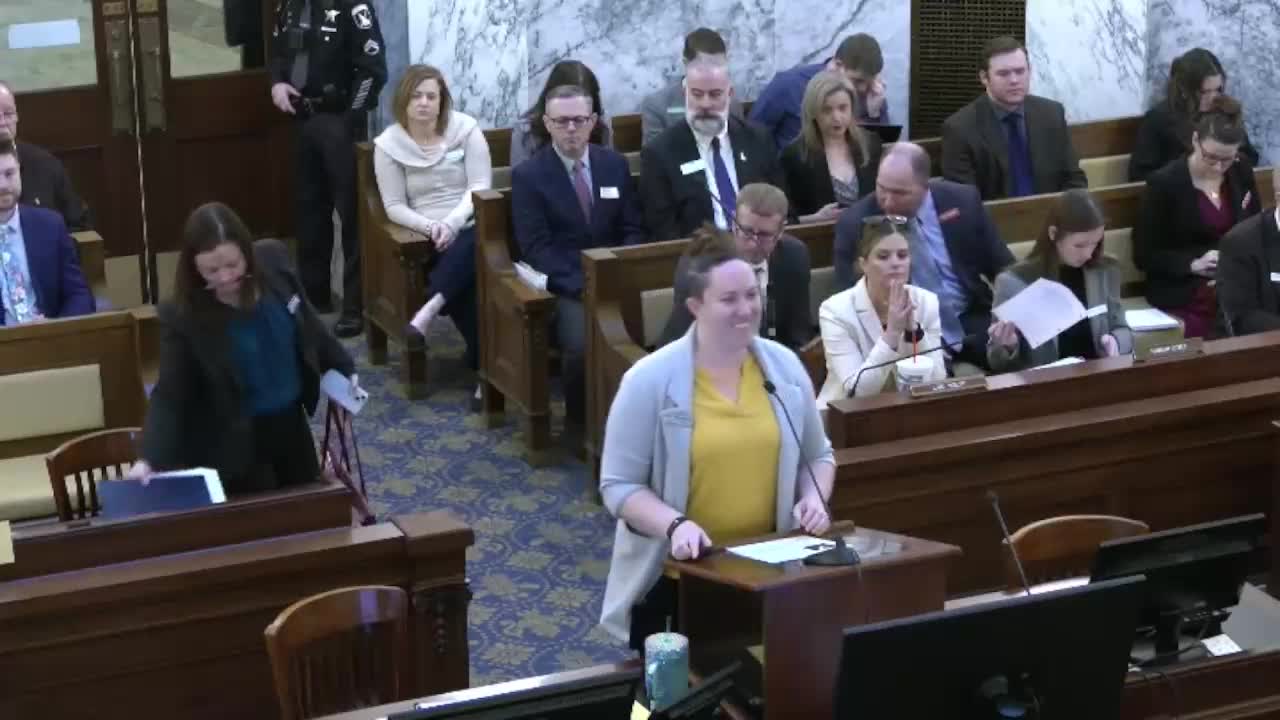
Williamson and Director Alex Adams told the committee that federal guidance limits administrative/personnel spending under the substance use block grant to 5%. A federal corrective action plan placed Idaho on notice for exceeding that cap. To remain compliant while maintaining current staffing, the department proposed moving $533,900 from liquor control/dedicated funds to personnel costs and simultaneously moving $673,900 from personnel to trustee and benefit payments on the federal side — effectively shifting which fund pays for personnel versus benefits.
Senator Cook asked whether the proposal was merely moving dollars on paper to avoid sanctions; Williamson said the agency told the committee it had other dedicated fund sources (liquor control funds and Millennium Fund) that could pay personnel costs so federal funds could be used for trustee and benefit payments in compliance with the 5% cap.
Adams said the department (which often acts as a pass‑through for Millennium Fund distributions and opioid settlement dollars) proposed net reductions in some FTP and personnel cost items elsewhere as part of its internal balancing. Adams described the department effectively as a check‑writing organization for certain pass‑through grants and asked that the Legislature consider whether DHW should be used as the pass‑through recipient for some community‑level programs.
Committee members requested follow‑up detail on program outcomes and asked for written reports for some Millennium Fund and opioid settlement funded items, including the Boise State collegiate recovery program and the Idaho Drug Free Youth program; director Adams said he would circulate reports and encouraged legislators to question subrecipients as appropriate.