Get Full Government Meeting Transcripts, Videos, & Alerts Forever!
Get email alerts on the State Agency Budget topic
No spam. Unsubscribe anytime.
Industrial Commission seeks staff and IRIS maintenance as caseloads, payments rise
Summary
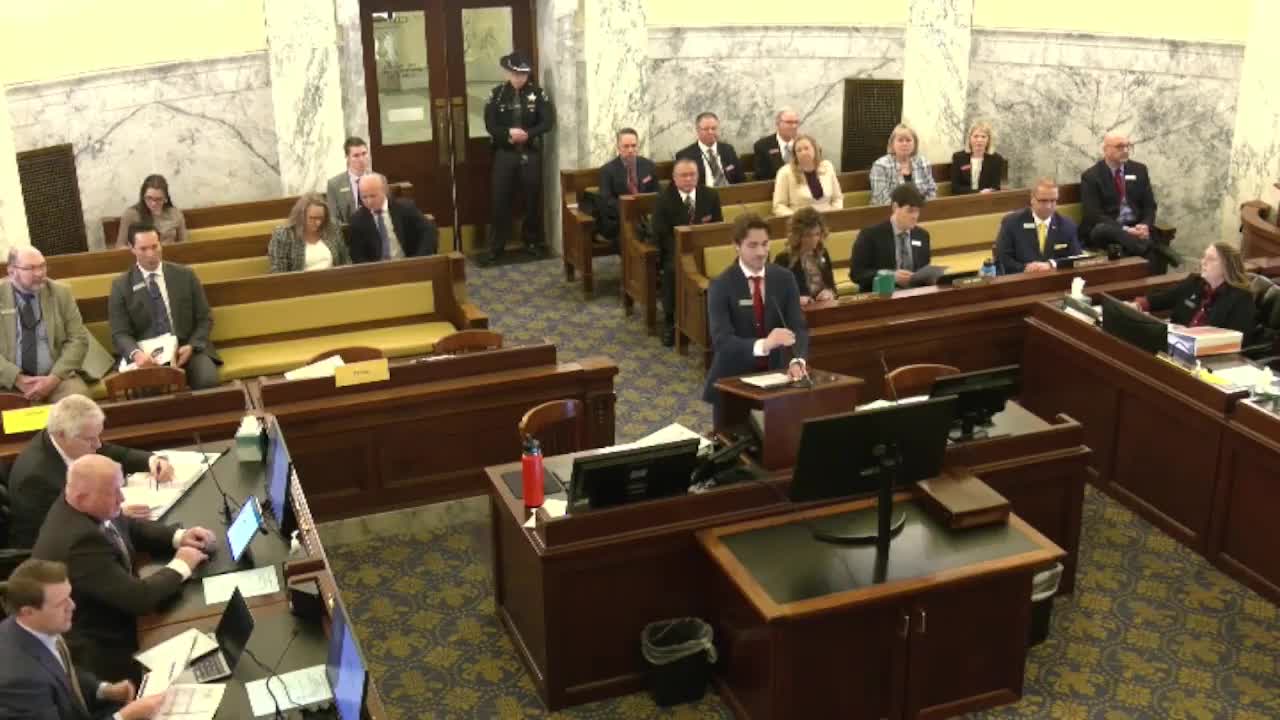
At a Jan. 23 Joint Finance Preparation Committee hearing, the Industrial Commission presented budget requests tied to its IRIS modernization, staffing gaps and vehicle replacements after reporting payment backlogs and multi‑fund reversions.
The Industrial Commission on Thursday told the Joint Finance Preparation Committee it needs ongoing maintenance funding for its IRIS case-management system, several staff reclassifications and four replacement vehicles to address rising caseloads, payment backlogs and aging field fleet.
Noah Peterson, budget and policy analyst for the Legislative Services Office, briefed the committee on the agency’s budget request and related fund activity, noting that the commission is a dedicated‑fund agency and that none of its appropriation comes from the state general fund. Peterson said the commission reverted $4,555,000 last year and that $2,400,000 of that came from the crime victims compensation program. He also summarized enhancement requests and the agency’s use of 12 vacant FTPs to fund positions.
The requests are tied to a multi‑year IRIS (Industrial Commission Redesign Information System) modernization project that Peterson said has received $12,874,000 in one‑time appropriations since fiscal 2021 and now requires contracted technical support: “this is essential support to essentially support the modernization that from the IRIS project,” he said, explaining a $288,000 one‑time request for maintenance contractors after the Office of Information Technology Services (ITS) could not provide the work.
Committee members pressed the agency on how IRIS affected staffing needs. Peterson described a staffing gap in the fiscal team and said the target turnaround time for processing a payment request from the crime victims compensation program is 30 days; at the time of the budget submission there were 872 outstanding payments and an estimated 12‑week turnaround. “The goal is 30 days,” Peterson said. Director George Gutierrez told the committee the commission temporarily shifted staff to eliminate an 800‑case backlog but needs a permanent senior financial technician to avoid future delays.
Gutierrez described how IRIS changed work flows and increased identifiable cases: IRIS created an electronic record and improved business‑system efficiency, which removed some clerical tasks previously passed to referees but also shifted responsibilities to adjudication staff to ensure records are complete before hearings. On employer compliance, he said the new system has increased data sources and detected substantially more noncompliant employers: “we are now identifying nearly 60% more cases,” Gutierrez said, and that surge has pushed more matters into legal processing.
Specific enhancement and budget details provided to the committee included: - Vacancy and staffing: the commission has 130.25 FTPs budgeted and reported 12 vacant positions as of August; the FY 2026 request proposes no new FTPs but would fill many vacancies with existing authorization. - IRIS and technology: IRIS has received $12,874,000 in one‑time appropriations (FY21–FY25); the FY26 request includes a $288,000 one‑time IRIS maintenance contract and a $30,000 one‑time contingency recommended by ITS. - Fiscal staff: a requested senior financial technician (ongoing $66,500) to help the crime victims compensation payment backlog; agency testimony cited 872 outstanding payments and an estimated 12‑week turnaround at the time of the August submission. - Adjudication capacity: a referee position request (ongoing $111,600) to help reduce average decision time, which rose from about 90 days to 110 days after a referee retired in 2020. - Reclassifications and records: reclassification of five adjudication associates (ongoing $25,500) and a technical records specialist (ongoing $62,300) to handle increased electronic records and prepare cases for the Attorney General’s civil litigation division. - Vehicles and equipment: four small SUVs requested (three for rehabilitation, one for compensation); replacement IT equipment requested at $104,200 (laptops, docking stations, monitors). - Fund mechanics: Peterson explained a supplemental transfer shifting $47,000 of appropriation among dedicated funds to align with statutorily designated purposes; the Industrial Administration Fund, Peace Officer Temporary Disability Fund and Crime Victims Compensation Fund are the commission’s primary revenue sources.
Committee members asked whether reverted fund balances could be used to fill vacant positions. Peterson deferred operational authority to the director; Gutierrez answered that most reversions were trustee and benefit payments and that the commission does not have unilateral authority to repurpose those monies without approval. He told the committee he would provide additional detail if the committee sought it.
Several members requested a written breakdown of IRIS expenditures and obligations. Representative Brian Tanner said the project’s multi‑year appropriations and repeated one‑time requests make a detailed, readable breakdown necessary; Gutierrez agreed to provide that information to the committee.
The commission’s director framed several requests as operational priorities to preserve service levels for injured workers, employers and victims. Gutierrez said last‑year work by fiscal staff eliminated the payment backlog but that without the requested fiscal reclassification and technician, timely payments and vendor relationships could suffer. He also said the vehicle replacements respond to high mileage and recurring mechanical failures in field offices that carry staff into remote areas.
The committee did not vote on the requests at the hearing. Staff and the director committed to follow up with detailed IRIS cost breakdowns and fleet inventories at the committee’s request.
The hearing included analysts’ and director’s testimony and questioning from multiple legislators, with several follow‑up requests for documentation. The committee moved on to the judiciary portion of the agenda after the Industrial Commission concluded its presentation and questions.