Get Full Government Meeting Transcripts, Videos, & Alerts Forever!
Get email alerts on the Child Welfare topic
No spam. Unsubscribe anytime.
DHW asks JFAC for staff and one-time funds to expand prevention, recruit foster parents to cut costly congregate care
Summary
Department of Health and Welfare Director Alex Adams told the Joint Finance and Appropriations Committee on Feb. 20 the department seeks dozens of new staff, a $14.1 million supplemental and other items to shift children from congregate care into prevention and foster placements and reduce rising costs.
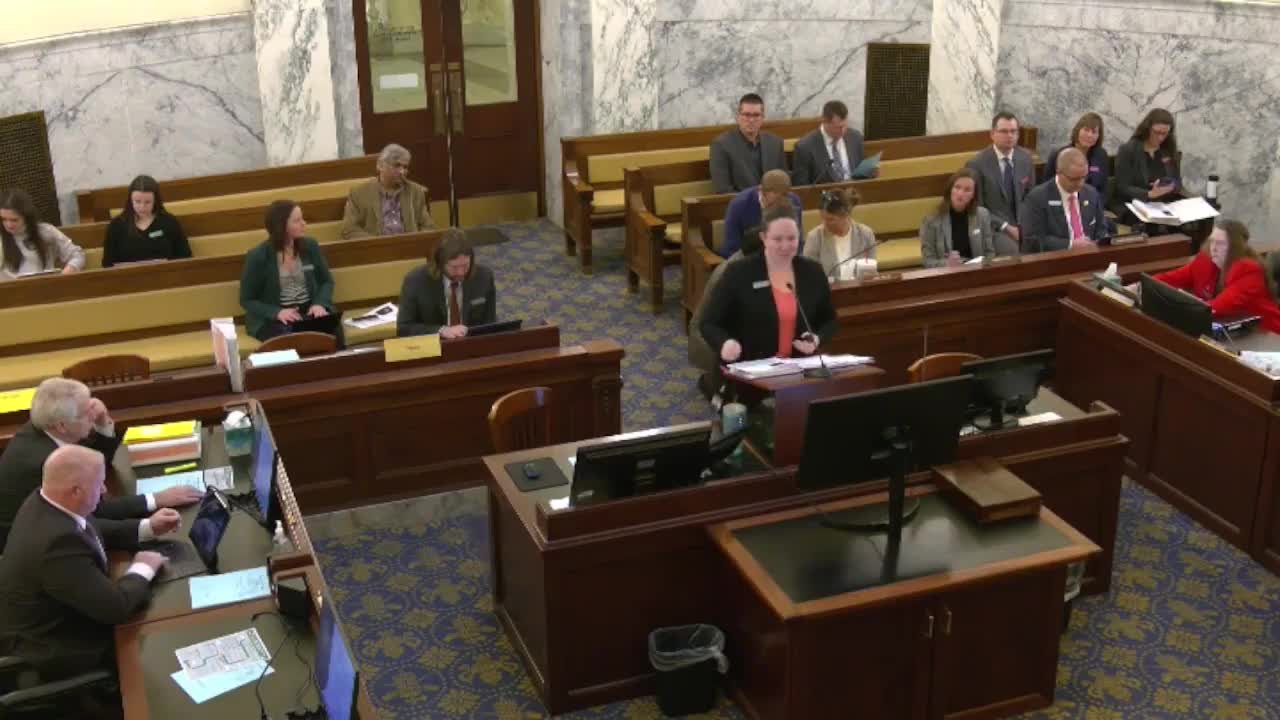
At a Feb. 20 Joint Finance and Appropriations Committee hearing, Department of Health and Welfare Director Alex Adams and Legislative Services analyst Alex Williamson outlined a multi-part request to expand prevention services and increase foster-placement capacity to reduce use of high-cost congregate care.
The department asked the committee to authorize dozens of new full-time positions, one-time operating funds and a fiscal-year supplemental of $14.1 million for foster care population forecast adjustments. Director Alex Adams said the department’s strategy is to reverse current placement patterns by putting "the right kid, right place, right time," increasing prevention work in homes and recruiting more foster families.
Why it matters: Adams told the committee that the cost and outcomes for children vary dramatically by placement: "If I keep a kid in their home, in a prevention case, it's a dollar 80 a day. If a child is removed from their home and placed in foster care, it's $16 a day. If I don't have a foster bed available to them, congregate care is $380 a day." The department said rising mental-health needs, substance use and a shortage of foster parents have driven greater use of specialized, expensive placements.
What was requested: Alex Williamson, budget and policy analyst with Legislative Services, presented details from the agency’s request. For the child-welfare division (retitled youth safety and permanency) the department asked for: - A prevention specialist team: 36 new FTP to expand a statewide prevention workforce (the division currently has 14 prevention specialists). The agency’s goal is to bring the state to roughly 50 prevention specialists so more children can safely remain at home. - Youth safety and permanency staff: agency requested 12 positions; the governor recommended 9. - Foster program clinical staff: agency requested 15 clinicians; the governor recommended 10. These clinicians would be assigned to the congregate-care unit and to support foster families accepting children with high emotional, behavioral or mental-health needs. - Foster program licensing staff: agency requested 14 FTP to speed licensing (agency reported it currently takes about 80 days on average to license prospective foster parents); the governor recommended 3 positions. - Case management support intended to reduce average caseloads from about 32 youth per worker toward a target of 26; the department reported 67 case management workers statewide.
Williamson summarized recent baseline figures: child-welfare was authorized 434.8 FTP with 45.8 vacancies as of Feb. 10; about 25 of the vacancies were in interview, 9 were posted. The division expended about $117.8 million in the most recent fiscal year; foster-care and assistance payments made up about 60 percent of that total, agency-provided staff costs about 40 percent.
Supplemental and transfer requests: Williamson said the department included a fiscal-year 2025 supplemental request that contains $14.1 million for foster-care population forecast adjustments driven by congregate-care cost increases. The agency also asked the committee to exempt child welfare from a restriction in last year’s maintenance bill that limits transfers of personnel dollars and trustee/benefit payments, asking instead to allow transfers in accordance with Idaho Code §67-35-11.
Payette Assessment Care Center: The department originally sought to buy the Payette assessment and care center but, Williamson said, the governor’s office and agency recommended leasing it instead while they assess whether purchase was appropriate long-term. Williamson said the revised request included approximately $2.7 million ongoing to operate the facility under a lease while staff and operations are evaluated. Director Adams told the committee the state invested in safety and repairs to make the facility usable and that private partners also contributed equipment.
How prevention work operates: Deputy Director Monte Pro described how a prevention specialist’s day differs from standard casework: prevention workers generally make face-to-face visits about once a week, perform assessments of child and family functioning, and broker or directly provide services tailored in a court-approved treatment plan. Pro described the prevention objective as shortening the time staff need to remain involved and closing cases once protective factors increase.
Committee questions and context: Several legislators praised the prevention focus and asked about specific items, including the Payette facility, the cost drivers of congregate care, and whether the department can fill requested positions (the department told the committee child-welfare vacancy rates are near or below agency averages and many positions were in active recruitment). Adams and staff emphasized the budget’s entitlements: the courts, not the department, determine which children are committed to state custody; once a child is committed, the department must provide a placement.
No final committee action or vote on the budget requests was recorded at the Feb. 20 hearing. The requests will be considered in subsequent budget deliberations and possible appropriation bills.