Get Full Government Meeting Transcripts, Videos, & Alerts Forever!
Get email alerts on the Appellate Public Defender topic
No spam. Unsubscribe anytime.
State Appellate Public Defender seeks deputy attorney to reduce contracting costs
Summary
The Office of the State Appellate Public Defender presented staffing levels, a request for an additional deputy appellate public defender, and data showing contracting overflow cases is more costly than hiring in-house.
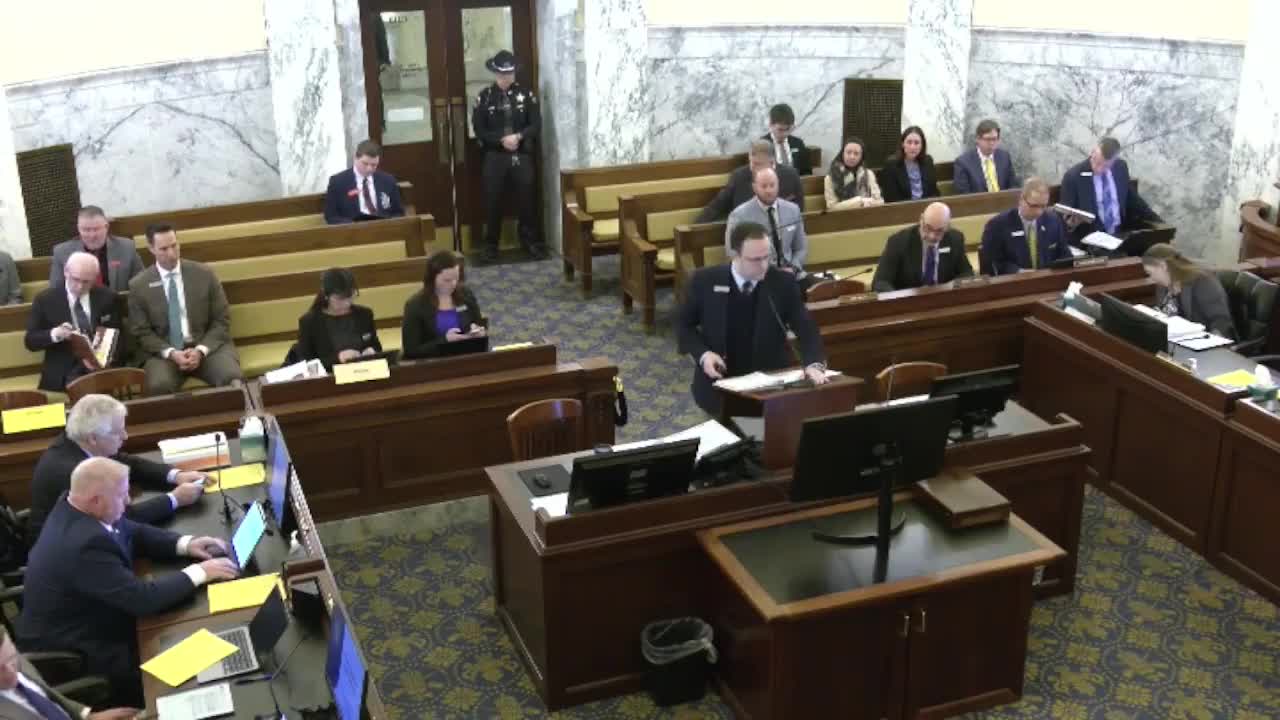
The Office of the State Appellate Public Defender asked the Joint Finance-Appropriations Committee to approve an additional attorney position and re-appropriation authority for previously authorized one-time funds to help manage a multi-year increase in appeals work.
Christopher Lahoset, a Legislative Services Office analyst, outlined the office’s role and budget history, noting the office is authorized 26 full-time positions and currently reports no vacancies as of December 15. “The office has authorized 26 full time positions. As of December 15, the office has no vacancies,” Lahoset told the committee.
Nut graf: The office argues hiring a deputy appellate public defender would be less expensive than contracting overflow appellate matters and would allow in-house handling of noncapital appeals currently assigned to outside counsel.
Eric Leightonen (identified in the hearing as director of the State Appellate Public Defender) and staff described the operational case mix and turnover; Justin Curtis (chief of the Appellate Unit) and Rachel Murray (office administrator) accompanied the director. Leightonen said the appellate office has seen a significant increase in caseload since the pandemic and occasional turnover tied to broader changes in the indigent-defense system. He told the committee the office’s caseload was “about…650 cases for the current fiscal year.”
The agency requested one attorney position — described as the thirteenth attorney in the appellate unit — to handle a regular share of noncapital felony, misdemeanor and juvenile direct and post-conviction appeals. Lahoset’s presentation noted contracting overflow cases could cost approximately $254,000 per year in outside attorney fees, while hiring an in‑state attorney at a salary of about $140,000 would be less expensive.
Committee questions focused on turnover, how cases are distributed, and whether contracting out overflow cases is a short- or long-term solution. Leightonen said the office must contract for conflict cases (when an in-house attorney has a conflict of interest) and sometimes for overflow matters. He said conflict counsel funds are typically about $200,000 per year and that about 14 cases were contracted out in the last 18 months to relieve pressure.
Leightonen and committee members also clarified the distinction between the State Public Defender (trial-level defense across counties) and the Appellate Public Defender (which handles appeals in the Court of Appeals and Supreme Court from Boise). “Our practice is limited to taking cases from all 44 counties, but arguing those cases up to the Court of Appeals and the Supreme Court here in Boise,” Leightonen said.
Ending: The committee did not vote at the end of the presentation. Staff and members asked for no immediate votes and the director thanked the committee for consideration of the requested position and re-appropriation authority.