Get Full Government Meeting Transcripts, Videos, & Alerts Forever!
Get email alerts on the Higher Education Funding topic
No spam. Unsubscribe anytime.
Lewis‑Clark State College asks JFAC for help closing salary gap, flags enrollment and formula impacts
Summary
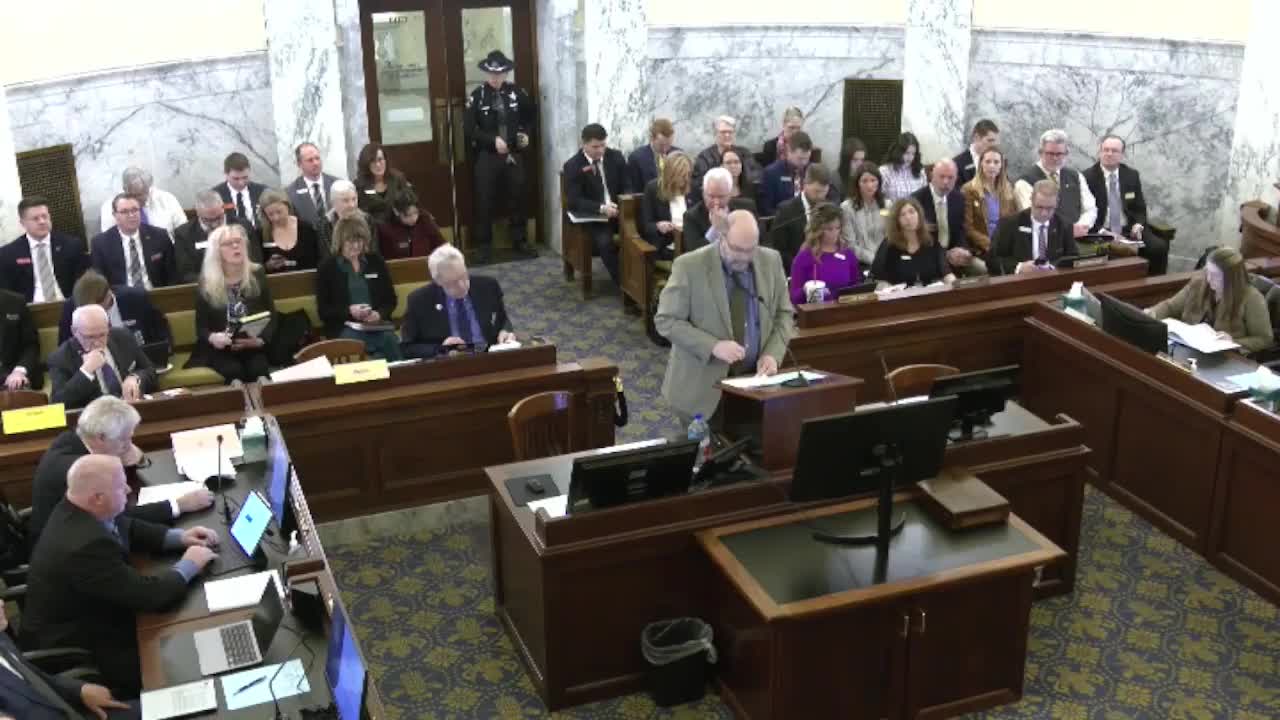
At a Jan. 27 Joint Finance‑Appropriations Committee hearing, Lewis‑Clark State College President Cynthia Pemberton asked for more state support to address a faculty and staff pay gap, to offset a reduction from the Enrollment Workload Adjustment (EWA) and to sustain growth in career‑technical programs and prison education.
BOISE, Idaho — Lewis‑Clark State College President Cynthia Pemberton told the Joint Finance‑Appropriations Committee on Jan. 27 that the college needs continued state support to address employee pay, operational costs and enrollment pressures.
Pemberton and a Legislative Services Office analyst, Kevin Campbell, presented Lewis‑Clark’s budget picture and requests. Campbell said Lewis‑Clark’s base appropriation for FY2025 is $41,700,000 and that tuition and fees — which are reappropriated between fiscal years — are a material part of the college’s cash flow. He also described the Normal School Income Fund and other endowments that support the institution.
Why this matters: Lewis‑Clark is a small, regionally focused public four‑year college that trains workers in health care and technical trades. Its financial health and ability to retain faculty affect program continuity for students across North Idaho.
Pemberton emphasized the operational consequences of the state’s funding mix and an old enrollment formula known as the Enrollment Workload Adjustment (EWA). She told the committee the EWA is a 3‑decade‑old weighted credit‑hour formula and that Lewis‑Clark’s average credit‑hour weighting is 1.85 compared with a system average of 2.51, “which means for 3 decades, LC State has received, on average, 26% less possibility of having the credit hours produced precipitate a positive formula outcome.”
The EWA will reduce Lewis‑Clark’s FY2026 appropriation by $102,500, Campbell said. Pemberton and analysts warned members that the EWA can move funding between institutions and that Lewis‑Clark’s program mix — which includes fewer graduate‑level and higher‑weighted courses — limits its outcome under the formula.
Pemberton also outlined a pay gap for LC State faculty and staff. Using the college’s most recent data she said an LC State instructor makes about $9,000 less per year on average than the K‑12 average for comparable roles, and an assistant professor is paid about $3,777 less per year than the K‑12 average. She asked the committee to consider additional operational capacity enhancement funding to make progress on that gap, noting the college’s request for $287,000 this cycle for compression/compensation (CEC) and that roughly $1.2 million would be needed to reach median comparables.
Enrollment and student supports were central to the presentation. Campbell gave Lewis‑Clark’s enrollment as 3,881 students. Pemberton said LAUNCH — the state student aid program — supported about 240 Lewis‑Clark students in the fall, particularly those in career‑technical education. She reported career‑technical enrollment was up 19% in the fall and an additional 10% in the spring, and she described workforce training outcomes such as electrical apprentices who completed programs with LAUNCH support.
Pemberton highlighted prison education as another expansion: she said Lewis‑Clark is the first institution in Idaho to complete the full transition from the experimental program to a prison education program allowing Pell eligibility, and that it now serves nearly 200 incarcerated students with sites in Orofino, Pocatello and Boise.
Budget breakdown and recent enhancements: Campbell said about 82.6% of Lewis‑Clark’s budget is personnel (faculty and support staff), 16.5% operating expenses and under 1% capital outlay. Recent enhancements included a portion of the governor’s combined enhancement ($370,100 in 2024), $9,600 for centralized HR functions and $440,200 in an operational capacity enhancement for FY2025. Lewis‑Clark also received endowment adjustments ($352,200) and an enrollment workload adjustment increase ($54,700) in the most recent cycle.
Committee members asked for comparative salary data; Campbell said he is preparing a cross‑institutional salary compilation and Pemberton offered to provide Lewis‑Clark’s detailed pay data to committee members. Pemberton said the college used recent enhancements to finish occupancy costs for the Schweitzer Career Technical Engineering Building, expand marketing, and invest in IT and custodial support.
Pemberton closed by reiterating the college’s mission as “North Idaho’s health care education leader” and its role as Idaho’s sole public small four‑year college offering an affordable, small‑school experience for many first‑generation and Pell‑eligible students.
In closing she asked for continued legislative support, saying, “We need you. We value you. We appreciate you.”