Get Full Government Meeting Transcripts, Videos, & Alerts Forever!
Get email alerts on the Medicaid Budget topic
No spam. Unsubscribe anytime.
Idaho Medicaid budget rises as expansion costs, provider rates and FMAP shifts drive spending
Summary
Analysts told the Joint Finance-Appropriations Committee that Idaho's Medicaid spending is climbing because of coverage expansion, provider rate increases, changes to hospital payment calculations and a shift in federal matching (FMAP) that moves roughly $45 million onto the state budget.
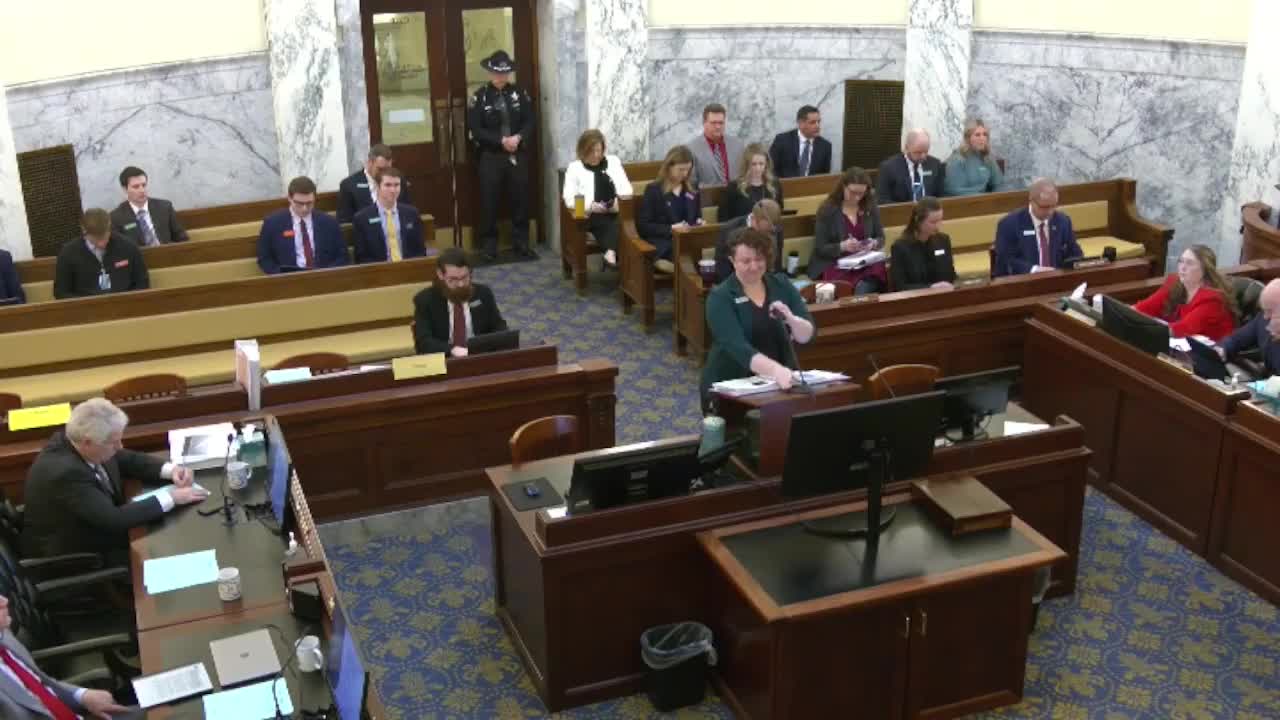
Alex Williamson, budget and policy analyst with Legislative Services, told the Joint Finance-Appropriations Committee on Feb. 26 that Idaho's Medicaid program has grown substantially and comprises the bulk of the division's spending.
"The division of Medicaid is responsible for administering plans to finance and deliver health services for people at risk due to low income and other factors," Williamson said, adding the division manages four benefit plans and an administrative arm.
The committee was shown that $4.56 billion was appropriated for fiscal 2024 and about $4.27 billion was expended by the division. Williamson said trust/benefit payments made up more than 98% of fiscal-year 2024 expenditures and that personnel and operating costs for Medicaid administration totaled about $67 million for that year.
Why it matters: the committee heard several drivers that together raised costs beyond early forecasts. The expansion population, created after a voter initiative and implemented in January 2020, produced expenses that were larger than the Milliman 2018 forecast because the launch coincided with the COVID-19 pandemic and because the state later approved provider rate increases and changes to hospital upper payment limit calculations.
Williamson highlighted differences in who drives costs: the basic plan (pregnant women, children and some adults) represents about 51% of participants but only roughly 19% of costs. By contrast, coordinated and enhanced plans (older adults, dually eligible and people with disabilities) make up about 20% of participants and about 57% of costs because of higher-acuity services.
Another budget driver noted was a change in the federal medical assistance percentage (FMAP). Williamson and Department of Health and Welfare officials said the FMAP change shifted about $45 million from federal funds to the state general fund for the non-expansion population. Director Alex Adams explained that as Idaho's personal income grows relative to other states, federal matching falls and state responsibility rises.
On caseload and forecasting, Williamson told the committee the department will start publishing a range of forecasts (baseline, optimistic, pessimistic) to improve transparency: "we're going to get out of the business of providing a single number with our forecast. We're going to start doing baseline, pessimistic, optimistic, and a range of options," she said.
Committee members raised concerns about the scale of growth. Representative Tanner described the budget increases as "out of control," and asked why the executive branch had not included cost-containment measures; Director Adams responded that Medicaid is an entitlement program with eligibility and benefit rules established by federal and state law and that the department implements policy set by the legislature.
The record contains additional clarifications and figures the committee used during questioning: the division has 237.5 full-time positions authorized with about 24.5 vacancies reported (Williamson said those vacancies were actively being recruited). Expansion eligibility thresholds shown in the presentation: a single person qualifies for expansion under 2025 poverty guidelines at $21,597 annually (about $10.38/hour full time); a household of four qualifies under $44,367 annually.
Ending note: analysts and department officials repeatedly emphasized that much of the recent spending growth reflected a confluence of factors (program launch timing, pandemic effects, provider rate actions and formula changes) rather than a single cause; committee members pressed for more detailed forecasts and options to manage future growth.