Get Full Government Meeting Transcripts, Videos, & Alerts Forever!
Get email alerts on the State Treasurer topic
No spam. Unsubscribe anytime.
Treasurer supports $15M workforce-housing transfer; previous $50M round was loans, IHFA says
Summary
The State Treasurer’s office presented its FY26 budget; the governor recommends a $15 million general‑fund transfer into the workforce-housing fund as revolving loan capital. Idaho Housing and Finance Association told the committee earlier $50 million previously provided was deployed as loans that will repay into a revolving fund.
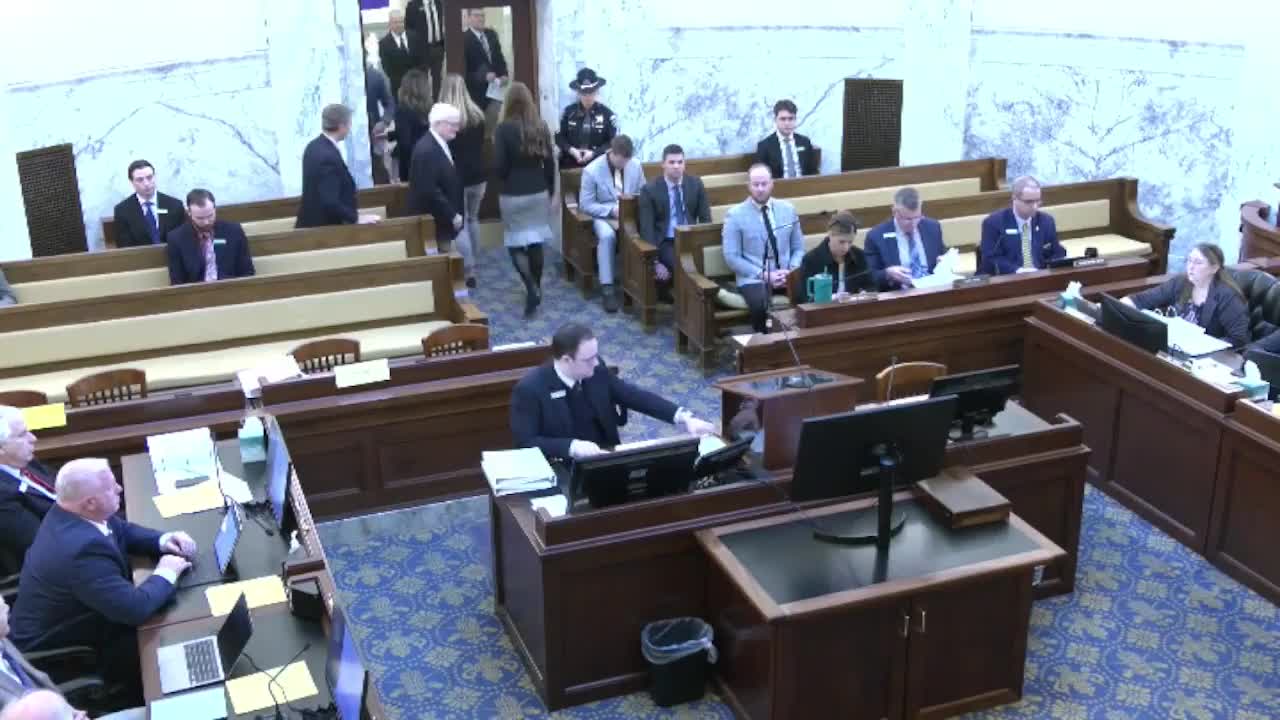
At a Joint Finance-Appropriations Committee hearing the Legislative Services Office briefed members on the State Treasurer’s budget; the governor recommended a $15 million transfer from the general fund to the workforce housing fund to support gap financing for housing development.
Why it matters: The treasurer acts as banker for state agencies and custodian for endowment and unclaimed property funds. The proposed transfer is intended to fund gap loans for workforce housing projects and to revolve as repayments are issued to support future projects.
Christopher Lahoset described the treasurer’s core duties—receiving and depositing revenues, investing surplus cash and administering unclaimed property—and drew attention to the abandoned property trust fund rules. He cited Article 14, Section 5801 of the Idaho Code and noted that excess amounts in the abandoned property trust fund above $500,000 are transferred to the general fund. Lahoset also summarized a prior supplemental: the legislature approved a $50 million one‑time trustee and beneficiary payment to be passed through the treasurer to the Idaho Housing and Finance Association (IHFA); that funding was reappropriated and ultimately dispersed to IHFA.
At the hearing an IHFA representative, Brady Ellis, explained that the prior $50 million round was issued as loans. "They were issued as loans in the first round just to confirm that," Ellis said. He said loans are structured with repayment schedules and that repaid funds are intended to return to a revolving loan pool for future gap‑financing awards.
Treasurer Julie Ellsworth confirmed that the treasurer’s office acts as a conduit for such transfers and that the recommended $15 million would be a pass-through to IHFA consistent with legislative direction. Ellsworth identified the office’s posture as a fiduciary manager of state cash and offered to provide committee members with additional documentation about transactions and repayments when requested.
Lahoset summarized FY24‑FY25 personnel and appropriation history for the treasurer’s office: the office has a 30‑FTP cap, a five‑year average authorized FTP of about 26.4, and a mix of personnel and operating expenditures. He identified a requested FY26 enhancement of $25,000 for a cybersecurity/cloud email security product. The governor’s recommended $15 million transfer to the workforce housing fund was presented as a revolving‑loan approach intended to produce an estimated 300 to 400 units over time, subject to project financing details and compliance with Idaho Code §67‑62‑27.
Committee members asked for details on how quickly previous awards were deployed and where projects are located; IHFA said allocations were competitive, development timelines vary and some projects from the prior funding round are now coming online. No committee action or vote was recorded during the hearing.