Get Full Government Meeting Transcripts, Videos, & Alerts Forever!
Get email alerts on the Secretary Of State Budget topic
No spam. Unsubscribe anytime.
Secretary of State seeks ongoing funds for voter guide, software and a deputy overlap
Summary
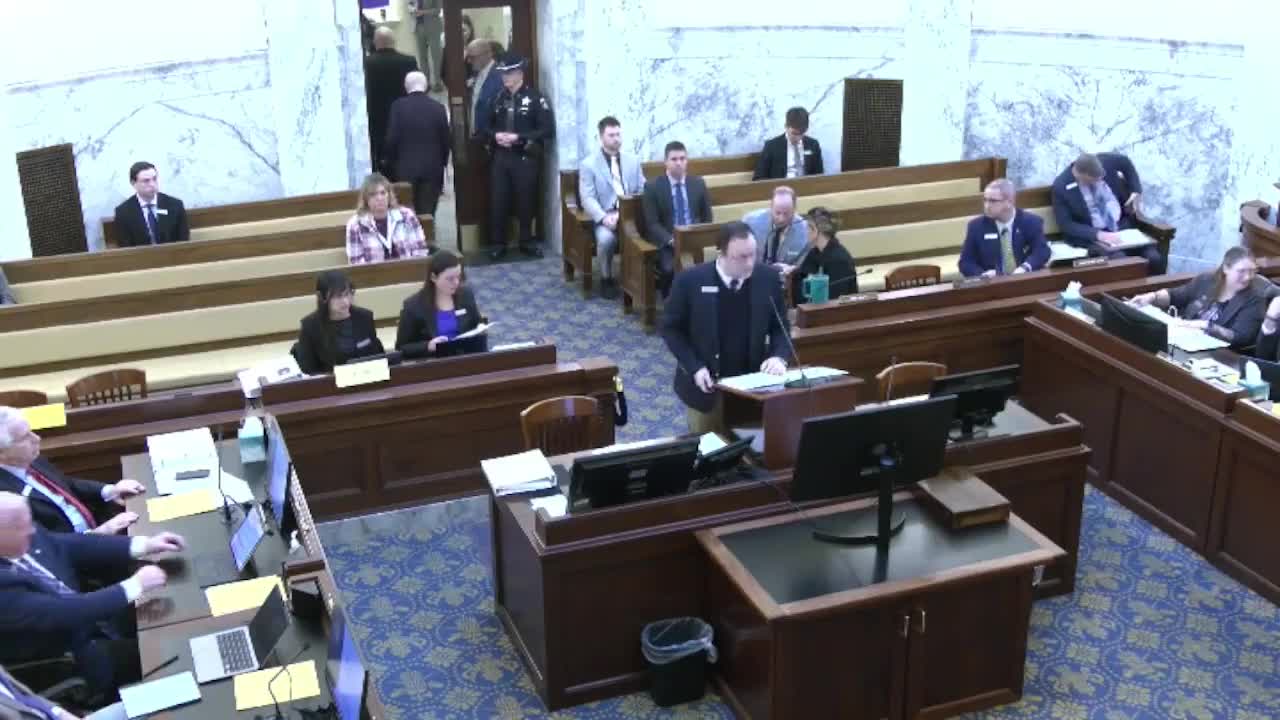
At a Joint Finance-Appropriations Committee hearing the Legislative Services Office presented the Secretary of State’s budget and enhancement requests and Secretary Phil McGrane and staff answered committee questions about the voter guide, software subscriptions and a proposed one‑time double-fill of a deputy business director.
At a Joint Finance-Appropriations Committee hearing the Legislative Services Office presented the Secretary of State’s budget and enhancement requests and Secretary Phil McGrane and staff answered committee questions about the voter guide, software subscriptions and a proposed one‑time double-fill of a deputy business director.
Why it matters: The Secretary of State’s office administers elections, business filings and other public records. The requests would create or add to ongoing base costs (notably for a voter guide and software-as-a-service subscriptions) and a one-time overlap to train a deputy director before the current deputy retires.
LSO analyst Christopher Lahoset said the office has an FTP cap of 35.5 and, as of late August, about a half‑position vacancy. The office’s FY24 appropriation included a one‑time $10,000,000 election system upgrade; about $2,500,000 of that has been spent and the remainder was reappropriated into FY25. Lahoset said the office’s FY26 requests include an ongoing $400,000 for a statewide voter guide (estimated $300,000 mailing and $100,000 printing), ongoing software subscription funding (about $287,100 for campaign finance and lobbyist software and other subscriptions), $20,000 ongoing for IT training, and a one‑time $26,000 payment tied to an American Association of Motor Vehicle Administrators upgrade.
Secretary McGrane described the voter guide as his top policy priority and said voters have repeatedly asked for a mailing that includes candidate information. "My number 1 policy, initiative since I took office has been a voter guide," McGrane said. He told the committee the voter guide would be mailed to all Idaho households for primary and general elections; Lahoset explained the fiscal-year timing means the guide request appears annually in the budget.
McGrane also discussed the office’s recent IT projects funded from the previous one‑time appropriation: campaign finance and lobbyist reporting upgrades and the Vote Idaho website. He said the office had spent just under $2.9 million of the $10 million package, has an RFP underway for the election management system, and is evaluating bids that range roughly from $5.6 million to $9.4 million. He emphasized that the office generates fee revenue and handles high transaction volumes—Lahoset said the office processed about 800,000 business filings last year and handled roughly 70,000 phone calls.
Committee members raised questions about recurring costs for the DMV database access fee (a one‑time federal upgrade fee of about $26,000 and ongoing subscription fees), frequency of the voter guide mailing, and the double‑fill proposal for the deputy business director. McGrane said the DMV fee is a one‑time charge tied to a federal upgrade and that the office pays an ongoing subscription (about $1,100 quarterly) for DMV lookups.
No committee action or vote was taken during the hearing; McGrane closed by summarizing the office’s IT work and thanking the committee for investment in the prior one‑time appropriation.