Get Full Government Meeting Transcripts, Videos, & Alerts Forever!
Get email alerts on the State Administration topic
No spam. Unsubscribe anytime.
Senate Finance sends bill to floor to let Administrative Hearings bill through Statewide Cost Allocation Plan
Summary
The committee voted unanimously to send Senate Bill 1116 to the Senate floor with a "do pass" recommendation. The bill would add the Office of Administrative Hearings to the Statewide Cost Allocation Plan (SWICAP) so the office can recover allowable costs into the general fund; funding and capacity questions were noted for later consideration.
The Idaho Senate Finance Committee voted to send Senate Bill 1116 to the Senate floor with a "do pass" recommendation after hearing from the Division of Financial Management on the bill's purpose and mechanics.
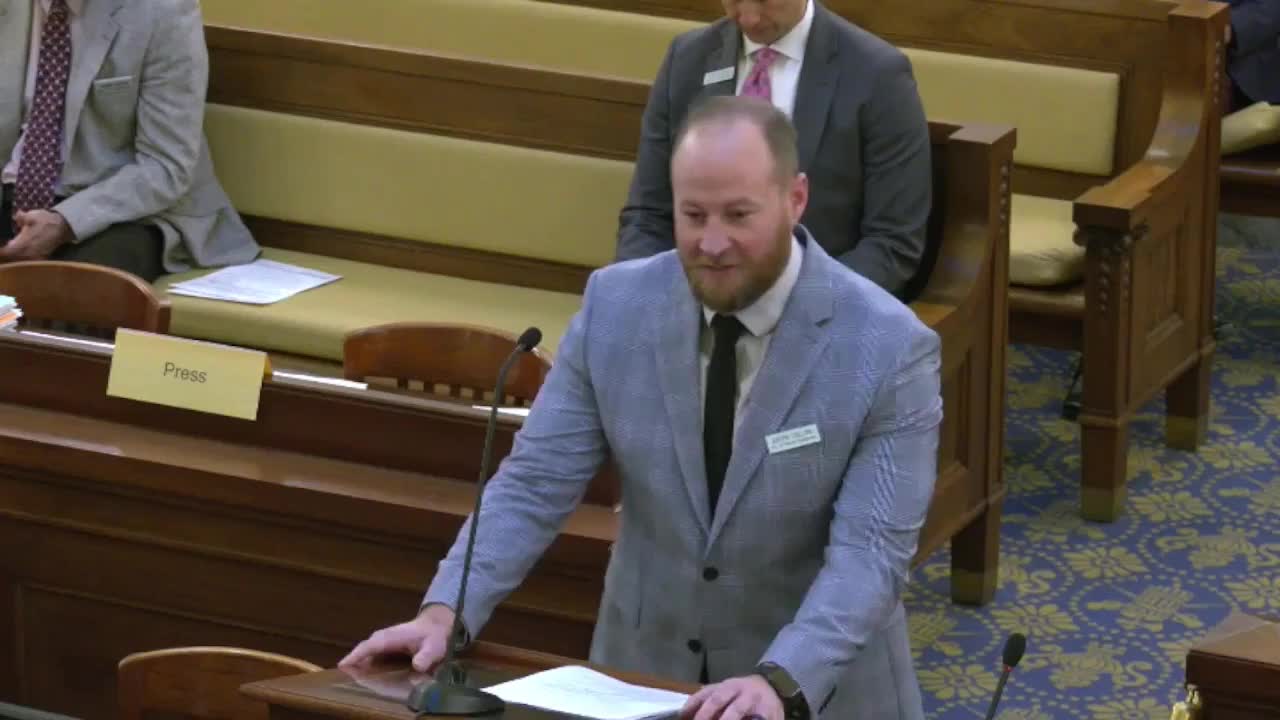
Justin Collins, state financial officer with the Division of Financial Management, told the committee the bill would allow the Office of Administrative Hearings to recoup allowable costs into the general fund through the Statewide Cost Allocation Plan (SWICAP). Collins outlined three primary elements: adding the Office of Administrative Hearings to the group of agencies for which DFM bills once budgets are passed, repealing language in "60 seven-fifty two-eighty 5" tied to the current billing structure, and adding language directing the Office of Administrative Hearings to work with DFM to include billings in the SWICAP budget for the following year.
Senator Janie Ward Engle King moved to send the bill to the Senate floor with a do-pass recommendation; the motion was seconded by Senator Harold (listed in transcript as "Harold Dearke"). The committee then conducted a roll-call vote; the transcript records all members voting in the affirmative (ten yes votes) and the committee chair stated the bill will advance to the Senate.
Committee members asked clarifying questions about how SWICAP billing works and whether the Attorney General's Office has capacity to provide legal services for agencies. Collins described SWICAP as a mechanism where agencies that provide billable services (for example, the Attorney General's Office) track those hours, submit them to DFM, and DFM allocates costs to recipient agencies and builds the amounts into next year's SWICAP budgets; the transcript records Collins deferring to the Attorney General on questions about AG office capacity to provide services.