Get Full Government Meeting Transcripts, Videos, & Alerts Forever!
Get email alerts on the Health And Welfare Reorg topic
No spam. Unsubscribe anytime.
Idaho Health and Welfare reorganizes leadership, aligns budget structure with operations
Summary
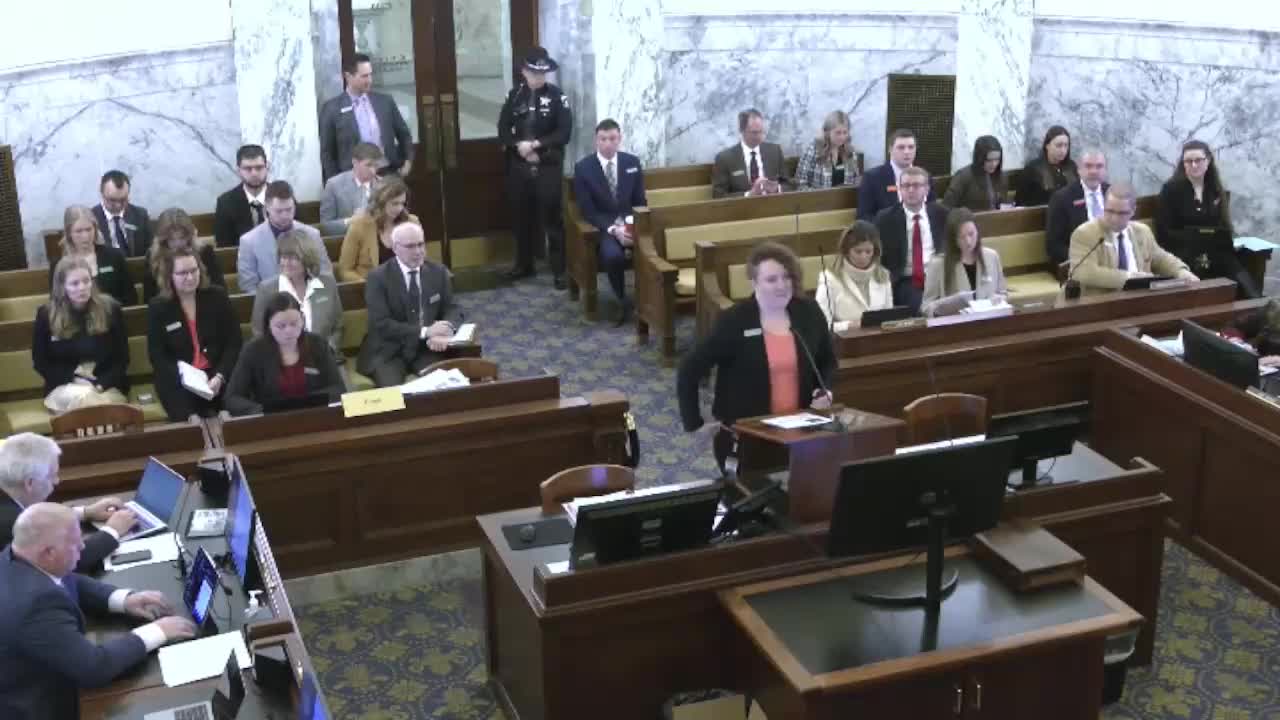
Director Alex Adams and Legislative Services analysts told the Joint Finance-Appropriations Committee on Jan. 13 that the Idaho Department of Health and Welfare reorganized its executive structure to improve accountability and align budget units with where the work is done.
Director Alex Adams and Legislative Services analysts told the Joint Finance-Appropriations Committee on Jan. 13 that the Idaho Department of Health and Welfare (DHW) has reorganized its executive structure and is seeking legislative alignment of budget units with where the work actually happens.
Adams said the reorganization creates clearer lines of sight and accountability for a large agency that administers Medicaid, child welfare and other programs. He told the committee: "budgets are laws, not suggestions," arguing the department needs daily budget oversight and a management structure that supports results.
The reorganization moves the department from three deputy directors to four and elevates the Medicaid administrator to a deputy director who retains Medicaid duties. Behavioral health staff that now operate through Medicaid managed care will be grouped under Medicaid. Several internal renamings and program moves were described by Alex Williamson, budget and policy analyst with the Legislative Services Office (LSO): support services becomes Division of Operations; public health and self‑reliance are grouped as Health and Human Services; and a new internal division named Child, Youth and Family Services will cover youth safety and permanency, family/community partnerships and early learning and development.
Adams and LSO said the proposed budget changes reflect existing administrative practice rather than creating new functions. Specific program moves described include extended employment services (EES) and community developmental disabilities staffing being aligned under Medicaid because Medicaid currently administers those staff functions. LSO said the agency asked that Idaho Child Care Program (ICCP) be re‑appropriated under Early Learning and Development with its own appropriation unit to improve tracking.
Adams also described changes to departmental executive roles: creation of a chief financial officer position reporting directly to the director, a chief of legislative and regulatory affairs, and a program manager for communications and customer experience. He named several leadership appointments presented to the committee: Misty Lawrence as CFO, Michael Pearson as Director of Operations, Jared Larson leading legislative and regulatory affairs with Sage Dixon reporting to him, Monty Pro as the child welfare lead, and John Bernasconi overseeing welfare operations. LSO analyst Williamson provided the org chart the committee reviewed.
Adams said the reorganization is intended to improve accountability and operational alignment: consolidating lines that administer programs under the staff who actually perform the work will make budgeting and oversight more transparent to JFAC.
Nut graf: Why it matters
The reorganization affects how multi‑billion‑dollar appropriations are administered: LSO told the committee Medicaid accounts for about 87% of DHW’s budget, and the department’s structure influences where budget authority, reporting, and staff sit. By aligning budgeted program units with current administrative practice, DHW and LSO said the legislature will be better able to match appropriations to operational responsibility.
Details and context
- LSO said DHW is authorized roughly 3,199.4 full‑time‑equivalent positions (FTP) and typically runs near a 94% filled rate over five years, though vacancies fluctuate. LSO also noted turnover and vacancy figures differ by division. - The agency told the committee that some moves (for example, moving the EES budget under Medicaid) are not changes in how services are delivered but are simply aligning appropriation lines to the staff currently administering the program. - Adams said he accepted organizational recommendations from the prior interim director and implemented many leadership changes within his first year. - Adams said the department has pursued a hiring strategy to bring experienced state government managers into key seats to improve operations.
What the committee asked
Committee members asked about whether the reorganization reflected philosophical as well as administrative choices, how the budget mechanics will be handled (LSO said changes are grouped as base adjustments and would be considered in program maintenance decisions), and whether particular programs (for example, EES) would see operational changes. Adams and LSO said the primary intent is budget‑to‑work alignment and that programmatic delivery is not intended to change as part of these moves.
Next steps
LSO told JFAC the governor’s budget and the agency’s proposed organizational alignment will be before the committee during program maintenance votes scheduled later in the session. Adams said he expects to return to the committee multiple times during January–March hearings for division‑level detail.
Ending
Committee members thanked the director and LSO. The reorganization was presented as a transparency and accountability measure; the committee will consider the corresponding budget realignments as part of upcoming program maintenance and enhancement decisions.