Get Full Government Meeting Transcripts, Videos, & Alerts Forever!
Get email alerts on the Vocational Rehabilitation Audit topic
No spam. Unsubscribe anytime.
Audit finds Idaho Division of Vocational Rehabilitation lacked controls; federal agency labeled it high‑risk and state faces multimillion‑dollar decisions
Summary
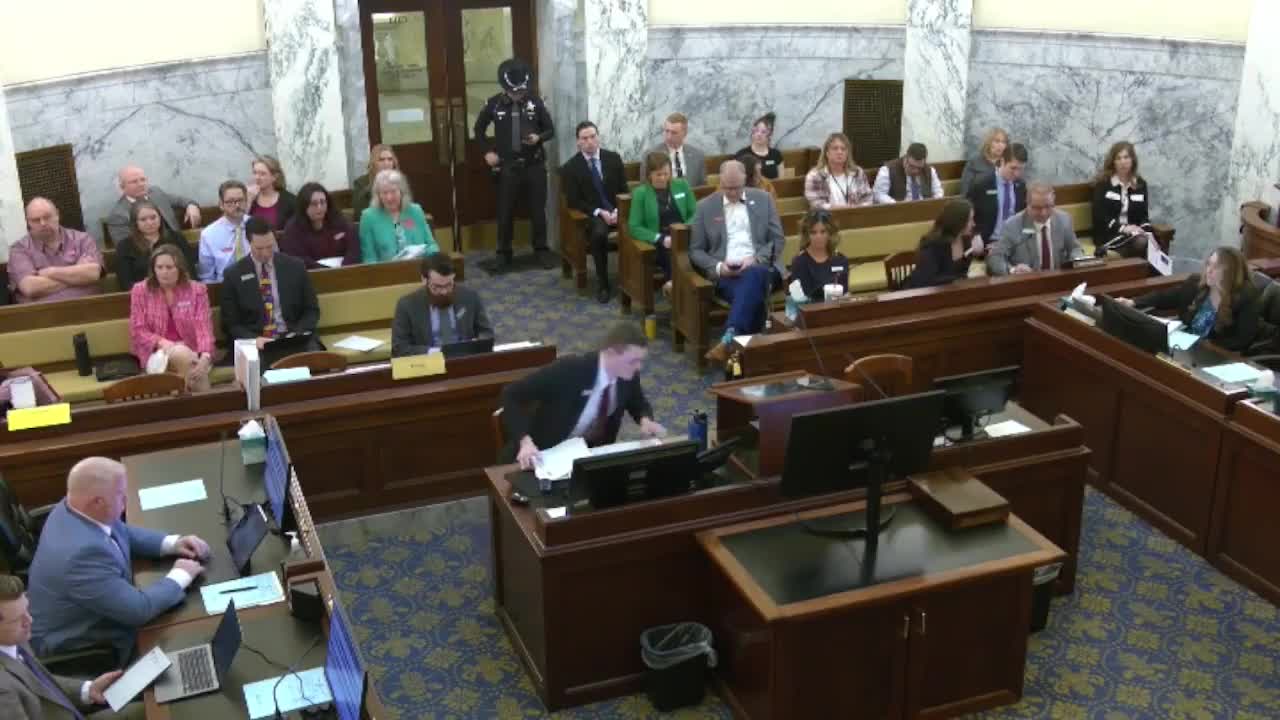
Legislative auditors told Idaho’s finance committee on Feb. 24 that the Division of Vocational Rehabilitation lacked adequate internal controls and accurate federal reporting, prompting a federal high‑risk designation and a multimillion‑dollar remediation effort that now requires state matching funds and could lead to federal remedies.
An accountability review presented to Idaho’s Joint Finance‑Appropriations Committee on Feb. 24 found that the Division of Vocational Rehabilitation (IDVR) did not maintain adequate procedures and control activities to ensure appropriation compliance, and that deficiencies in case management, financial reporting and obligations tracking exposed the state to a potentially large federal repayment or other enforcement action.
April Renfro, principal auditor with the Legislative Services Office audits division, told the committee the audit — issued Jan. 13, 2025 — identified three broad deficiencies: failure to maintain internal controls to ensure compliance with appropriation laws for FY 2024, an insufficient financial management system that did not align commitments with the correct appropriation period, and inaccurate or unsupported federal financial reporting. The report followed a legislative supplemental request from the division and a period of federal scrutiny.
Why it matters: The Rehabilitation Services Administration (RSA), the federal grantor for state vocational rehabilitation grants, designated IDVR a high‑risk grantee on May 3, 2024, imposed specific conditions under 2 CFR 200.208 and required corrective action. The governor recognized a $10 million federal "reallotment" in September 2024 (a noncognizable adjustment), but those federal funds require state matching dollars to be spent. The division is requesting $2.7 million in state matching funds for FY 2025; the governor recommended an additional $1.7 million supplemental to cover services already provided that RSA may deem unallowable.
What auditors found
Renfro told lawmakers that IDVR’s case‑management system did not communicate consistently with the state fiscal system and commitments were not tracked in a way that clearly matched appropriation years and awards. That mismatch, combined with delays in billing and reconciliation, created a backlog of invoices and commitments that, by FY 2024, exceeded amounts appropriated for trustee and benefit payments. The review covered federal grants that span two federal fiscal years plus a 120‑day closeout period, which complicates proper period‑of‑performance accounting, she said.
The audit cited deficiencies in federal reporting: IDVR’s quarterly and semiannual RSA‑17 reports included unliquidated obligations and other items the agency stated were “the best information the agency has at this point in time,” language Renfro flagged as indicating low confidence in the accuracy of reports to the federal grantor.
Federal designation and financial mechanics
Renfro explained that RSA’s high‑risk designation triggered specific conditions that can include additional reporting, prior approvals, monitoring and technical assistance. She said RSA has authority under federal rules to seek repayment or apply other remedies if a grantee cannot substantiate costs and that the agency may require a proportionate return of funds tied to the degree of harm to the federal interest.
Governor’s noncognizable adjustment and the matching requirement
Budget analyst Brooke Dupree summarized the appropriation history and explained the governor recognized a noncognizable adjustment (the $10 million in federal reallotment) in September 2024 after RSA offered reallocated federal funds. Dupree and Renfro stressed that although those funds were added, the federal grant requires state matching dollars (the state share is about 21.3% per presentations), which is why IDVR asked the Legislature for a $2.7 million one‑time general‑fund supplemental to match the $10 million. Dupree said the governor recommended the $2.7 million supplemental and also recommended an additional $1.7 million one‑time general fund to cover services IDVR expects RSA to deem unallowable for federal reimbursement.
Contracting and consultant work
IDVR signed a professional services contract Aug. 12, 2024, for $499,999 to assist in corrective actions; the contract was later amended in November 2024, increasing the value by $1.9 million to approximately $2.4 million and extending the term into late 2025. Renfro said the amendment expanded the scope and the contractor’s tasks included business‑process mapping, case‑management reconfiguration, forensic accounting of period‑of‑performance issues, federal financial‑report analysis and preparation and creation of a grants‑management manual. The contractor is based out of Mississippi, and the division has paid roughly $900,000 to date; those consultant costs have been charged against federal grant funds and will require state match as well if the federal funds are expended.
IDVR leadership and committee exchange
Interim IDVR director Judy Taylor said she became interim director June 15, 2024, and described steps taken since arriving, including engaging technical assistance, contracting for corrective work, and working to restate and correct prior reporting. Taylor told the committee the initial contract addressed a technical case‑management problem that prevented correct period‑of‑performance reporting; she said the contractor is “one of the few people in the nation that know how to do that.” Taylor said the expanded contract responded to additional federal scrutiny after IDVR submitted extensive documentation in support of a draw request and RSA found many items unallowable.
Auditor and agency next steps
Renfro said the audit recommended IDVR design and implement procedures to monitor commitments associated with individual plans for employment and to ensure compliance with annual appropriation amounts, and to work with the Legislature on longer‑term solutions to rising costs and participation. Renfro noted the Legislative Services Office added the matter to the state single audit work and that a forensic accounting review will examine activity back to 2019 (the audit’s fiscal scope), but she cautioned final federal determinations and remedies will depend on RSA’s review and any corrective action outcomes. The committee heard that the forensic review and federal processes could take months; no firm end date for final federal decisions was available during the hearing.
Committee questions and concerns
Lawmakers pressed for more precise estimates of potential liabilities. Taylor and Renfro said some preliminary failure‑rates were available from early documentation reviews (Renfro noted contractor update materials showed about a 20% disapproval rate in a sample), but Taylor said specific figures varied by program and draw; she told the committee a single draw request for Pre‑ETS (pre‑employment transition services) had a roughly 75% failure rate for the documentation submitted for reimbursement and that IDVR estimated $1.7 million in potentially unallowable costs for the remainder of FY 2025. Taylor and auditors said a forensic audit would be used to quantify unresolved question costs and the federal grantor would then determine remedies.
What the committee must decide
IDVR’s requests in the budget books presented to the committee included a $2.7 million one‑time general‑fund supplemental (state match for the $10 million reallotment), and a $1.7 million one‑time general‑fund supplemental the governor recommended to cover services already rendered that RSA may deem unallowable. The committee did not vote during the hearing; members asked for additional detail and follow‑up from the agency and the audits division before deciding on supplemental appropriations or other budget actions.
Ending note
Auditors and agency officials told lawmakers the situation is complex and evolving. Renfro warned that if IDVR fails to satisfy corrective actions RSA may take further enforcement steps, which can include prior approvals, additional monitoring, or, in extreme cases, financial remedies. Lawmakers said additional oversight hearings and analyses may be necessary before the committee finalizes decisions on supplemental funding or long‑term reforms.