Get Full Government Meeting Transcripts, Videos, & Alerts Forever!
Get email alerts on the Aging Services Budget topic
No spam. Unsubscribe anytime.
Idaho Commission on Aging seeks small ongoing increase, presses to spend remaining ARPA before federal deadline
Summary
The Idaho Commission on Aging outlined use of federal ARPA funds and requested modest ongoing general fund increases to cover inflation and meal program needs while saying most ARPA spending was one-time and would not create ongoing obligations.
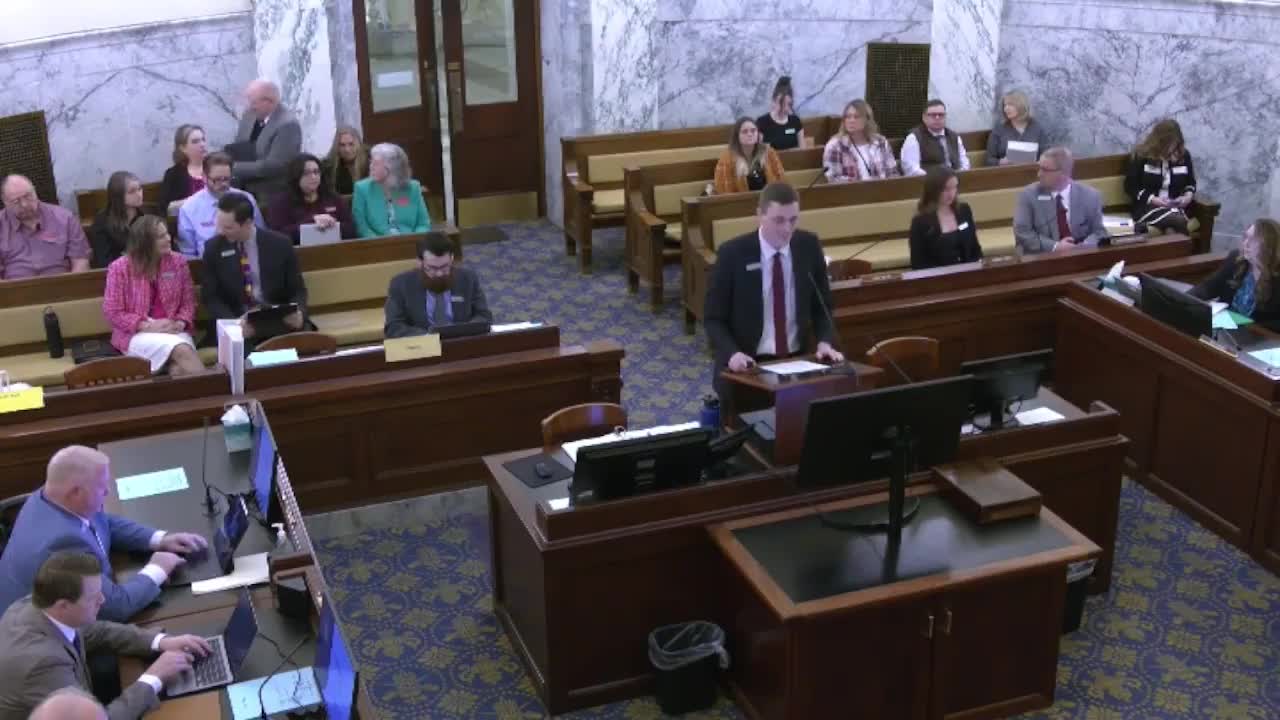
The Idaho Commission on Aging told the Joint Finance-Appropriations Committee on Feb. 24 that it has used federal American Rescue Plan Act (ARPA) awards for one-time modernization and service enhancements and is asking for a modest ongoing general-fund increase to cover inflationary costs.
In a presentation, Colin McGurkin, a budget and policy analyst with Legislative Services, said the commission implemented programs under the federal Older Americans Act and the Idaho Senior Services Act and routed most direct services through six local Area Agencies on Aging (AAAs). He told the committee the commission’s FY 2024 expenditures totaled about $16.7 million, with roughly 88% of that — about $10.4 million in federal funds and $4.2 million in general-fund trustee and benefit payments — flowing to AAAs for direct services such as meals, transportation and caregiver assistance.
Why it matters: The commission is asking lawmakers to approve a relatively small ongoing boost to the base to preserve service levels as costs rise and to authorize one-time draws from remaining ARPA balances before those funds expire on Sept. 30, 2025.
The commission’s recent ARPA activity and budget requests
McGurkin summarized five years of the commission’s financing, noting repeated use of one-time federal ARPA appropriations from FY 2022 through FY 2024 (which he said total about $7.4 million in actual ARPA expenditures). He said the commission requested $1.8 million in FY 2025 to use remaining ARPA funds before the federal deadline.
McGurkin told the committee that in FY 2024 the commission expended about $16.7 million overall and that the agency’s base budget rose from about $13.6 million in FY 2021 to roughly $16.7 million going into FY 2026, an increase driven in part by several enhancements.
Judy Taylor, director of the Idaho Commission on Aging, described services funded with ARPA and other one-time appropriations, including meal programs, adult protective services training, targeted caregiver education and a pilot to expand the public-health workforce supporting unpaid caregivers of people with dementia. Taylor said the commission also received a one-time federal appropriation of about $5.2 million in FY 2024 tied to ARPA drawdowns and an additional $150,000 from the CARES Act for adult protective services projects.
Taylor emphasized that the ARPA dollars were spent on one-time modernization and program enhancements and, she said, “none of that total results in ongoing obligations or loss of expected services when ARPA grants expire.”
Specific budget items in the request
McGurkin and Taylor listed the commission’s FY 2026 request and FY 2025 actions. The agency’s FY 2026 request (and the governor’s recommendation) includes an ongoing general-fund increase of $162,600 to cover inflationary costs; McGurkin said roughly $155,000 of that is for a 3% increase in trustee and benefit payments to AAAs, and $7,600 is for a 2% increase in commission operating expenditures (training materials and travel). The commission also requested $500,000 in one‑time federal funds to pay final ARPA invoices (about $450,000 to AAAs for meal programs, caregiver assistance, modernization projects and related services, and $50,000 to cover staff time and limited operating expenses tied to closing out ARPA-funded work).
Taylor said the commission previously added positions and targeted general-fund amounts in recent years, including a financial specialist (1 FTE and about $76,700 ongoing in FY 2025) and $805,000 from the general fund in FY 2025 for nutrition program funding targeted to reduce wait lists and expand meals. She said FY 2023 enhancements included roughly $720,000 from the general fund for caregiver supports and one FTE plus $78,200 for a training specialist.
Committee questions and clarifications
Senator Cook asked whether funds are being spent specifically on Alzheimer’s and dementia services; McGurkin said he did not have a specific figure and would follow up. Taylor outlined caregiver supports paid through the Older Americans Act and state funds: respite, support groups, education and a state-funded high‑risk caregiver pilot focused on caregivers of people with memory loss. She described using community health workers embedded at AAAs to conduct in‑home assessment and planning for high‑risk caregivers and said those jobs were sustained by available funding.
Representative Miller and others asked about personnel spend rates and the commission’s high percentage of filled FTEs relative to expenditures; McGurkin explained federal appropriations and reversion patterns after large ARPA awards contributed to apparent underspending in personnel lines in some years. Vicki Janzick, the commission project manager and fiscal lead, told the committee the commission direct-bills federal grants for staff time and asked for $25,000 of ARPA funds to allocate administrative costs to the appropriate grants rather than drawing from other federal sources.
Senator Wintrow and other lawmakers praised senior centers and pressed Taylor on caregiver-program gaps and outcomes. Taylor said nutrition was a top priority and reported the commission had eliminated the home-delivered meal wait list as of that day after prior appropriations increased meal rates and reduced wait lists.
What the agency asked the committee to do
Taylor closed by asking the committee to support the commission’s budget request, saying the agency’s spending plan “reflects that strategic planning” and that “all appropriated funds will be used to advance our mission, invested wisely, with outcomes monitored and reported transparently.”
Ending note
Committee members asked for follow-up detail on how Alzheimer’s‑related funds were being spent and for a breakdown of what is in the base for Meals on Wheels and other nutrition supports. Taylor agreed to provide additional information to the committee by email.