Get Full Government Meeting Transcripts, Videos, & Alerts Forever!
Get email alerts on the State Liquor Division topic
No spam. Unsubscribe anytime.
Idaho Liquor Division asks JFAC for store, IT and accessibility funding as turnover falls but sales slide
Summary
The Idaho State Liquor Division outlined FY2024 revenue and FY2026 funding requests to the Joint Finance-Appropriations Committee, citing distribution formulas that returned roughly $118.3 million to state and local funds, ongoing retailer staffing turnover and requests for store upgrades, IT modernization and website ADA remediation.
The Idaho State Liquor Division told the Joint Finance‑Appropriations Committee that it distributed about $118.3 million in FY2024 and is seeking a mix of ongoing and one‑time funding for store improvements, network security and accessibility upgrades.
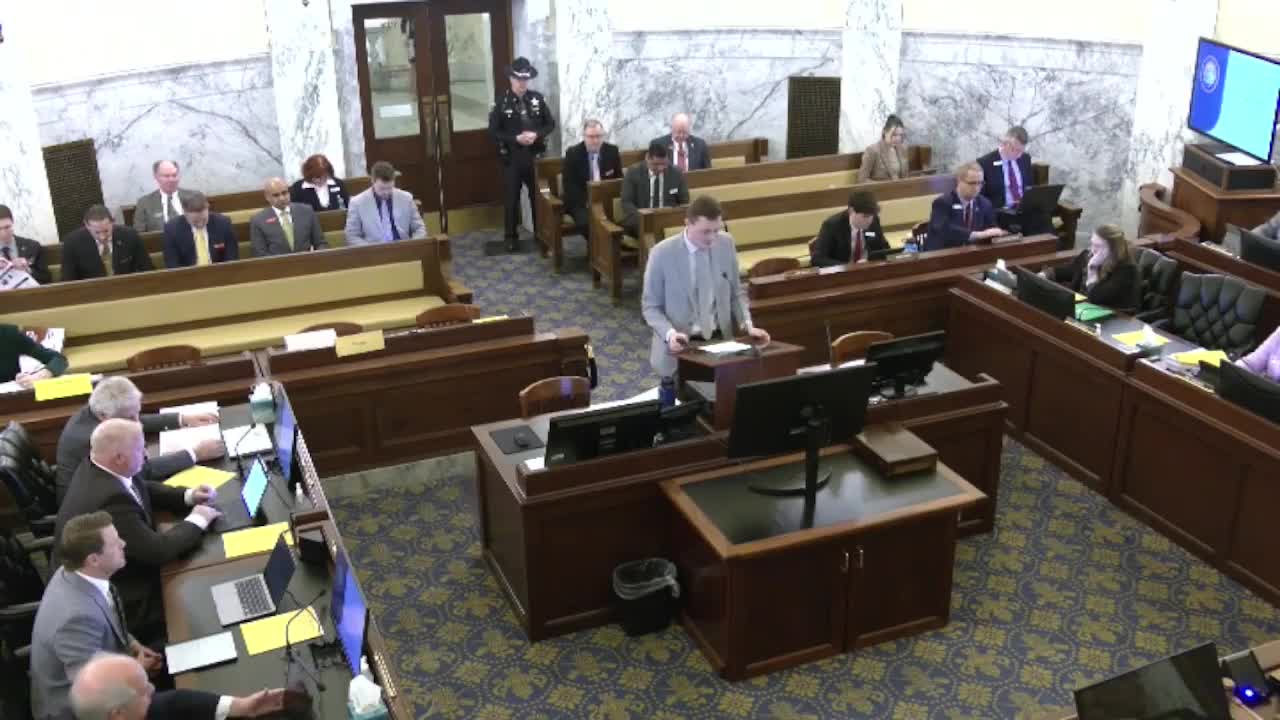
The division presentation, delivered by Kellen McGurkin, budget and policy analyst with the Legislative Services Office, and Director Andrew Arulanandam, said FY2024 distributions were determined under Idaho law and included a 2% surcharge that produced about $6.7 million for the court services fund and a larger split that sent roughly $56.3 million to cities, counties and magistrate courts. The division reported $319.1 million in total sales for FY2024, with reported net income of about $116.6 million.
Why it matters: The Liquor Division is a revenue‑generating state agency whose net income and statutory distributions support courts, cities and the general fund. Requests for workplace pay adjustments, technology modernization and equipment affect the agency’s operations, the reliability of sales and the timing and size of distributions the Legislature relies on.
The division said its FY2026 request totals about $131,400 in ongoing dedicated funds and several one‑time items. Ongoing requests include $57,400 to raise temporary retail staff wages from $15.00 to $15.45 per hour and $72,000 to cover new shrink‑wrap requirements from a new freight contract. One‑time requests highlighted in the presentation include $1.2 million for replacement items (shelving, lighting, flooring, signage and vehicles), $200,000 for 70 firewalls and 70 managed switches for network modernization, and $100,000 to upgrade the agency website to meet Web Content Accessibility Guidelines aimed at ADA compliance.
Director Andrew Arulanandam described the ADA remediation request as based on a consultant review. "There are indeed other items. I don't have the exact list. We did consult with an expert and he gave us a list of items that we would need to upgrade to be in full compliance," Arulanandam said, and added that legal challenges to noncompliant sites nationally motivated a prudent one‑time investment.
Staffing and turnover: The division reported an FTP cap of 257.25, a filled rate of roughly 93% and that it employs about 210 full‑time positions in retail operations plus roughly 185 part‑time store clerks who are not included in the FTP headcount. The division said it has converted part‑time clerk hours to full‑time positions in recent years to reduce turnover. Arulanandam said turnover for temporary store clerks declined from about 140% annually before recent pay changes to roughly 84% after an earlier increase to $15 an hour.
On operations and distributions, the analyst explained that available funds are split so one half goes to cities, counties and magistrate courts and the other half is subject to statutory fixed distributions, transfers to Peace Officer Standards and Training (POST) and then the general fund. The presentation noted a decline in free fund balances from about $38 million in FY2022 to $14 million in FY2024 and attributed part of that decrease to a post‑COVID shift in direct‑to‑consumer sales at higher margins that have since normalized.
The division also described a multi‑year IT modernization plan with prior investments in Cradlepoint cellular routers and a proposal that the Office of Information Technology Services recommended: combining routers with firewalls and managed switches to move stores from DSL/T1 to cellular connectivity. The agency said the new setup is projected to save about $100,000 in upfront hardware costs and reduce monthly expenses by about $10,000 versus a hardwired solution.
Committee members questioned whether the website remediation would truly cost $100,000 and whether incremental pay increases for temporary staff were enough to solve turnover. Tony Grama, chief deputy and CFO of the Liquor Division, clarified that temporary store clerks are state employees who do not automatically receive annual CEC adjustments; the division must request line‑item enhancements to change their pay.
Looking ahead: The director closed by emphasizing the division’s role as a revenue generator and as daily public‑facing ambassadors for the state. He stood for committee questions after the presentation.