Get Full Government Meeting Transcripts, Videos, & Alerts Forever!
Get email alerts on the Professional Regulation topic
No spam. Unsubscribe anytime.
Senate committee advances modest increase to State Bar dues to amending order
Summary
The committee voted to send Senate Bill 10-30 to the fourteenth order for possible amendment; the bill would raise annual Idaho State Bar dues by modest amounts, increases that bar members approved in 2024, and the bar testified the funds will sustain existing operations.
Boise — The Senate Judiciary and Rules Committee voted to send Senate Bill 10-30 to the fourteenth order for possible amendment. The bill would amend Idaho Code §3-409 to increase annual license fees paid by Idaho lawyers to the Idaho State Bar.
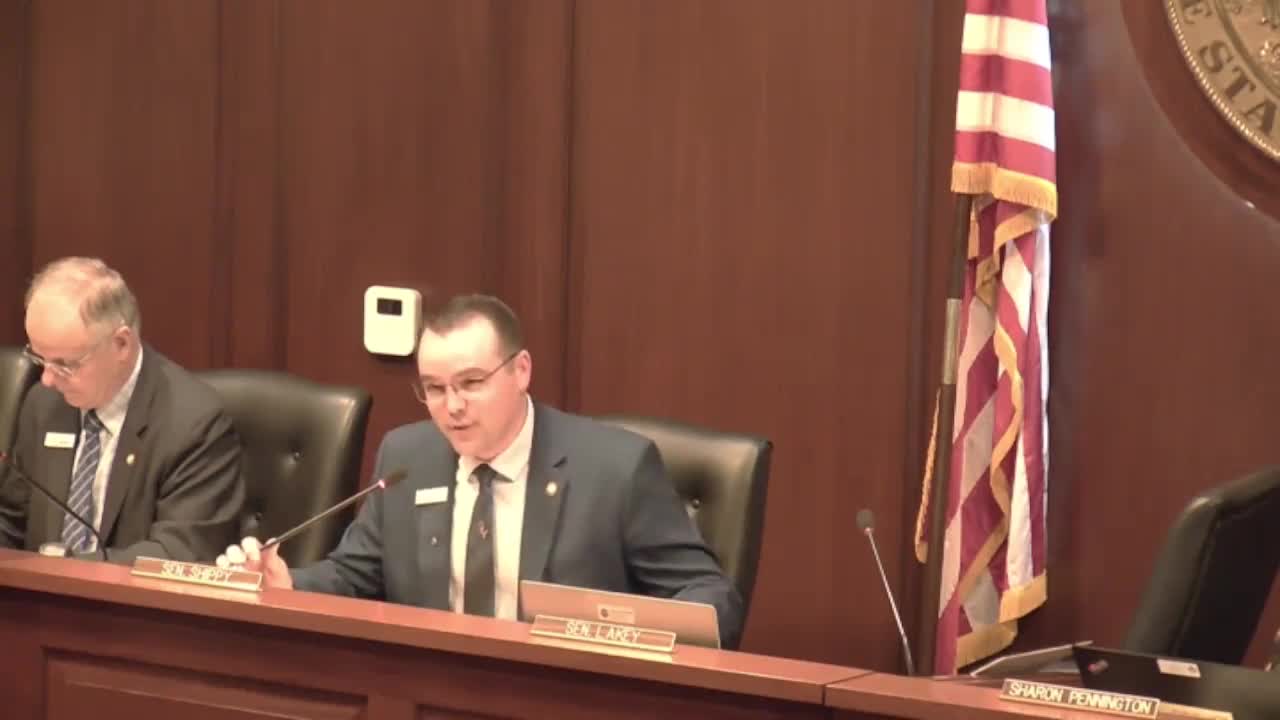
Sen. Todd Lakey, who presented the bill, said the increases are modest and that the State Bar is funded by dues, not the general fund. “These increases range from $10 to $45 a year for 2025 and $10 to $60 in 2026 depending on the attorney category,” Lakey said, noting the last adjustment of fees was in 2011.
Maureen Braley, executive director of the Idaho State Bar, told senators the increase was approved by membership in fall 2024 by a 63% majority and that the additional revenue is intended to fund current operations rather than expand programs. “This bill does propose to amend Idaho code section 3-409 to increase the annual license fees paid by Idaho lawyers to the Idaho State Bar,” Braley said. She asked the committee to send the bill to the fourteenth order to accommodate a small set of technical amendments, including reinstating a senior-membership category inadvertently omitted from the printed bill.
Sen. Foreman moved to send the bill to the fourteenth order for potential amendment; Sen. Ricks seconded. The motion passed by voice vote.
The committee’s action advances the bill to the amending process where clerks and sponsors may refine statutory language before a possible floor vote.