Get Full Government Meeting Transcripts, Videos, & Alerts Forever!
Get email alerts on the Groundwater Management Domestic Wells topic
No spam. Unsubscribe anytime.
Senate advances amended water bill limiting domestic-well exemptions in critical areas
Summary
Senate Bill 10-83 (as amended) passed after lengthy debate. The measure narrows the domestic-exempt well allowance in designated groundwater management and critical areas to household and livestock uses, clarifies local planning compatibility and creates compliance steps for combining domestic uses to protect senior water rights.
Boise — After prolonged debate on March 5, the Idaho Senate passed Senate Bill 10-83 (as amended), a bill that narrows the state’s domestic-well exemption in designated groundwater management areas, critical groundwater areas, and moratorium areas.
Key provisions: The amended bill limits the domestic-well exemption — which previously allowed a homeowner to drill a well and pump up to 13,000 gallons per day for an in-home use and a half-acre of irrigated land without a separate water right — to in-home and livestock uses in certain designated areas. It allows multiple domestic exempt uses to be combined into a single well in those areas, creates notice-and-correct processes for violations with increased penalties for noncompliance, requires compatibility with municipal service areas within one mile, and preserves irrigation water rights with the land after development. The amendments also included measures aimed at protecting water quality and enabling local land-use planning to account for water conditions.
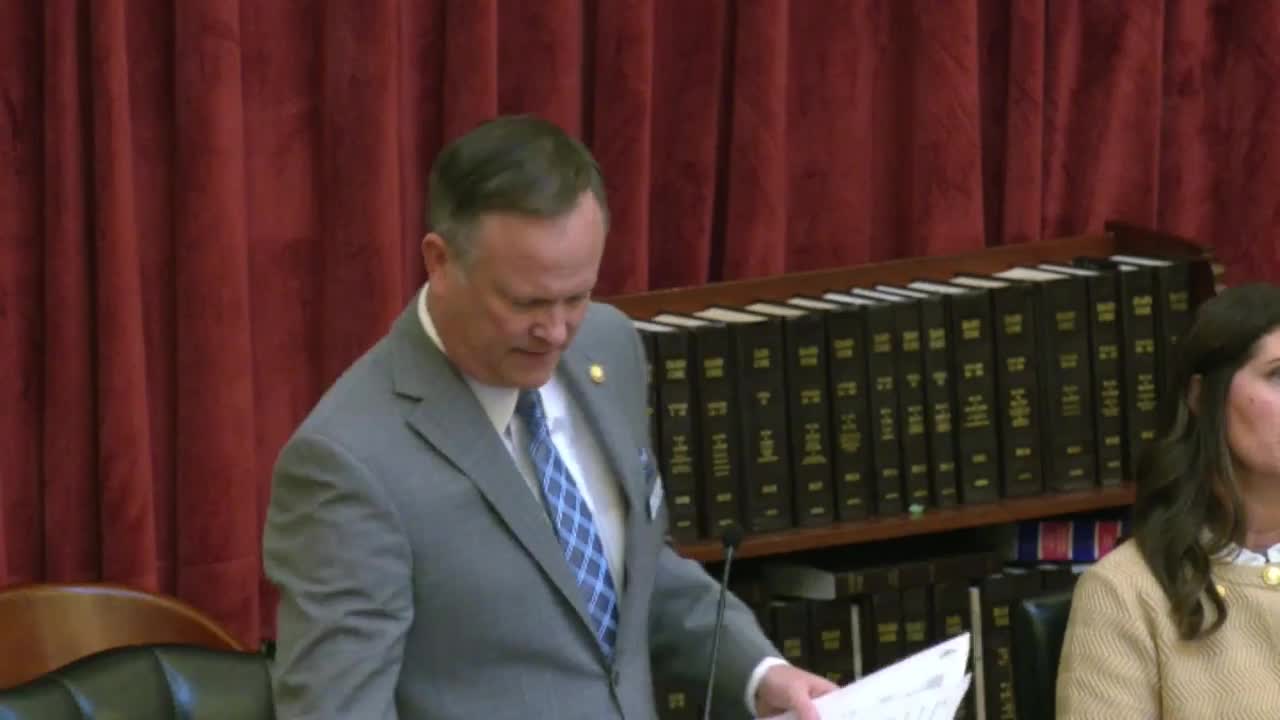
Sponsor remarks: Senator Anthony, the floor sponsor, framed the bill as a response to rapid growth and the cumulative effect of thousands of domestic wells: "Over the last 20 years, nearly 56,000 of those domestic wells ... have been installed in Idaho," he said, describing the need for parity between junior users and holders of prior water rights.
Support and concerns: Supporters argued the bill defends the prior-appropriation doctrine (first in time, first in right) and protects agricultural users from newly drilled domestic wells drawing groundwater without regulation. Opponents urged caution about government intrusion on property rights but some supporters responded that water rights are distinct from land title. Stakeholders noted the bill is the result of multi-year stakeholder work and three years of drafting.
Vote and next steps: The Senate passed the bill on third reading, recorded as 32 yes, 1 no, with 2 absent. The bill will be transmitted to the House. Implementation will involve administrative clarifications and enforcement mechanisms to ensure compliance in designated areas.
Implication: If enacted, the law will change how domestic wells are regulated in constrained groundwater areas, strengthening protections for senior users, adjusting local land-use planning practices, and creating enforcement tools for the state.