Get Full Government Meeting Transcripts, Videos, & Alerts Forever!
Get email alerts on the Capital Punishment Methods topic
No spam. Unsubscribe anytime.
Senate approves bill making firing squad primary method of execution; floor debate is sharp
Summary
House Bill 37 passed the Idaho Senate March 5 to make the firing squad the primary execution method, replacing lethal injection as the first option. The measure drew extended floor debate about humanity, optics, legal risks and operational readiness before passing by a recorded majority.
Boise — The Idaho Senate on March 5 approved House Bill 37, a high-profile and contentious measure that makes the firing squad the primary method of execution in Idaho and keeps lethal injection as a secondary option. Sponsors said the change addresses legal, logistical and drug-supply problems in carrying out capital punishment; opponents called the measure backward and warned of disturbing optics and risks from a botched execution.
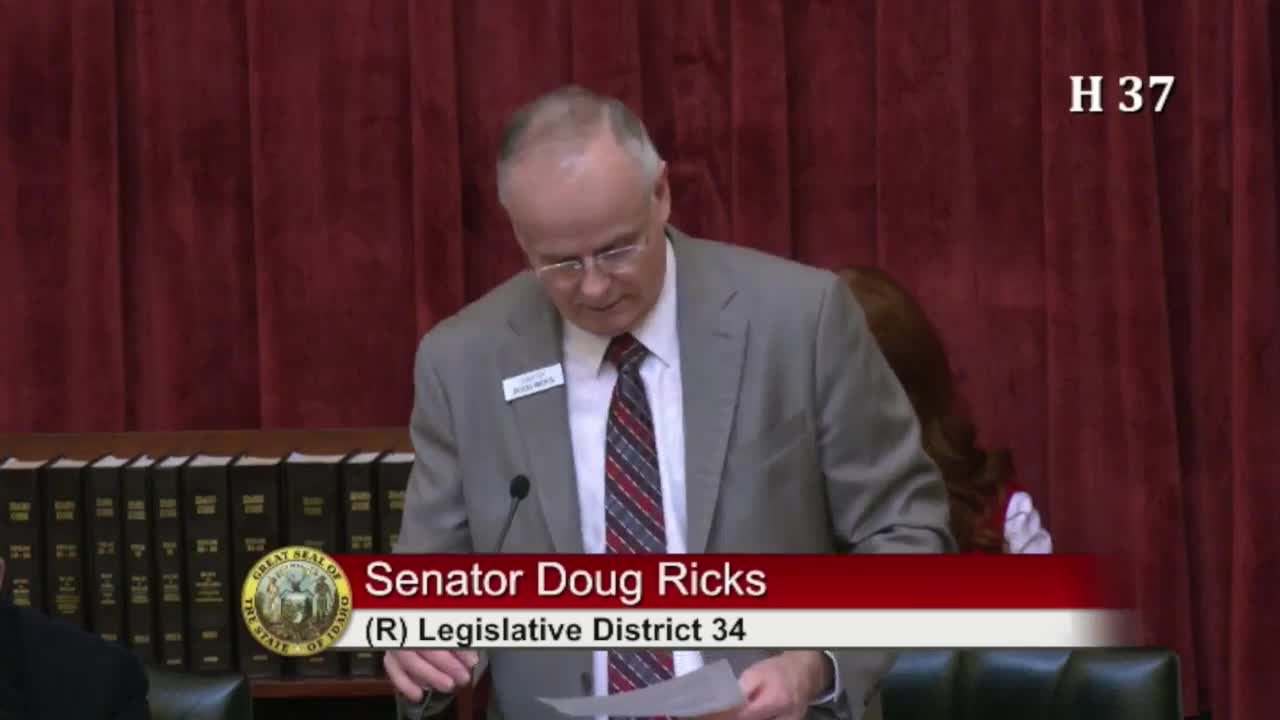
Sponsor remarks: Senator Ricks, speaking for the bill, said the measure responds to repeated legal challenges and difficulty obtaining lethal-injection drugs and described the firing squad as “a more humane way to carry out executions for those on death row because it is quick and certain.” He said the Department of Correction had prepared policies, anticipated needing facility remodeling (previously funded at $750,000) and could complete work without additional appropriation.
Opposition remarks: Several senators spoke at length against the bill. Senator Foreman cautioned that “projecting a piece of metal at 3,200 feet per second ... through the human body is anything but humane,” saying he had witnessed troubling consequences. Senator Wintrow invoked historical concerns, calling the firing squad’s public use "a public spectacle, a vision of terror" and called the choice a move backward. Other senators urged restraint and noted the state’s duty to treat prisoners humanely even when crimes are heinous.
Sponsor and legal context: Proponents argued lethal injection has produced litigation over the risk of prolonged suffering and that drug supply from pharmaceutical manufacturers has become difficult, creating delays. Supporters cited court commentary (including a quoted 2017 opinion by Justice Sonia Sotomayor) suggesting shooting can produce near-instant death in some circumstances. The bill sets an effective date of July 2026 to allow facility work.
Vote and next steps: After extended debate and a series of emotional floor speeches, the Senate recorded 28 ayes with 7 nays on third reading; the bill passed and will be transmitted back to the House. The bill’s passage signals further implementation work by the Department of Correction and potential litigation or public controversy ahead.