Get Full Government Meeting Transcripts, Videos, & Alerts Forever!
Get email alerts on the Statewide Budget Decision topic
No spam. Unsubscribe anytime.
Work group reviews statewide budget decisions: revenue options, health‑insurance cost and employee compensation
Summary
Legislative staff briefed the committee on key statewide decisions that will shape agency budgets: two revenue forecasts, personnel benefit cost adjustments (health insurance), contract inflation, statewide cost allocation, and competing proposals for change in employee compensation (CEC).
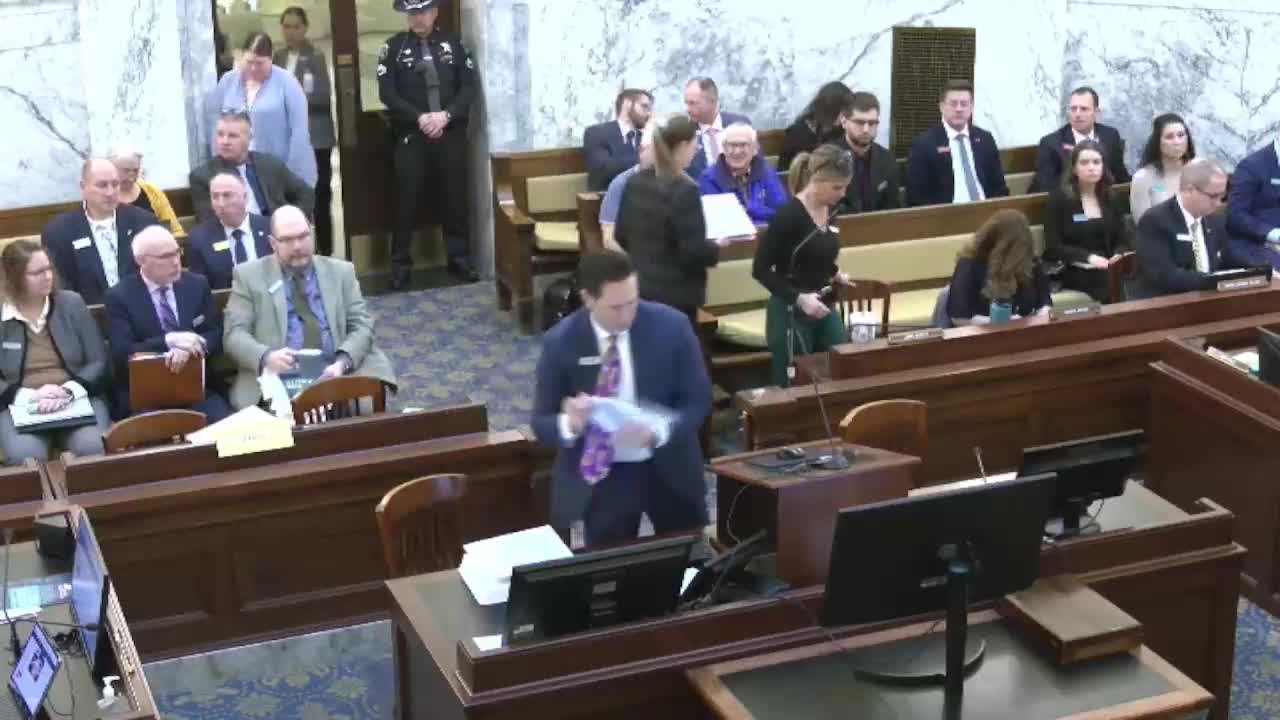
Keith Bybee, Division Manager for Budget Policy Analysis at the Legislative Services Office, briefed the committee on a packet of statewide budget decisions that the Joint Finance work group will consider, including two alternative general‑fund revenue forecasts, personnel benefit cost adjustments, contract inflation, statewide cost allocation and change in employee compensation (CEC).
Bybee described two revenue options: the governor’s revenue baseline for FY2026 presented in the packet at $6.26 billion and an Economic Outlook and Revenue Assessment Committee (EORAC) recommendation of $6.40 billion for use in setting budgets. The packet also proposed a personnel benefit cost adjustment for health insurance; Bybee summarized the governor’s request as increasing the budgeted health insurance amount from $13,000 to $14,300 per eligible employee (a $1,300 increase per eligible employee) and included variable benefit costs to be finalized.
Contract inflation was presented as a relatively small statewide request (about $3.3 million all funds in the packet). Statewide cost allocation changes were estimated to add approximately $5.5 million all funds (about $3.6 million general fund) with the largest increases shown for the State Controller and the Office of Information Technology Services in that cost allocation calculation.
The most discussed item was the proposed change in employee compensation (CEC). The governor’s recommendation in the packet was the equivalent of a 5% increase (or a $1.55 per hour equivalent for eligible state employees), plus salary schedule shifts for specific pay schedules, and a 5%‑equivalent increase for public‑school support units. Bybee gave consolidated totals in the packet: the governor’s CEC package was shown as roughly $179.7 million statewide ($91.8 million for the general‑government merit component, $4.3 million for schedule shifts and $83.5 million for public schools). Bybee also presented the CEC committee’s alternative estimate at about $174.7 million statewide (using a $1.55 per hour approach) and warned members that some small adjustments were still being reconciled in the database.
DFM director Laurie Wolf and members asked for and pledged technical follow‑up. Senator Ward Engelking and other members emphasized concern for highly skilled, highly paid state employees and signaled interest in alternative ways to direct compensation. Committee staff told members they plan to take formal votes on statewide decisions later in the week (the packet and Bybee’s remarks said votes were planned Thursday and program maintenance work would follow). Bybee and staff said they would circulate updated, reconciled numbers before those votes.
Ending: Committee members asked staff for more detailed calculations and impacts by agency so they can judge the distributional effects of any CEC choice before Thursday’s votes.