Get Full Government Meeting Transcripts, Videos, & Alerts Forever!
Get email alerts on the Agricultural Research Extension topic
No spam. Unsubscribe anytime.
University of Idaho agricultural research and extension outlines requests, highlights Parma facility and rural digital outreach
Summary
The Joint Finance-Appropriations Committee heard the University of Idaho’s Agricultural Research and Extension Service present its FY2026 requests, including a viticulture and small-fruits research faculty request, facility maintenance needs, and continued work on rural adult computer-literacy projects tied to ARPA and potential FCC funding.
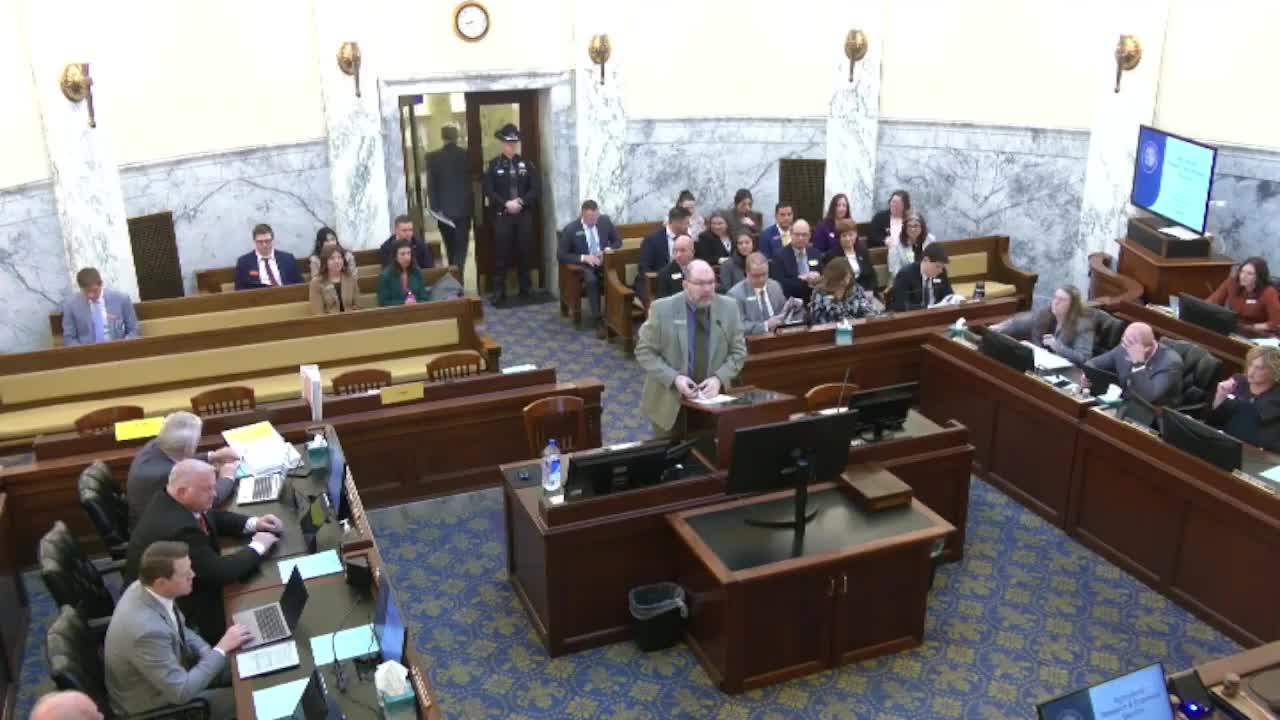
The Joint Finance-Appropriations Committee received a Feb. 10 briefing on the University of Idaho’s Agricultural Research and Extension Service base budget and FY2026 requests, with college leaders highlighting new faculty needs, recent facility investments and expansion of extension digital-literacy work in rural communities.
Kevin Campbell, budget and policy analyst with the Legislative Services Office, summarized the service’s statewide footprint—research and extension presence in 42 of Idaho’s 44 counties and three recognized tribal communities, 10 research centers with access to over 14,000 acres, and a current full-time-equivalent count near 341.3 FTP.
Michael Perella, dean of the College of Agricultural and Life Sciences (CALS), told lawmakers he is retiring in June but praised recent legislative support for new facilities and faculty and described the college’s research and extension role. “Idaho agriculture contributes about almost 20% of the total economic output of the state,” Perella said, highlighting the sector’s statewide economic importance.
The service requested $157,900 ongoing from the general fund for a viticulture and small-fruits research faculty position aimed at disease prevention, water and pest management, and post-harvest storage practices for grapes and small fruits. The service also requested $250,100 to cover part of building maintenance costs at the Idaho Center for Agriculture, Food, and the Environment in Parma, a collaborative facility with Idaho’s dairy industry.
Campbell and Perella detailed recent and earlier appropriations: FY2024 appropriations included funding for new faculty in animal and plant sciences and agricultural engineering; FY2025 included funds for Parma research-laboratory maintenance, 2 new faculty positions in irrigation and forestry and a $142,000 ARPA appropriation supporting broadband-related adult computer-literacy training. The division reported $564,200 in additional CEC funding in the FY2025 enhancements bill.
Perella described extension’s role beyond production agriculture, including community and family programs. He said extension’s outreach reached more than 450,000 face-to-face contacts with Idahoans last year and engaged over 75,000 youth in 4‑H programming. “Year after year, our college ranks among the 25 best colleges for agricultural sciences in America,” Perella said, noting the college’s national research reputation and recent new laboratories.
Committee members asked for clarification about the adult computer-literacy work funded with ARPA dollars and how the program is tied to broader federal grants. Perella said the college’s Western Center for Rural Development has pursued and received competitive federal funding: a proposal tied to an FCC call has been selected among 24 national projects for a potential $13 million award to expand digital-literacy work, pending final federal action. He said the program integrates two-year schools, other four-year institutions and local communities.
Senators and representatives noted concerns about one-time federal funds creating ongoing state obligations; staff acknowledged that ARPA-funded pilots should be tracked and evaluated and said legislative staff will do further accounting during interim work and deep-dive reviews.
Perella closed by thanking the legislature and summarizing the college’s priorities: maintaining strategic infrastructure, hiring and retaining faculty, and leveraging state support to attract additional federal and private research funding. He said recent change-in-employee-compensation appropriations reduced turnover from 14% to 11% and stressed that continuing base support helps the college secure competitive external grants.