Get Full Government Meeting Transcripts, Videos, & Alerts Forever!
Get email alerts on the Cte topic
No spam. Unsubscribe anytime.
Lawmakers review CTE budget as officials warn of oversubscribed programs and seek $10 million to expand capacity
Summary
The Joint Finance-Appropriations Committee heard an overview of Career Technical Education’s (CTE) base budget and FY2026 requests, including a governor-backed $10 million ongoing proposal to expand seats in high-demand programs amid persistent waitlists for welding, nursing and other trades.
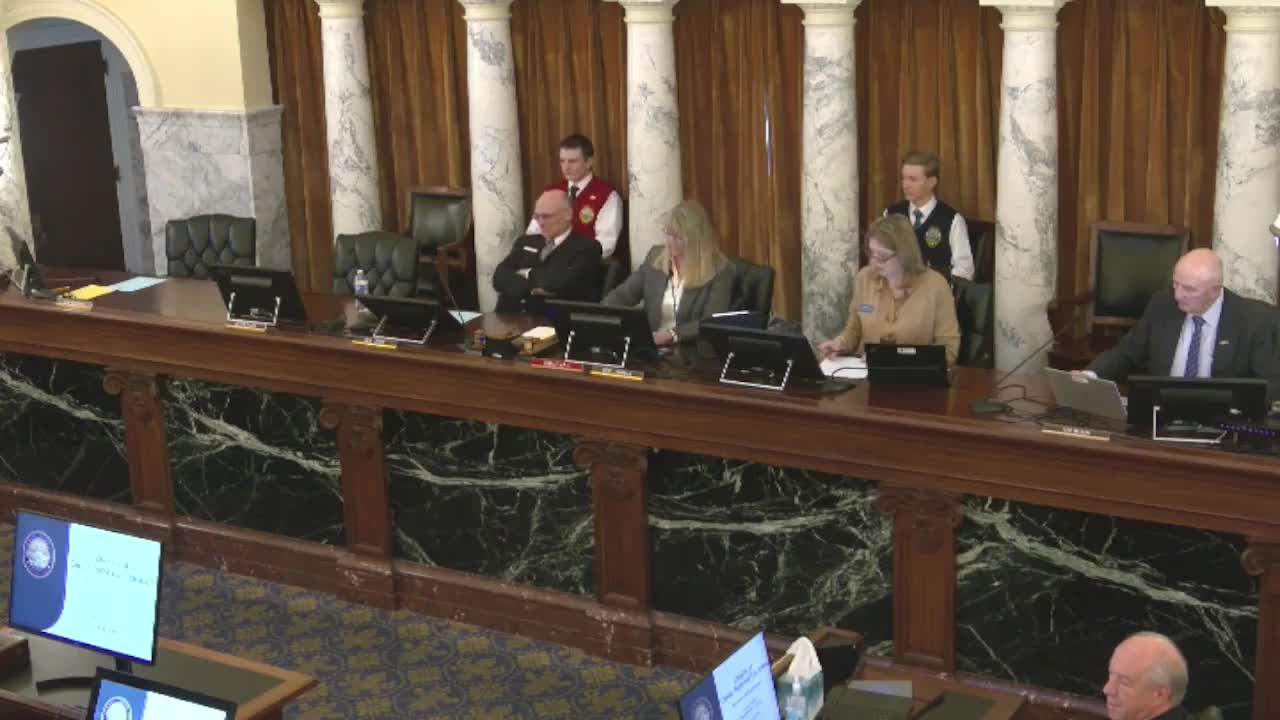
The Joint Finance-Appropriations Committee heard a presentation Feb. 10 on the Division of Career Technical Education’s (CTE) base budget and FY2026 requests, as agency and legislative staff described large, statewide demand that has produced waitlists in programs such as welding and nursing and outlined a $10 million ongoing capacity proposal from the governor.
CTE, which supports career- and technical-programs across Idaho’s secondary schools, six technical colleges and adult education centers, asked for funding to add instructors, expand facilities and place a business-industry engagement manager in districts lacking that capacity, officials told the committee.
Kevin Campbell, budget and policy analyst with the Legislative Services Office, gave the committee an overview of CTE’s structure and funds, noting CTE’s funding includes the Displaced Homemaker Fund, the Hazardous Materials and Waste Enforcement Fund and the Motorcycle Safety Fund and that CTE typically spends near 100% of its appropriations.
Joshua Whitworth, executive director for the State Board and interim administrator for the CTE division, told lawmakers the state “is seeing large demand across the entire career technical education, ecosystem, still significant,” and said the division is monitoring federal-grant guidance while emphasizing fiscal diligence. “The funding is available. But, I think we have to be diligent about when we pull that down,” Whitworth said.
Committee members pressed officials on what is driving the waitlists and where the gaps exist. Whitworth said constraints are both facilities and faculty: “We kind of look at it as 3 tier 3 legs of the stool...we need...faculty…[and] facilities able to handle it,” he said, describing a need to add equipment or space (for example more welding booths) and certified instructors as student demand expands.
Lawmakers repeatedly referenced welding and nursing as among the most in-demand programs with oversubscriptions. Whitworth pointed to manufacturing growth and projects such as Micron and potential nuclear-related construction as structural drivers of demand for welders. On nursing, he said, “we're running about, I think 3 to 400 nurses short on an annual basis right now.”
The governor’s $10 million ongoing request, discussed several times by committee members, would create grant capacity the division could allocate to technical colleges and other eligible entities to expand seats in “high-demand” programs. Whitworth described the proposed distribution model as grant-based and tied to employer engagement: the division would prioritize programs where industry partners “are willing to match a certain dollar amount” and where the investment demonstrably reduces oversubscription. “The grant would require some engagement by industry to participate in that,” he said.
Lawmakers asked for more detail before authorizing the request on the floor. Representative Furness and others said they expect a granular plan—who would receive funds, how many seats would be added, and specific outcomes—before supporting a large ongoing appropriation. Whitworth and staff said they can provide lists of oversubscribed programs and that the division has grant-distribution experience and reporting processes to allocate funds by demand rather than equally across institutions.
Committee members also raised fund-balance questions. Campbell had noted the Hazardous Materials and Waste Enforcement Fund and the Motorcycle Safety Fund are dedicated to specific training and programs. Senator Berkey and Representative Tanner asked why one hazardous-materials fund appeared to show a negative balance in reporting; Whitworth said the division would follow up and validate reporting and that multiple agencies use the fund. On the motorcycle-safety fund, lawmakers asked whether fee structures and program expenditures merited policy review since balances have grown while apparent expenditures fluctuated.
Other FY2026 requests CTE presented included: roughly $664,000 ongoing from the general fund for additional instructors in at-capacity technical-college programs; $125,400 for a business-industry engagement manager; $50,000 for adult education and literacy workplace English programming; $3,000 one-time for a computer for the requested manager; and authority adjustments for federal grants. Campbell also listed prior recent appropriations including $5 million ongoing for CTE readiness and one-time appropriations of $10 million for secondary CTE and $5 million for postsecondary equipment and investments.
Committee members asked for follow-up detail—program-by-program waitlist data, a clearer breakdown of personnel costs that appear in the division’s budget line items versus college budgets, and a formal plan for distributing the governor’s $10 million request—before advancing major new ongoing commitments.
Whitworth closed by praising CTE staff and urging careful use of new funds tied to industry demand; lawmakers recessed the CTE discussion after asking staff to return the requested follow-up data to the committee.