Get Full Government Meeting Transcripts, Videos, & Alerts Forever!
Get email alerts on the Committee Procedures topic
No spam. Unsubscribe anytime.
House Education Committee chair lays out session rules: paperless operations, remote testimony, time limits on presenters and public comment
Summary
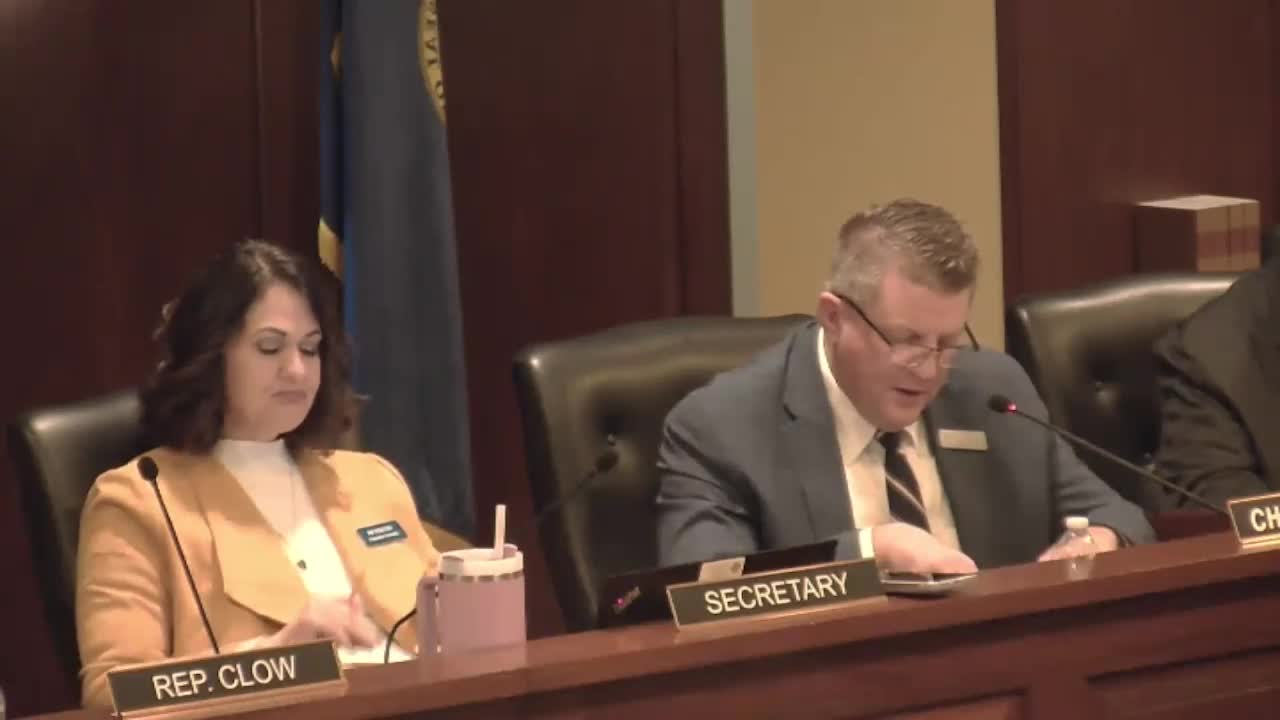
Chairman Doug Pickett opened the Idaho House Education Committee by explaining how the panel will operate for the legislative session, including a shift to paperless workflows, limits on testimony and presentations, and rules for voting and motions.
Chairman Doug Pickett opened the Idaho House Education Committee by explaining how the panel will operate for the legislative session, including a shift to paperless workflows, limits on testimony and presentations, and rules for voting and motions.
Pickett said the committee "have declared ourselves to be a paperless committee," and asked members to notify him of accommodation needs for printed materials. He also instructed members that draft legislative items ("RS's") should be treated as confidential, saying, "To me, it's important that an RS is private until it's introduced and proprietary in fact." He asked members to consult sponsors before sharing those files.
The rules Pickett outlined specify time limits and order for bill hearings: "We will give bill presenters 5 minutes to present their bill and then we will have a question period of time," followed by public comment and a sponsor's final statement of up to five minutes. He said the committee will allow remote testimony but "I would like to give preference to those who attend," and later clarified the time allotment: "Beyond that we will allow remote testimony, 2 minutes each on bill hearings."
On voting and motions, Pickett said the committee will use voice votes unless a roll call is requested: "When it comes to voting, we will have voice votes unless a roll call is requested." He described common committee motions (due pass, hold, hold to time certain with a date, send to general orders) and stressed that a motion to call the previous question is not in order in committee: "a motion for a previous question ... is not an order in a committee meeting" and "we will not be entertaining any motion for previous question in this committee." He also reminded members that bills sent to general orders may be amended either by the committee or later by the Committee of the Whole on the House floor, and that agency bills should have floor sponsors.
Pickett urged decorum and procedural discipline, asking members to direct questions through the chair to "maintain order and dignity" and to give respectful treatment to members of the public who testify, noting that some have never testified before a legislative committee. He also asked members to check fiscal notes and statements of purpose on RS files and to review "joint rule 18" when evaluating whether a bill is ready to advance.
The rest of the meeting consisted primarily of member introductions and personal remarks; no bills were debated or voted on during this session. Pickett closed by reiterating the committee's role in producing work that is "presentable to the public and according to the rules," and the committee adjourned.