Get Full Government Meeting Transcripts, Videos, & Alerts Forever!
Get email alerts on the Reading Vision Tracking Screening topic
No spam. Unsubscribe anytime.
Presenter tells education committee vision‑tracking checks could identify and remediate reading problems
Summary
Mary Mahalka told the House Committee on Education about a low‑cost vision‑tracking screening and short remediation exercises she said can improve reading and classroom behavior for students with binocular‑vision difficulties. She cited a study of incarcerated adults and juvenile detainees showing high prevalence of tracking problems.
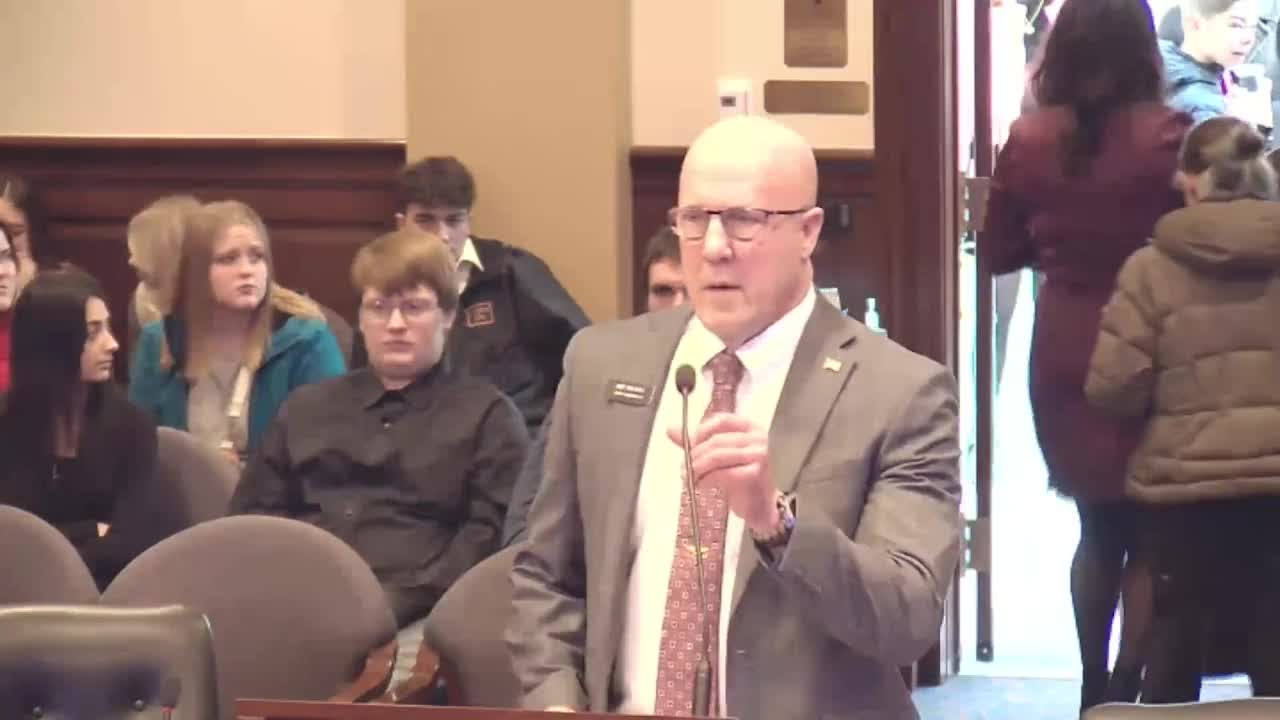
BOISE — At a hearing of the House Committee on Education, Mary Mahalka, a former teacher and reading‑intervention advocate, told lawmakers a simple, low‑cost vision‑tracking screening and short training exercises can correct underlying visual problems that interfere with reading and classroom attention.
“We are failing to meet the needs of children to develop effective reading and comprehension skills,” Mahalka told the committee. She cited the National Center for Education’s reading assessment showing only about 31 percent of fourth‑grade students nationwide reading at or above proficiency and said Idaho follows the same trend.
Mahalka described a brief one‑minute screening she uses and a set of inexpensive exercises — including near‑point tracking, horizontal figure‑8 eye movements, and midline‑crossing activities — that teachers or trained volunteers can administer. She said the approach is intended to identify binocular‑vision and oculomotor coordination issues that can mimic or contribute to diagnoses such as dyslexia or attention problems.
“Most often dyslexia, ADD, ADHD are misdiagnosed as just being a vision tracking problem,” Mahalka said. She told the committee that in screening programs led by developmental optometrists, more than 70 percent of tested inmates at a California correctional facility showed vision‑tracking difficulties; she also cited similar high rates in juvenile‑detention screenings.
Mahalka said the intervention is inexpensive — she demonstrated using cardboard, yarn, beads and other low‑cost tools — and she described a short home‑or‑classroom practice regimen tied to a simple sticker chart to build daily practice and momentum. She provided examples from classroom practice in which students progressed in weeks and a child with chronic distraction reported “I know where my eyes are” after short practice.
Committee members asked how the exercises relate to phonics‑based instruction and whether the approach is age‑limited. Mahalka said the exercises complement phonics instruction and can be used across ages; outcomes vary by maturity and baseline condition, but she said adults can also benefit. She recommended parent volunteers and brief screenings early in the school year.
Lawmakers praised the demonstration and asked staff to consider how such screening or volunteer programs could be piloted in schools. No committee action or formal motion was taken on the presentation; the item was introduced as informational testimony.