Get Full Government Meeting Transcripts, Videos, & Alerts Forever!
Get email alerts on the Charter School Admissions Military topic
No spam. Unsubscribe anytime.
House committee backs bill giving charter-school admission preference to active-duty military families
Summary
The House Committee on Education voted 12-2 to send House Bill 163 to the floor with a “do pass” recommendation. The bill would add active-duty and federally-activated National Guard/Reserve parents to the priority list for charter-school enrollment lotteries to reduce educational disruption for military children.
BOISE — The Idaho House Committee on Education voted to send House Bill 163 to the floor with a due-pass recommendation after hearing sponsor and public testimony arguing the bill would reduce school disruptions for children of military service members.
Rep. David Levitt, R‑District 25, told the committee HB 163 “provides admission preference to families with at least 1 parent or legal guardian on active duty or active guard and reserve duty as defined in Title 10 U.S. Code subsection 101.” Levitt said the change would be added to existing charter-school admission preferences and would not alter the underlying lottery process.
“The intent is to support military families by giving their children priority access to charter schools,” Levitt said. He described the bill as a way to provide “greater educational stability for military children who frequently face school disruptions due to relocations.”
Multiple witnesses, including charter-school leaders and military spouses, told the committee the policy would reduce transition stress and help children integrate more quickly after a move. Steve Lambert, a charter-school leader and 24‑year Air Force veteran, said frequent relocations made securing “a stable, high quality schooling a challenge.” He testified that granting preference to military dependents would be “beneficial” and cited examples of similar policies in other states.
Ashley Cotton, director of outreach for the nonprofit Bloom and an active‑duty military spouse, said she moved her daughter to find a suitable school after a permanent change of station and encountered long wait lists at high‑performing charter schools. “Idaho is home to some of the highest performing nationally ranked charter schools,” Cotton said, urging lawmakers to “vote in favor of House Bill 163 to ensure that active duty military families have the opportunity to access the highest quality of charter school education that Idaho has to offer.”
Committee members asked how the bill would interact with existing priority tiers and with charter-school wait lists. Levitt and Idaho Charter School Network representatives explained that founders’ children remain the top priority, and the proposed military preference would be placed after founders and before siblings in the statute’s listed tiers. Emily McClure of the Idaho Charter School Network said charter schools operate a continuing wait list after a lottery is held; if a military family qualifies, “they would jump on the wait list, so that they are top on the wait list even after the lottery is held.”
Concerns focused on local capacity. Several lawmakers, including Rep. Harris, said a higher priority for military families could displace local residents or siblings already attending a school. Rep. Harris said she could not support the bill as written because it could “displace thousands of kids and thousands of families across the state.” Rep. Wisniewski likewise questioned how the priority would affect residents of areas with a single charter school, such as Mountain Home near Mountain Home Air Force Base.
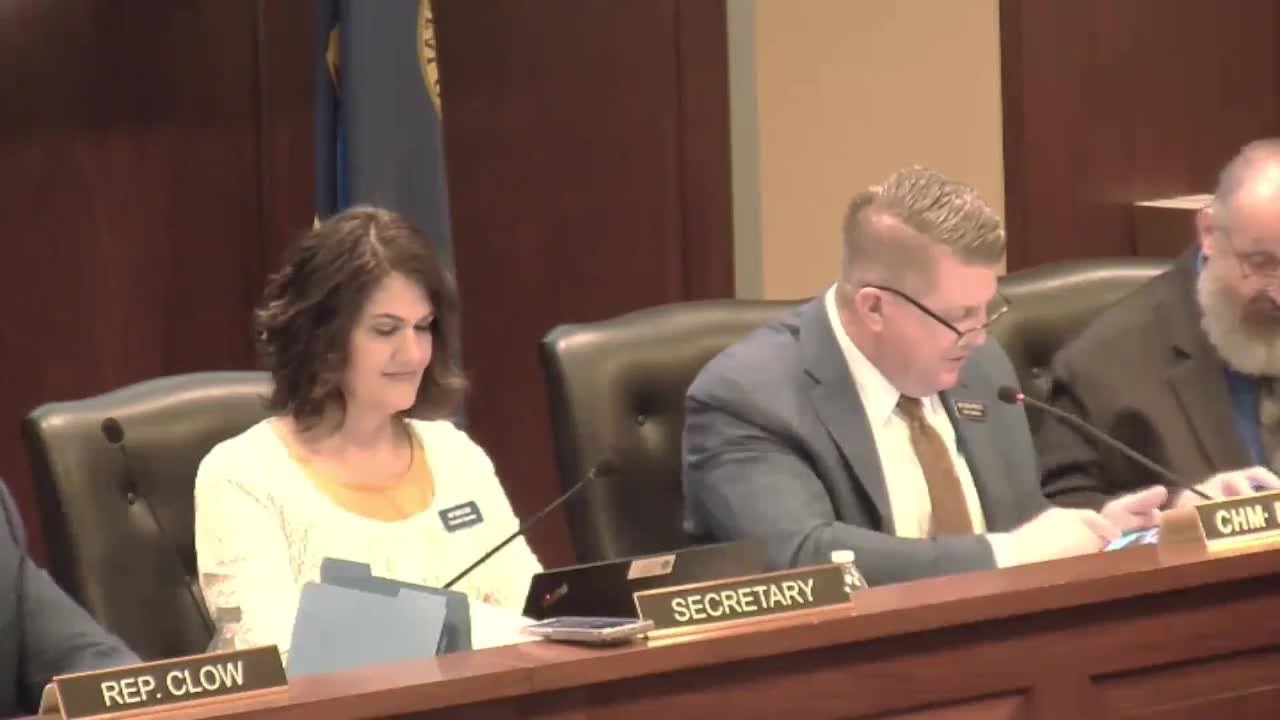
Rep. Clow and others suggested technical fixes might be possible if the policy produced unintended consequences, and some members urged studying other states’ experiences before final action by the full House. The committee ultimately approved a motion to send HB 163 to the floor with a due‑pass recommendation; the chair announced the committee vote as 12 in favor and 2 opposed.
Votes at a glance: House Bill 163 — Committee action: send to House floor with a due‑pass recommendation; committee vote: 12‑2.
Next steps: HB 163 will proceed to a floor reading where members can debate amendments or technical changes. The bill’s sponsors and witnesses said the policy requires no new state funding and would be implemented under charter-school operating rules.