Get Full Government Meeting Transcripts, Videos, & Alerts Forever!
Get email alerts on the Urban Agriculture Chicken Ownership topic
No spam. Unsubscribe anytime.
Idaho senator seeks statewide minimum rules for residential chickens; committee votes to print RS 31,970
Summary
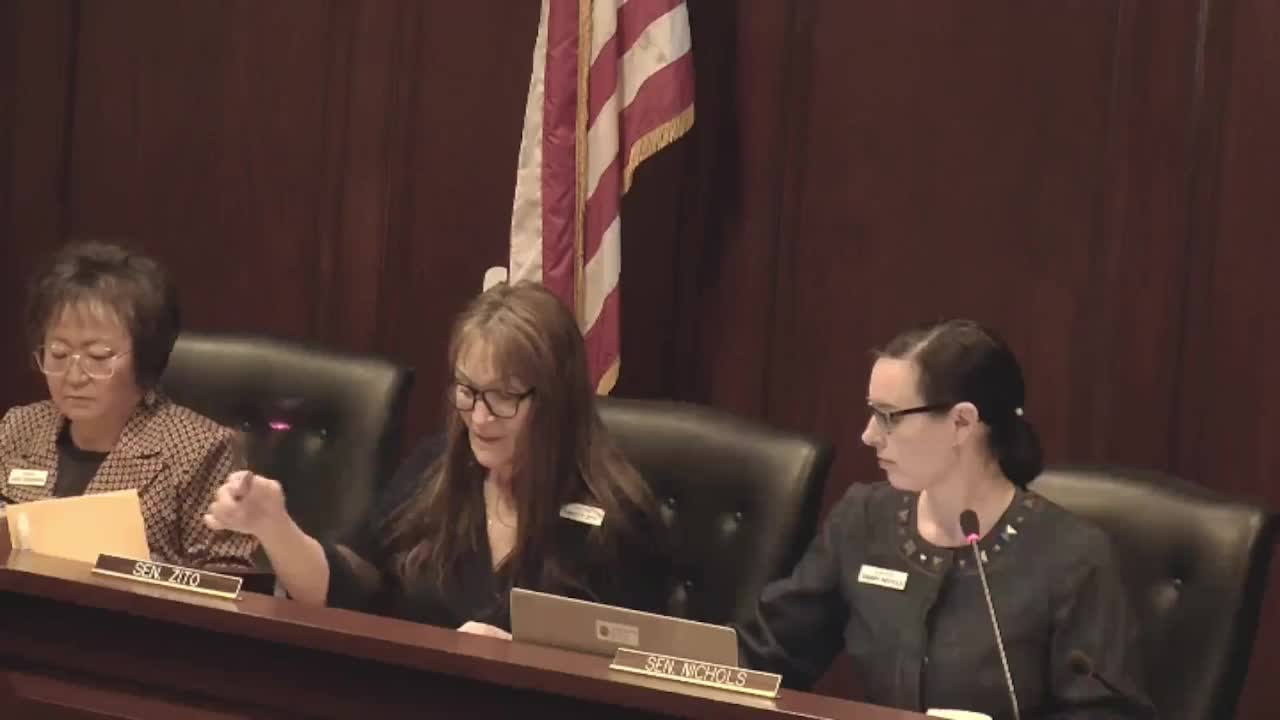
Sen. Tammy Nichols presented RS 31,970 to create statewide minimum standards for residential chicken ownership; the Senate Agriculture Committee voted to send the request to print. The proposal would allow up to four chickens per 0.2 acre while preserving local zoning and HOA authority on roosters and multifamily properties.
Boise — Senator Tammy Nichols introduced RS 31,970 on the Idaho Senate Agriculture Committee agenda, asking the panel to print the proposal for a formal hearing.
"Basically, this legislation supports urban agriculture in Idaho by setting just clear minimum standards for residential chicken ownership," said Senator Tammy Nichols, who identified herself as representing District 10. She told the committee the measure would allow property owners to keep up to "4 chickens for 2 tenths of an acre," while preserving local control.
The proposal is intended to permit small-scale backyard chicken ownership where local ordinances do not already prohibit it. Nichols said the measure would "promote[] food security, protect[] property rights and exclude[] multifamily and areas already covered by agricultural zones." She also noted homeowners associations could still regulate roosters because "that's usually the main issue is just noise with roosters."
In discussion, Senator Taylor asked about the phrase "small scale livestock" in the draft language and whether it might be interpreted to allow larger animals. Nichols responded that the code already contains definitions for small-scale livestock that typically "pertains to rabbits, guinea pigs, chickens, small, small things." Senator Lakey (recorded in the transcript with some name variations) urged careful drafting to prevent misinterpretation — for example, someone attempting to keep a cow in a subdivision — and said she would review the language further.
After brief questions, Senator Lakey moved that the committee send RS 31,970 to print. A second was recorded but not identified in the transcript. Vice Chair Zito put the motion to a voice vote: "All in favor please say aye." The committee answered "Aye" and the chair said, "Any opposed? Motion carries." No roll-call tally was recorded in the transcript.
The printing motion advances the proposal to the next formal hearing stage; printing does not itself enact the policy. Committee members indicated they will examine definitions and related sections during the upcoming print hearing and formal consideration.
Votes at a glance
- Motion to send RS 31,970 to print. Moved by: Senator Lakey. Second: not specified. Outcome: motion approved by voice vote (recorded as "Aye; motion carries").
What happens next
Printing places the draft RS on the committee's schedule for a subsequent public hearing and markup, where sponsors and opponents may comment and where the committee may propose amendments before any floor action.