Get Full Government Meeting Transcripts, Videos, & Alerts Forever!
Get email alerts on the Corporate Transparency Act topic
No spam. Unsubscribe anytime.
House Business Committee sends memorial urging repeal of federal Corporate Transparency Act
Summary
The Idaho House Business Committee voted Feb. 11 to send House Joint Memorial 3 to the full House asking Congress to repeal the federal Corporate Transparency Act, citing administrative burdens, privacy concerns and legal uncertainty for small businesses.
BOISE — The Idaho House Business Committee voted Tuesday to send House Joint Memorial 3 to the full House urging the U.S. Congress to repeal the federal Corporate Transparency Act (CTA), saying the law has imposed burdens on small businesses and produced legal uncertainty for Idaho business owners and state filing offices.
Representative Jordan Redmond, sponsor of the memorial, told the committee the measure “expresses the desire for the United State Congress to repeal the Corporate Transparency Act and eliminate red tape for small businesses.”
The memorial does not change Idaho law; it asks Congress to act. Committee members and state officials who testified described operational and privacy concerns tied to the federal filing regime implemented by the Financial Crimes Enforcement Network (FinCEN).
Nicole Fitzgerald, chief deputy secretary of state, told the committee the Secretary of State’s business services division — which handles filings for more than 900,000 Idaho businesses — has been overwhelmed by questions and call volume since the federal rulemaking began. “Our office has received thousands of phone calls regarding the CTA, upwards of 500 calls in some days,” Fitzgerald said, and the office’s business services team fields roughly 70,000 calls a year in normal operations. She said that increased calls and unclear federal guidance “significantly delayed our ability to process information, and provide other critical services to the state.”
Fitzgerald summarized the CTA’s basic approach as requiring reporting of “beneficial owners” — individuals who own or control at least 25% of a business — to FinCEN and said the statute directs state agencies to cooperate with FinCEN. She described a sequence of federal court rulings and stays that left business owners unsure whether and when to file. Fitzgerald said the filing regime officially began Jan. 1, 2024, and that a January 2025 deadline had been repeatedly affected by court actions.
Idaho Secretary of State McGrane also addressed the committee, calling the CTA “an excessive overreach” and noting the penalties that accompany noncompliance. “There are huge penalties here — $10,000, two years in prison,” McGrane said, arguing the law’s costs fall disproportionately on small businesses and suggesting repeal is preferable to a one-year delay recently advanced in the U.S. House.
A public testifier, Denise Hansen Lefever, a certified public accountant from Meridian, urged repeal and repeated several concerns Fitzgerald raised: privacy risks from collecting Social Security and driver’s-license numbers, confusion about compliance, and the cost of hiring accountants or attorneys to file. “This is a federal overreach that places an unnecessary, costly, invasive, and burdensome regulation on small business,” Lefever said.
Committee members who spoke during the discussion expressed sympathy for small-business confusion while some voiced unease about repealing a tool designed to help law enforcement identify shell companies. Representative Birch said he was “concerned about just simply repealing it without replacing it,” noting that the CTA was intended to target money laundering, tax evasion and fraud. Others, including several secretaries of state and committee members, said the statutory design and federal rollout have produced harmful effects that justify urging Congress to reconsider the approach.
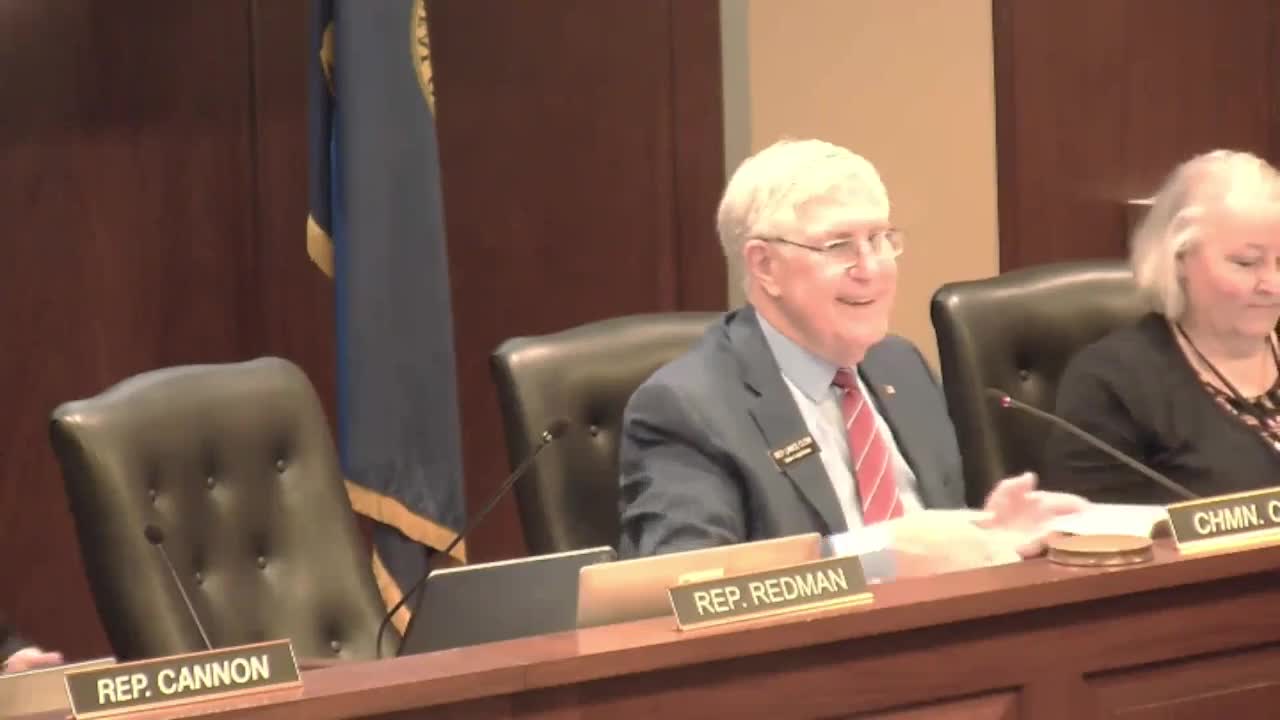
After public testimony, Representative Marvin moved to send House Joint Memorial 3 to the House floor with a “do pass” recommendation. The committee approved the motion by voice vote; the chair announced “motion carries.”
The committee action forwards a memorial asking Congress to act; it does not alter state reporting requirements or create penalties in Idaho. The memorial will next appear on the House floor for further consideration.