Get Full Government Meeting Transcripts, Videos, & Alerts Forever!
Get email alerts on the Vocational Rehabilitation Audit topic
No spam. Unsubscribe anytime.
Forensic review underway as Idaho Vocational Rehabilitation receives $10M reallocation and hires contractor
Summary
The Division of Vocational Rehabilitation told the JFAC on Feb. 24 it received a $10 million federal reallocation that required a state match and has entered into large consultant contracts to address federal monitoring concerns after audits found control weaknesses and inaccurate federal reporting.
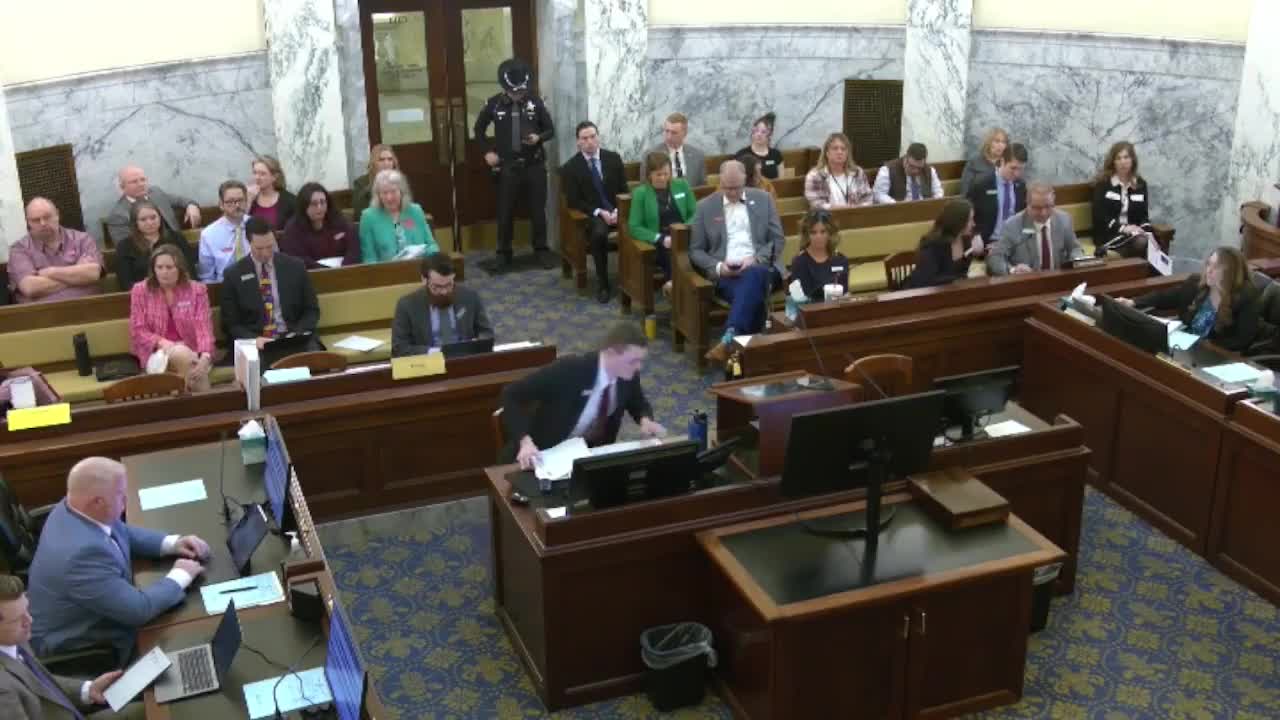
The Idaho Division of Vocational Rehabilitation (IDVR) briefed the Joint Finance-Appropriations Committee on Feb. 24 on a continuing federal monitoring and financial-review crisis that auditors say stems from weak controls, inaccurate federal reporting and errors in period-of-performance accounting.
Brooke Dupree, budget and policy analyst with the Legislative Services Office, told the committee that RSA (the Rehabilitation Services Administration, the program’s federal grantor) reallocated $10,000,000 to Idaho in September 2024 and the governor recognized that amount as a noncognizable adjustment. Dupree said the federal grant requires a state match; the division requested a $2.7 million one-time general-fund supplemental as the state match and the governor later recommended a $1.7 million one-time supplement for services the division expects federal partners may deem ineligible.
April Renfro, manager in the Legislative Services Office audits division, said audits and RSA oversight found the division failed to maintain adequate internal controls and did not have sufficient financial-management systems, leading to inaccurate federal financial reporting and failures to account for and report obligations properly. She said RSA designated the division a "high-risk grantee" in May 2024 under 2 C.F.R. §200.208 and imposed specific conditions, then required a corrective action plan that auditors found too broad and lacking measurable steps.
Renfro and Dupree described how IDVR’s case-management system did not communicate properly with the state fiscal system, which complicated tracking client plans and matching expenditures to the correct federal grant period. That mismatch helped create a backlog of invoices and unliquidated obligations near the end of state FY 2024.
To address the problems, IDVR contracted with a vendor that had prior federal technical-assistance experience. The initial professional-services contract, signed Aug. 12, 2024, was for $499,999 for business-process mapping, period-of-performance control analysis and related tasks; an amendment in November increased the contract by $1.9 million and extended the term to Dec. 2025, bringing the contract total to roughly $2.4 million. IDVR reported it has paid about $900,000 of that contract so far and is billing the federal grant for consultant expenses; auditors noted those federal charges will require state matching dollars.
Director Judy Taylor, interim director of IDVR, said the division brought in technical assistance to reprogram its case-management system and correct period-of-performance reporting. She said the vendor has national expertise and prior work for RSA and that the vendor’s services were intended to be temporary and include a knowledge-transfer plan to train IDVR staff to take over corrective processes.
Taylor said that when the division submitted its first reimbursement draw under extra federal scrutiny, RSA found many claims lacked adequate policy, contract, invoice or client documentation. She said certain Pre-Employment Transition Services (Pre-ETS) draw requests had an unusually high rejection rate during initial federal review; Dupree and Taylor identified a significant projected shortfall for costs that RSA may deem unallowable in Pre-ETS, and the division estimated $1.7 million of services already rendered could be disallowed by federal partners.
Renfro warned that if corrective actions are not met, RSA could take additional enforcement steps under federal regulations, which range from additional reporting and prior approvals to possible repayment of federal funds proportional to the federal interest harmed. She said the audits division has added the issue to the 2024 single-audit work and will continue oversight.
Committee members pressed for clearer accounting of the state-match calculation, the scope and expected returns from the consultant contract and when auditors and federal partners will produce a settled financial figure. Dupree and Renfro said timing is uncertain; some numbers may emerge from the single-audit process and RSA’s responses, but a full forensic accounting and federal decision-making process will take months.
The committee heard that IDVR currently serves about 2,735 active clients and is maintaining a waitlist of approximately 1,950 qualified applicants; leadership said the agency has implemented an austerity-driven hiring slowdown and is exploring a differentiated-practice model to allocate staff time more efficiently.
Auditors and agency officials urged the committee to consider supplemental funding to secure the state match and to support corrective efforts, while warning the workload and potential federal liabilities make next steps uncertain.