Get Full Government Meeting Transcripts, Videos, & Alerts Forever!
Get email alerts on the Jfsc Budget Roundup topic
No spam. Unsubscribe anytime.
JFAC approves series of supplemental appropriations and FY2026 enhancements across state agencies
Summary
The Joint Finance-Appropriations Committee on Feb. 14 approved multiple supplemental appropriations and FY2026 enhancement requests affecting the Military Division, Veteran Services, Agriculture, Finance, Insurance, State Board of Education special programs and health education programs; most motions carried with recorded roll-call votes.
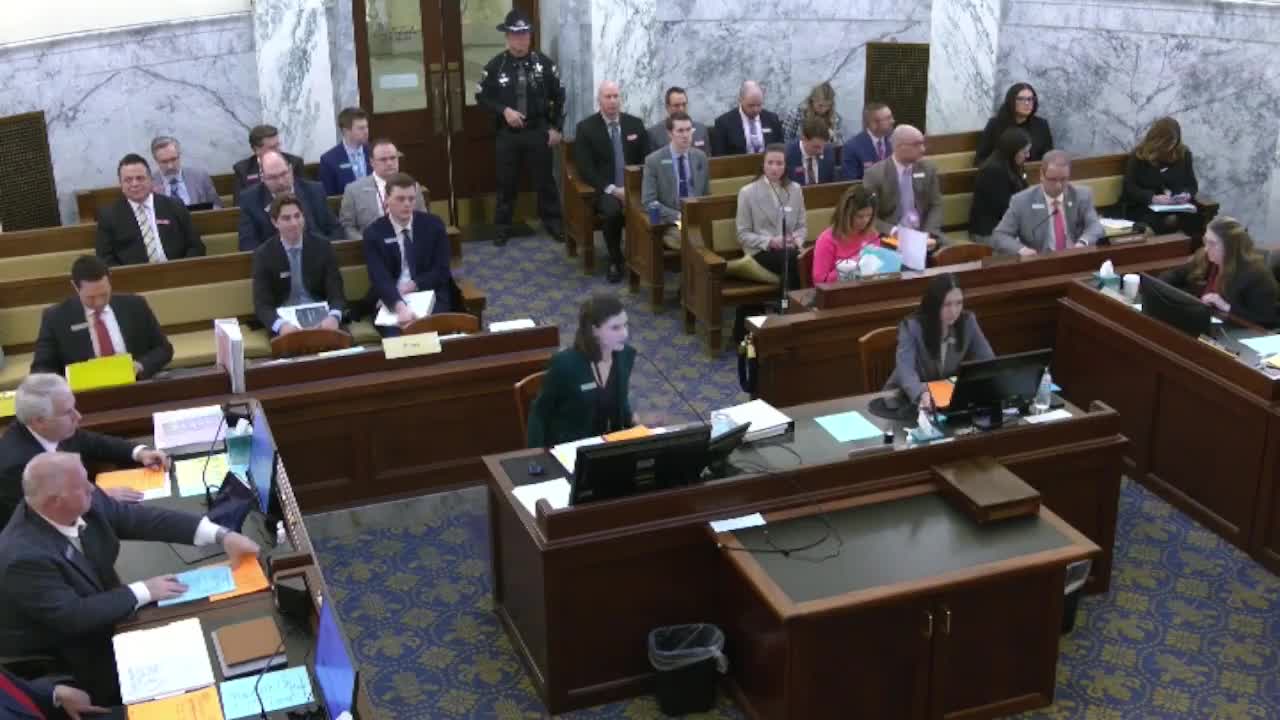
The Joint Finance-Appropriations Committee approved a package of supplemental appropriations and fiscal-year 2026 enhancement requests affecting several state agencies during its Feb. 14 session, taking recorded roll-call votes on each motion.
The actions ranged from a small fiscal-year 2025 deficiency warrant for hazardous-materials cleanup to larger FY2026 enhancement packages, including an $8.6 million transfer to support hazardous-materials regional response teams. Committee staff repeatedly framed the measures as necessary to align agency programs with operational needs and federally funded projects.
Why it matters: The approvals will move state funds between accounts, add or reallocate staff positions in several agencies, and authorize multi-year reappropriation authority for large construction grants—measures that change the state’s near-term fiscal commitments and the operations of public-safety, veterans, agricultural and regulatory programs.
Key approved items and context
- Military Division (supplementals and FY2026 enhancements): The committee approved a $34,200 one-time transfer from the general fund to the Hazardous Substance Emergency Response Fund to cover remaining 2024 cleanup costs (motion passed unanimously; recorded as “20 ayes, 0 nays” aggregated). It also approved a $540,001 one-time appropriation to support public safety communications installation work, and a $759,200 one-time appropriation to upgrade IT infrastructure. For FY2026 the committee approved a package that included funding for public safety communications staff and equipment and authorized a one-time transfer of $8,600,000 from the continuously appropriated State Emergency Relief Fund to the division’s miscellaneous revenue fund to buy equipment for hazardous-materials regional response teams; that transfer passed on a recorded roll call (19–1 Senate/House split reported in the roll-call summaries; committee summary: majority in the affirmative).
- Veteran Services: JFAC approved the Division of Veteran Services’ FY2026 request, including a requested reappropriation authority “not to exceed $111,488,600” from FY2025 into FY2026 for federal construction grants to replace the Boise Veterans Home and renovate the Lewiston Veterans Home. The motion passed on recorded roll calls (committee summary: majority in the affirmative with the Senate 9–1 and the House unanimous in several roll-call summaries).
- Department of Agriculture: The committee approved a $1,724,300 one-time transfer from the general fund to cover remaining FY2024 exotic-species monitoring and control costs and approved FY2026 enhancements including pay-structure and compensation items and replacement equipment. Votes recorded: motions passed with majority roll-call tallies reported in the committee record.
- Department of Finance: The committee approved five new full-time equivalent positions and $765,800 from dedicated funds for examiners and specialized positions (including an IT-focused financial examiner, cybersecurity-focused securities examiner, and a forensic accounting specialist) and $52,600 for recommended IT hardware. The motion carried on a roll-call vote summarized in the record.
- Department of Insurance: The committee approved adding two FTEs (a staff actuary and a regulatory compliance specialist), $48,100 for a compensation increase in the State Fire Marshal program and $162,200 for replacement items for that program. The motion carried on recorded roll-call votes.
- State Board of Education special programs: JFAC approved a package of small enhancements that included $1,375,000 ongoing for a rural and underserved educator incentive program and other small staffing and program requests recommended by the governor. The motion passed on recorded roll calls.
- Health education programs (residency funding): The committee approved several residency and fellowship funding items totaling $954,500 and two FTEs for residency programs across Idaho, and attached intent language directing reporting related to OB-GYN fellowships. The motion passed on recorded roll calls; the committee also approved language describing reporting expectations for the Idaho Graduate Medical Education Committee.
Roll-call norms and majority statements
For each motion the clerk called the roll and the minutes record the Senate and House tallies as read into the record. When the clerk announced “the majority having voted in the affirmative,” the committee chair directed the motion be transmitted with a “due pass” or “due pass recommendation,” as shown in the official minutes.
What the committee did not do
The committee did not adopt any tax changes or permanent statutory rewrites during the session recorded here; most actions were appropriations, transfers, staffing authorizations, replacement equipment purchases, or directives to report back to JFAC. Where large federal construction grants were referenced, the committee approved reappropriation authority rather than new state-funded construction spending.
Sources and evidence
Committee discussion and motions recorded in the transcript between the presentations by Legislative Services analysts (Keith Bybee, Frances Lippitt, Noah Peterson, Kevin Campbell and others) and the roll-call announcements provided the basis for this summary. Direct comments from analysts highlighted the fiscal notes and specific dollar amounts for each item.