Get Full Government Meeting Transcripts, Videos, & Alerts Forever!
Get email alerts on the Special Education Funding topic
No spam. Unsubscribe anytime.
Committee introduces RS 32437 to create state fund for high-needs special-education costs
Summary
Lawmakers voted to introduce RS 32437, a proposal to create a state reimbursement fund for very high-cost special-education students. Sponsors described a $3 million initial cap and district-level limits; department officials said Medicaid and existing contracts affect net cost to districts.
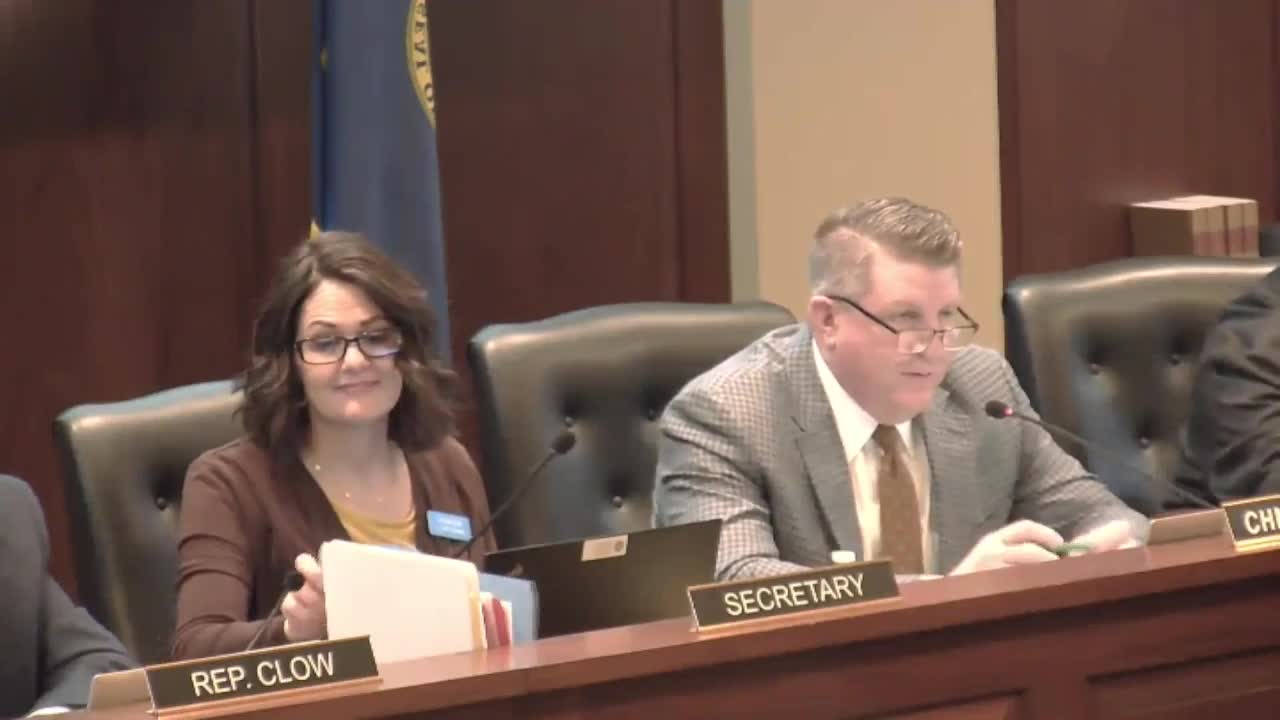
Representative Ben Furman introduced RS 32437, a proposal to help school districts cover unusually high special-education costs, and the committee voted to introduce the measure for a full hearing.
The proposal would create a fund to reimburse districts for costs beyond the first $15,000 for a high-need student, with the state splitting costs with districts after a student’s expenses exceed $65,000, Representative Furman said. He said the budget line would be capped at $3,000,000 and that each school district would be capped at roughly $150,000 in reimbursements.
“These are kids who actually need an aide with them during the whole day,” Furman said. “This will help anything after the first $15,000 of expenses.”
W. Cutchfield, identified in the hearing as the state superintendent, told the committee the $3 million figure is an estimate based on currently known statewide cases of students who require full-time support and said the amount was chosen as a start point rather than a fixed projection.
China Hirasaki, director of special education for the Idaho Department of Education, described the range of costs. She said typical special-education services such as speech are relatively inexpensive, but certain cases — for example, students requiring full-time nursing care, tracheotomy care or g-tube feeding — can run “upwards into the hundred-thousand dollar arena,” depending on district contracts.
Hirasaki also explained that Medicaid can reimburse some school-based services but requires local matching and does not cover all services. “Medicaid doesn’t cover the entire cost for school-based Medicaid. There’s a required match, which hovers typically right now about 30%,” she said, describing how districts front costs and later receive partial reimbursement. She added that some services, such as American Sign Language interpreters, are not Medicaid-reimbursable and can cost $60,000–$70,000 depending on provider availability and travel for rural districts.
Committee members asked for more detail at a full hearing. Representative Tanner and others noted that the $3 million figure could rise or fall depending on enrollment and that applications would be made after a student is enrolled. Superintendent Cutchfield said the line item would not automatically be spent and unexpended funds would remain in the general fund.
Representative Sauter moved to introduce the RS for a full hearing. The motion carried; one member asked to be recorded as voting nay.
The committee did not take final action beyond introduction; proponents and several members urged more detailed fiscal and administrative information at the next hearing.