Get Full Government Meeting Transcripts, Videos, & Alerts Forever!
Get email alerts on the Fish And Game Budget topic
No spam. Unsubscribe anytime.
Idaho Fish and Game describes grant-driven budget swing, seeks one-time funds for website, fire rehabilitation and remote connectivity
Summary
Department officials told the Joint Finance Committee their budget is driven by dedicated license revenues and federal grants, reported a temporary dip in cash balances tied to federal billing, and requested primarily one-time funds for projects including a website overhaul and fire rehabilitation of the Valley Fire footprint.
The Idaho Department of Fish and Game told the Joint Finance Committee that its budget is funded entirely by dedicated and federal sources, that recent year-to-year swings reflect federal grant timing, and that the department is requesting mostly one-time appropriations for projects and equipment.
Analyst Janet Jessup said the department receives no general fund support and is funded primarily through the Fish and Game Fund, which holds license, tag and permit revenues that are often statutorily set aside for specific uses. She said the department is allocated about 550 full‑time positions and operates 19 state-run hatcheries.
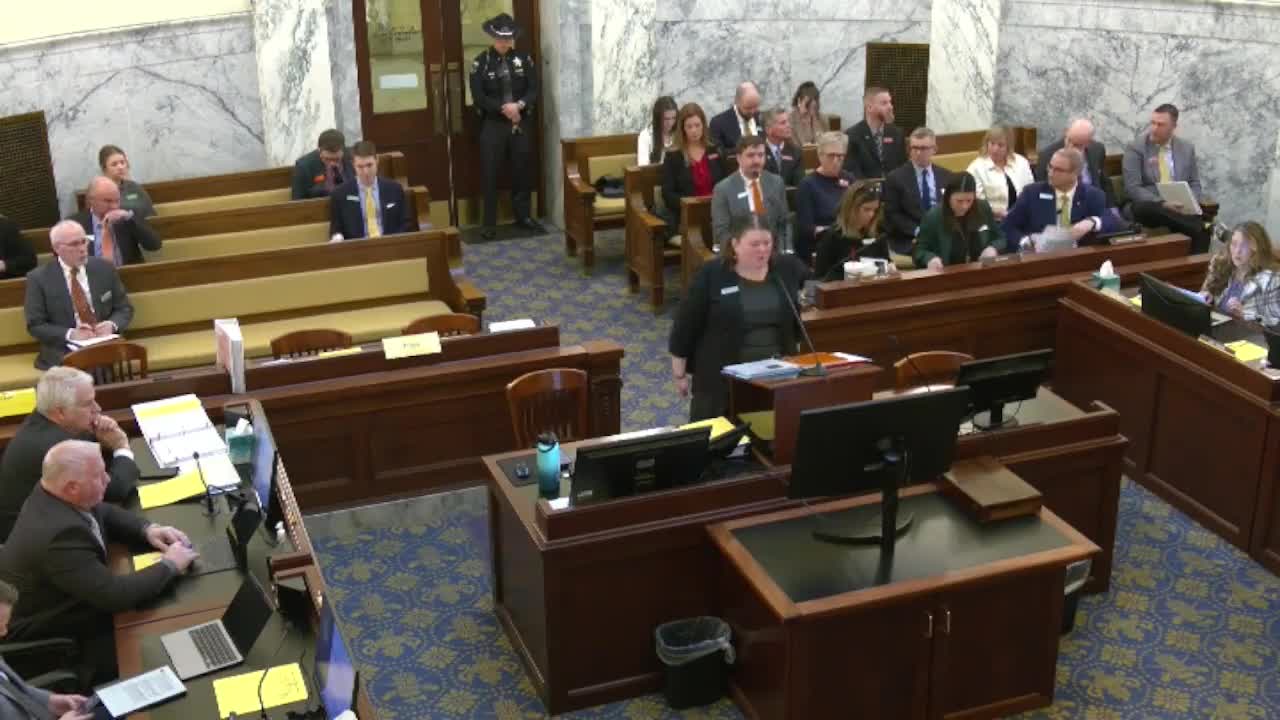
Director Jim Fredericks and administration chief John Oswald answered lawmakers’ questions about fund balances and specific requests. Oswald explained a dip in the department’s consolidated fund balance for fiscal 2024 as a billing-timing issue related to federal grant invoicing: “We fell behind several months and we have caught up in fiscal year 25,” he said, adding the department planned deliberate use of reserves in fiscal 2026 for one-time projects.
The agency requested $18,184,900 in enhancements for fiscal 2026; Jessup said about 88% of the requested amount is one-time. Ongoing requests include support for the department’s license sales system, lease funding for recreational access, and $500,000 ongoing to support a 25‑year capital lease for a subregional office near McCall.
Fredericks described a planned second phase of a website overhaul. The first phase used only a portion of an initial $750,000 appropriation for discovery work. “We have learned … Colorado … was about $1,500,000,” Fredericks said, and the department now expects the total website redesign to cost about $1.3 million. He said, if funded, the department could begin work at the start of the next fiscal year.
Lawmakers also questioned the department about wildfire rehabilitation for the Valley Fire east of Boise. Fredericks said immediate costs are roughly three quarters of a million dollars and that the work will require follow-up treatments and additional restoration over time. He said the department is in discussions with the local utility about a possible voluntary contribution to the ongoing restoration: “That conversation is still ongoing,” he said.
Representative Mitchell raised remote connectivity requests; administration chief Oswald said the agency worked with the state’s ITS office to spec hardware and that some locations require point-to-point connections across large land areas, which increases per-site costs.
The governor’s recommendation did not deviate from the agency’s requests. No formal committee action occurred during the presentation; department officials agreed to answer follow-up questions and supply additional detail on fund balances and project timelines.