Get Full Government Meeting Transcripts, Videos, & Alerts Forever!
Get email alerts on the Public Works Capital Projects topic
No spam. Unsubscribe anytime.
Lawmakers review $1.9 billion pipeline of capital projects, discuss deferred maintenance and project timelines
Summary
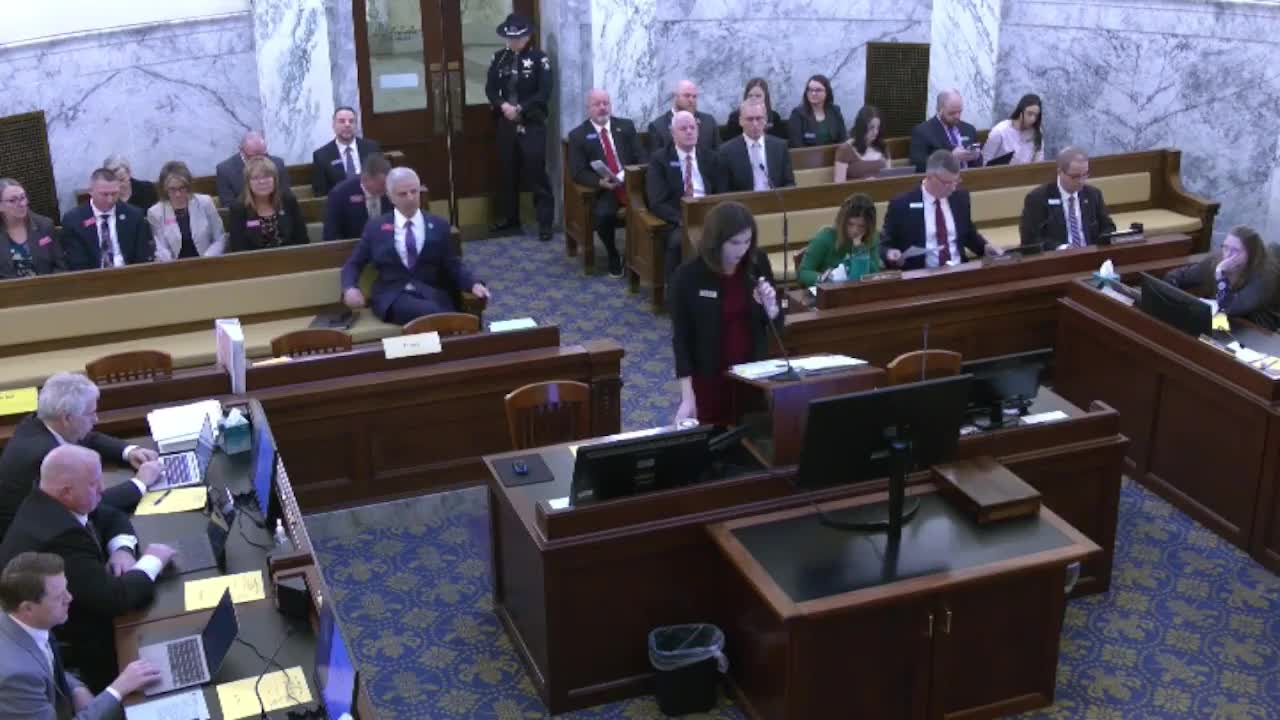
Legislative analysts told the Joint Finance-Appropriations Committee the state's active public works portfolio totals about $1.9 billion, with $1.4 billion in capital projects and 42% of funding already committed.
Legislative analysts and the Division of Public Works told the Joint Finance-Appropriations Committee the state's active public works portfolio totals roughly $1.9 billion, including $1.4 billion in capital projects.
Frances Lippett, legislative budget analyst, explained the Permanent Building Fund's multi-year project structure and that unexpended balances become continuously appropriated under Idaho law. She listed statutory revenue sources for the permanent building fund, including a $10 fee on income tax filings, portions of sales and cigarette tax, beer tax proceeds, a share of lottery earnings and interest income. Lippett said the state also has invested general fund money in recent years to address deferred maintenance and capital projects.
The Division of Public Works reported that it has completed about $70 million of work at the Chinden Campus, has $30 million in progress and estimated another $145–160 million in additional deferred maintenance and upgrades if remaining buildings are brought into scope. Director Dale Reynolds said the campus is largely occupied, with roughly 7% of rentable square feet vacant (about 2,100 square feet in one southern portion of a floor), not counting an entirely vacant building that agencies are still considering.
Lippett summarized the Division of Public Works' FY2026 recommendation, which included six capital projects and $68.2 million in alterations, repairs and maintenance projects. Individual capital requests included funding for an Idaho State University life sciences complex (a $127.77 million estimated total project using multiple funding sources), lab expansion at Boise State's Micron Center for Materials Research, a Lewiston district facility for the Idaho State Police (after an attempted purchase of an existing building proved unsuccessful), a Bonneville County utilities connection for a National Guard readiness center, expansion of a Department of Lands office, and a joint military science and veterans assistance center at the University of Idaho.
Committee members pressed Division staff on timelines for projects. Administrator Dale Reynolds said timelines vary by delivery method and project scale; he offered the women's prison project as an example that will take about 2½ years once under construction. Lippett and Reynolds confirmed the division had submitted a detailed capital project report to the committee in November and agreed to provide lists of projects that had not made progress within a four-year timeline established in budget language.
Lawmakers also discussed construction cost escalation, workforce shortages and procurement thresholds. Administrator Reynolds said labor and materials remain constrained but that some cost escalation has flatlined; he confirmed that project work already under contract must continue. Permanent Building Fund advisory council recommendations and project prioritization are based on agency need and project readiness rather than geographic distribution, Reynolds said.
The committee asked for further reporting on project timelines and for the division to identify projects that had not advanced within the four-year implementation guideline; Lippett agreed to provide that information.