Get Full Government Meeting Transcripts, Videos, & Alerts Forever!
Get email alerts on the Charter School Financing Credit Enhancement topic
No spam. Unsubscribe anytime.
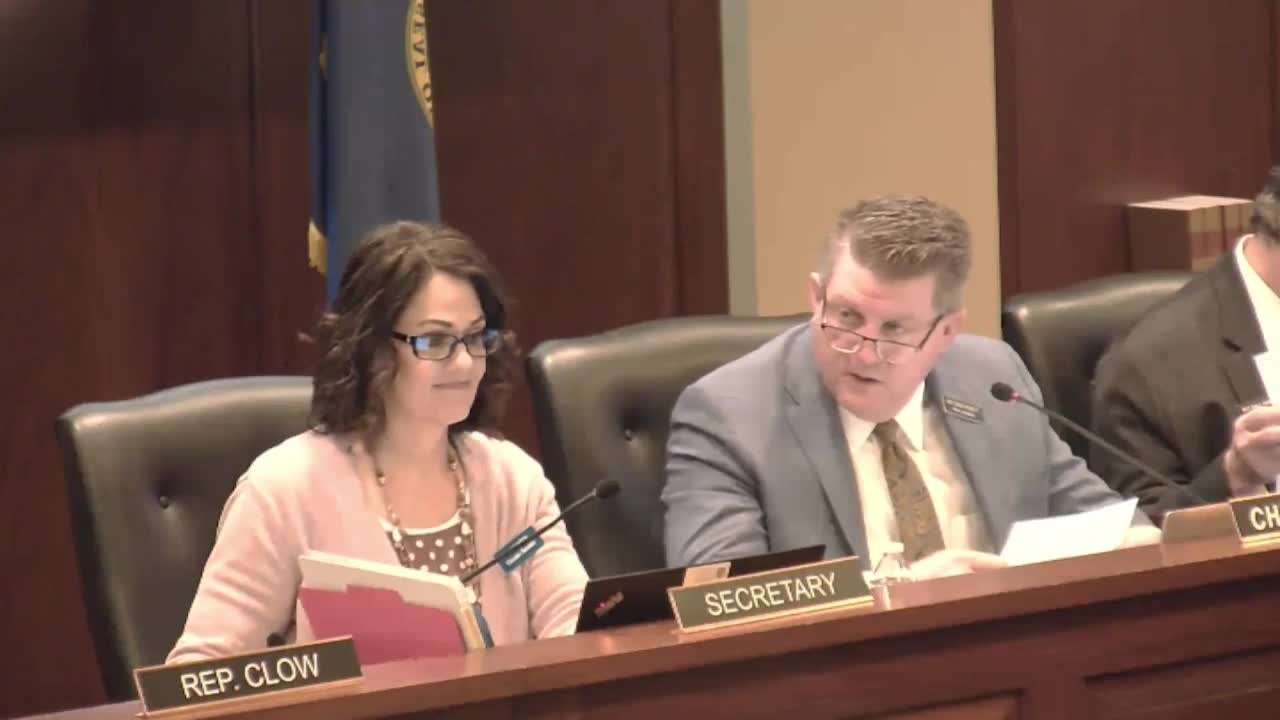
House education panel holds bill and introduces RS to shift charter school credit‑enhancement approach
Summary
The House Committee on Education held House Bill 256 for further consideration and introduced RS32492 to change the proposed credit‑enhancement approach for charter school facility financing. Charter leaders and financing partners testified the state program lowers borrowing costs and attracts lenders.
The Idaho House Committee on Education on Feb. 25 held House Bill 256 in committee and introduced RS32492, which the sponsor said would move the proposed credit‑enhancement approach from a ‘‘floor‑based’’ method to a ‘‘formulaic‑based’’ method.
Representative Wendy Horman, R‑District 32 of Bonneville County, introduced the change and told the committee the modification came at the Treasurer’s Office request. "So that's the change in the bill. Otherwise everything remains as it was in the House Bill 2 56," Horman said.
The committee approved a motion to hold House Bill 256 in committee; Representative Harris made the motion and it carried on a voice vote with no recorded opposition. Later in the hearing Representative Mundyff moved to introduce RS32492 and request placement on the second‑reading calendar; that motion also passed on a voice vote.
Why it matters: witnesses told the committee the state's credit‑enhancement program reduces financing costs for charter school facilities and expands lender participation for start‑ups and refinancing. Monica White, chief executive officer and founder of Elevate Academy, said the program helped make projects feasible for schools serving at‑risk students. "If we go through the typical bond market, we have to pay 865,000 in interest annually each year for 35 years," White said, adding that using the credit‑enhancement program would lower interest to about $576,000 per year per school at a 5% rate and save roughly $289,000 annually per campus. White described a typical trade school build cost of about $18,000,000.
Emily Downey, chief financial officer for SAGE International Charter Schools, described prior savings her schools realized from using the state program: refinancing in late 2020 saved one campus about $119,000 per year in interest; another purchase and high‑school build saved about $239,000 per year.
Building Hope Finance, a certified development financial institution, and Bloom's CEO Terry Ryan, testifying remotely, also supported the program. Robin Odlin of Building Hope Finance said Idaho's program is "state of the art" and brings lenders to projects they otherwise would not finance. Terry Ryan described federal grants, a state revolving loan fund and the credit‑enhancement program as pieces that let schools move to 30‑ to 35‑year permanent financing.
Committee procedure and next steps: Representative Harris moved to hold House Bill 256 in committee pending consideration of the RS and public testimony; the motion carried. Representative Mundyff moved to introduce RS32492 and place it on the second‑reading calendar; that motion carried. The committee did not record roll‑call vote tallies in the transcript; outcomes were announced by voice vote.
Testimony and record: witnesses emphasized the program's role in reducing net interest expense and enabling long‑term financing, particularly for charter schools with facility‑heavy programs such as construction and welding. No members recorded opposition on the floor during the public hearing; several members asked procedural questions about how the bill and RS would be handled moving to the floor.
The RS will be placed on the House second‑reading calendar; House Bill 256 remains held in committee pending further action.