Get Full Government Meeting Transcripts, Videos, & Alerts Forever!
Get email alerts on the K12 Budgeting Funding Formulas topic
No spam. Unsubscribe anytime.
LSO presents K–12 budget overview: attendance-driven funding, support units and proposed enhancements
Summary
Jared Tatro of the Legislative Services Office presented a high-level K–12 budget briefing to the House Education Committee, explaining attendance-based funding, support units, staff allowances and top enhancement requests including a weighted student formula, transportation formula rewrite and a special-needs fund.
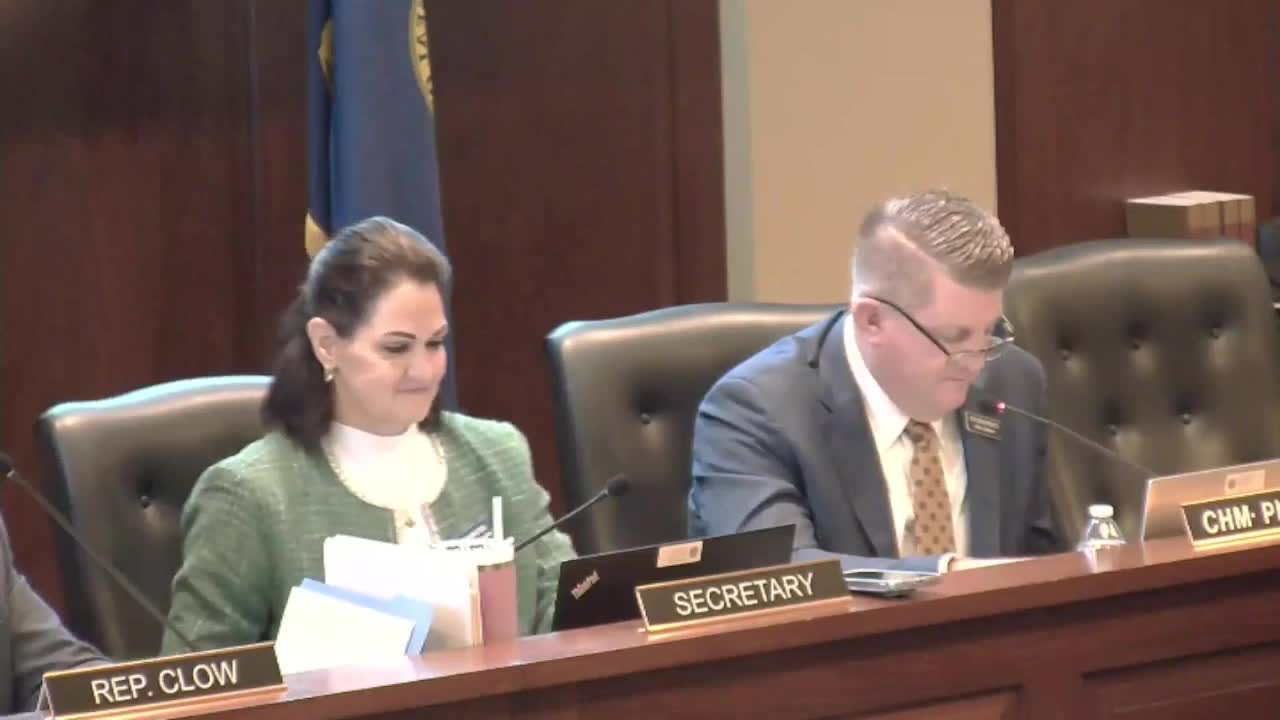
Jared Tatro, deputy division manager for the Legislative Services Office’s budget and policy analysis division, briefed the House Committee on Education Feb. 13 on how Idaho funds K–12 public schools and on the department’s top budget priorities and enhancement requests.
Tatro explained that most state K–12 funding flows through support units and is calculated using average daily attendance (ADA). He said the current midterm ADA-based payment reflects about 295,400 average daily attendances against an enrollment estimate of roughly 314,100 students. The committee was told the current midterm support-unit count is 15,875; last session’s appropriation was based on 16,154 support units.
Tatro noted that the Legislature does not set local employee compensation; lawmakers appropriate formula dollars and districts decide salaries. He also described the staff allowance statutory formula (1.55 full-time equivalent staff per support unit) and said some committee members and staff want clearer, updated statutory language to reflect modern roles such as IT managers.
He warned the committee about recent confusion when the state reverted from a COVID-era hybrid enrollment rule back to a pure ADA basis, saying the reversion and reduced ADA compared with temporary enrollment counts produced an unexpected funding shortfall the Legislature later addressed with supplemental appropriations.
Tatro reviewed major funds and one-time federal money in prior years: the School District Facilities Fund (the “$2.92 Fund”), the Public Education Stabilization Fund (PSIF) and federal ARPA funds; he said roughly $251 million represents traditional federal aid and about $99 million was the final-year ARPA allotment districts were expected to spend this year.
On enhancements, Tatro identified three top items that will require germane legislation: a weighted-student formula (a move away from support units to targeted per-student weights), a rewrite of the pupil-transportation formula, and a special-needs student fund to recognize high costs for some special-education cases. He said the superintendent requested these but legislation would be needed before Joint Finance could act.
Tatro also summarized Department of Education enhancement requests including a dispute-resolution specialist for special-education issues, a special-education specialist for charter schools, and an increase in driver-education reimbursement. He noted the department is working to improve attendance verification and that the Legislature recently added a Department of Education position to help verify attendance counts.
Committee members asked clarifying questions about program interactions, timelines for districts to know their budgets, whether Advanced Opportunities and other scholarship funds can be “double-dipped,” and which statutory sections detail divisors and support-unit calculations (Title 33, Chapter 10). Tatro provided citations (Title 33, Chapter 10; sections on average daily attendance and divisors) and directed members to the legislative budget book and online resources for district-by-district detail.
Tatro’s materials are part of the committee’s shared OneDrive and the legislative budget book. Committee members thanked him and said they will use the briefing to guide budget and policy work this session.