Get Full Government Meeting Transcripts, Videos, & Alerts Forever!
Get email alerts on the Dual Credit Advanced Opportunities topic
No spam. Unsubscribe anytime.
Committee sends bill to floor allowing homeschool students alternative pathway for dual credit
Summary
House Bill 175 would allow Idaho homeschool students to access advanced opportunities dual-credit funding directly through community colleges, permit multiple college entrance exam attempts, and align private-school provisions with public-school rules. The House Education Committee gave HB175 a due-pass recommendation.
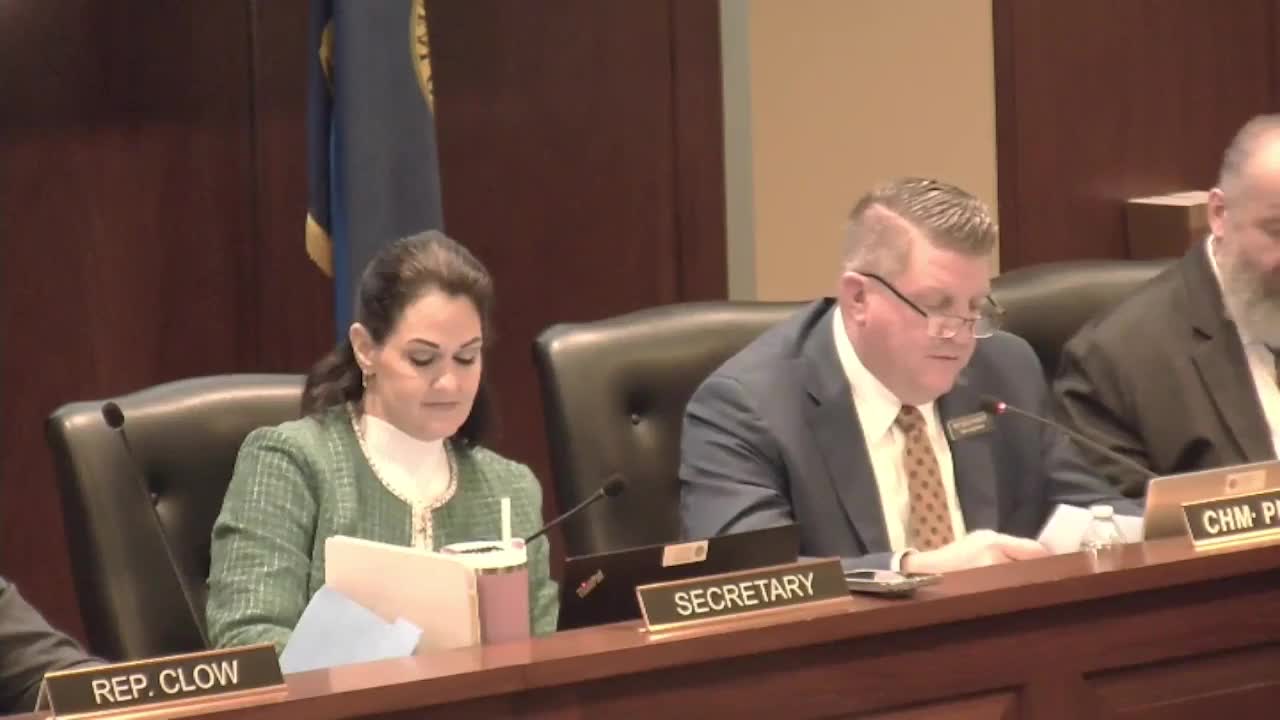
The Idaho House Committee on Education voted Feb. 13 to send House Bill 175 to the floor with a due-pass recommendation. Sponsor Rep. Lance Horman said the bill clarifies and expands use of the state’s Advanced Opportunities program so more students can access college-level coursework and related supports.
Horman said the bill responds to constituent reports that some districts recently became less cooperative with families seeking dual-credit pathways. HB175 would allow homeschool students who encounter difficulty working through a district to access Advanced Opportunities funding directly through community colleges. The language, the sponsor said, was drafted with College of Western Idaho (CWI) and circulated to other institutions for input.
The bill also clarifies that students may retake college entrance exams more than once, revises language to change “tuition and fees” to “educational costs” to align with the Opportunity Scholarship, and aligns private-school course-failure language with public-school language so districts can determine what constitutes failure. At the Department of Education’s request, the bill would also require the state to pay out-of-district community college tuition for private-school students in Advanced Opportunities and would require private-school students to meet the same counseling requirement after earning 15 credits as public-school students.
Committee members asked for technical clarifications. Rep. Marmon asked whether the Advanced Opportunities account amounts and the Opportunity Scholarship amounts would interact; Horman described the programs as distinct (Advanced Opportunities accounts of about $4,625 and Opportunity Scholarship around $3,500). Rep. Mathias said he would not support the motion only because language on page 5, lines 12–13 might conflate college entrance exams (non-credit-bearing) with credit-bearing postsecondary exams; he said that could be corrected by amendment.
Rep. Ehart moved to send the bill to the floor with a due-pass recommendation; the motion passed with Rep. Mathias recorded as a nay. The committee recorded no other votes by name.
Sponsor and supporters said the bill’s intent is to remove unnecessary barriers to dual-credit opportunities and to ensure private- and homeschool students have equitable access to funds and guidance.
No members of the public signed up to testify during the committee’s public-testimony period for HB175.