Get Full Government Meeting Transcripts, Videos, & Alerts Forever!
Get email alerts on the Workforce Compensation topic
No spam. Unsubscribe anytime.
ITD seeks targeted pay increases to curb turnover among highway maintenance crews
Summary
Idaho Transportation Department asked JFAC for a targeted career‑path pay increase affecting maintenance positions, citing high turnover, training costs and recruitment challenges for CDL‑qualified staff.
The Idaho Transportation Department asked the Joint Finance‑Appropriations Committee for a targeted compensation adjustment aimed at maintenance staff and transportation technicians, saying wage increases across horizontal career‑path steps would reduce turnover and training costs.
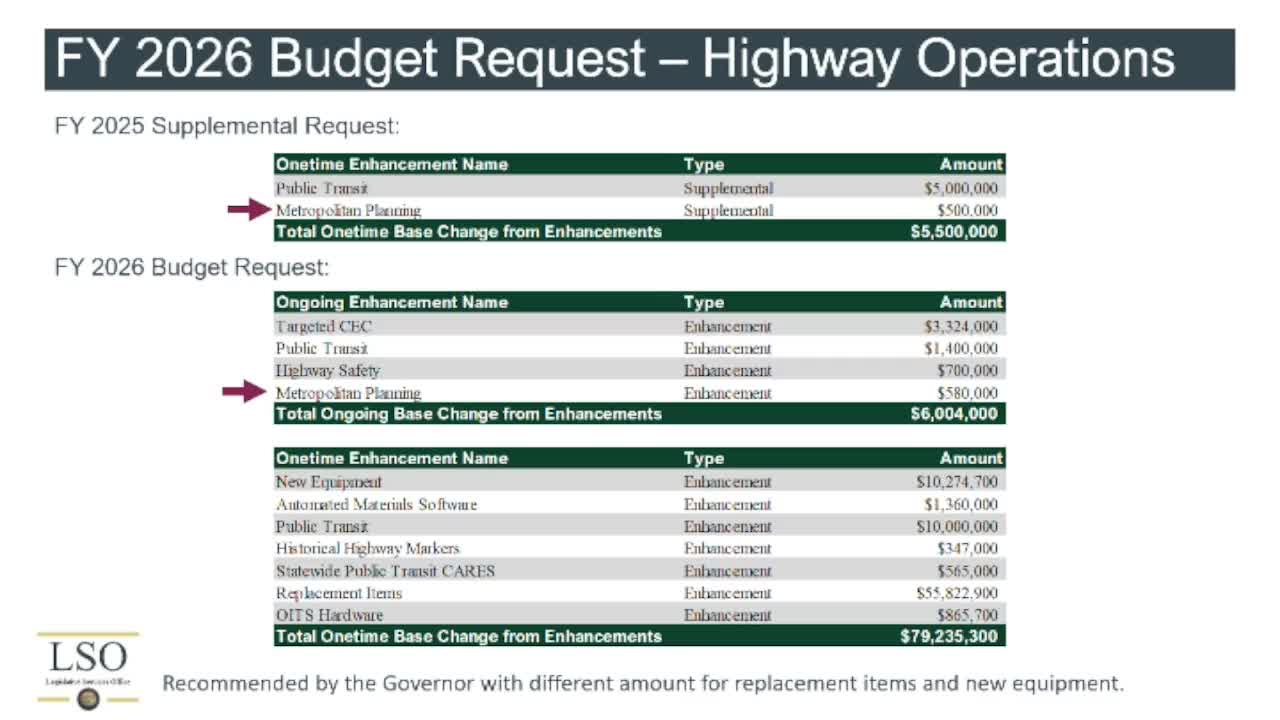
ITD requested a targeted CEC (career‑path) adjustment that would raise pay steps by $2.50 per hour across approximately 505 positions in maintenance classifications and other frontline roles. Director Scott Stokes said the department’s maintenance workforce has averaged about 78 separations per year in recent years — from a population of roughly 400 maintenance employees — and the department spends significant time and resources training entrants, particularly those who must obtain commercial driver’s licenses.
"Our average departure rate, just in maintenance employees, has been an average of 78 per year out of about 400," Stokes said, describing why ITD urged the pay adjustment. He told lawmakers that many entry hires lack CDLs and ITD spends 6 to 12 months training and certifying employees to perform road work and operate snowplows and other equipment.
Committee members asked whether higher state pay would simply shift employees into the private sector or to counties and cities that often pay similar or higher entry wages. Representative Mitchell said private employers can raise pay quickly and asked if ITD could hold employees after investing in their training. Stokes said many departures have been to counties and cities rather than private industry and that local governments often pay $20 to $25 an hour at entry. "Once they get into the system, we keep them for a few years," he added, noting retention improves after five years of employment.
The committee also discussed a separate 53‑position workforce request approved last year for district frontline roles. ITD reported roughly half of those 53 positions have been recruited and that the department still has 60–70 vacancies overall. Department officials said the targeted CEC is aimed specifically at the maintenance career path rather than headquarters engineering positions and would adjust pay steps across the four‑step ladder to avoid compression.
Ending: JFAC members said they will evaluate the targeted CEC request alongside broader compensation discussions for state employees and the committee’s overall salary policy decisions.