Get Full Government Meeting Transcripts, Videos, & Alerts Forever!
Get email alerts on the Child Welfare Budget topic
No spam. Unsubscribe anytime.
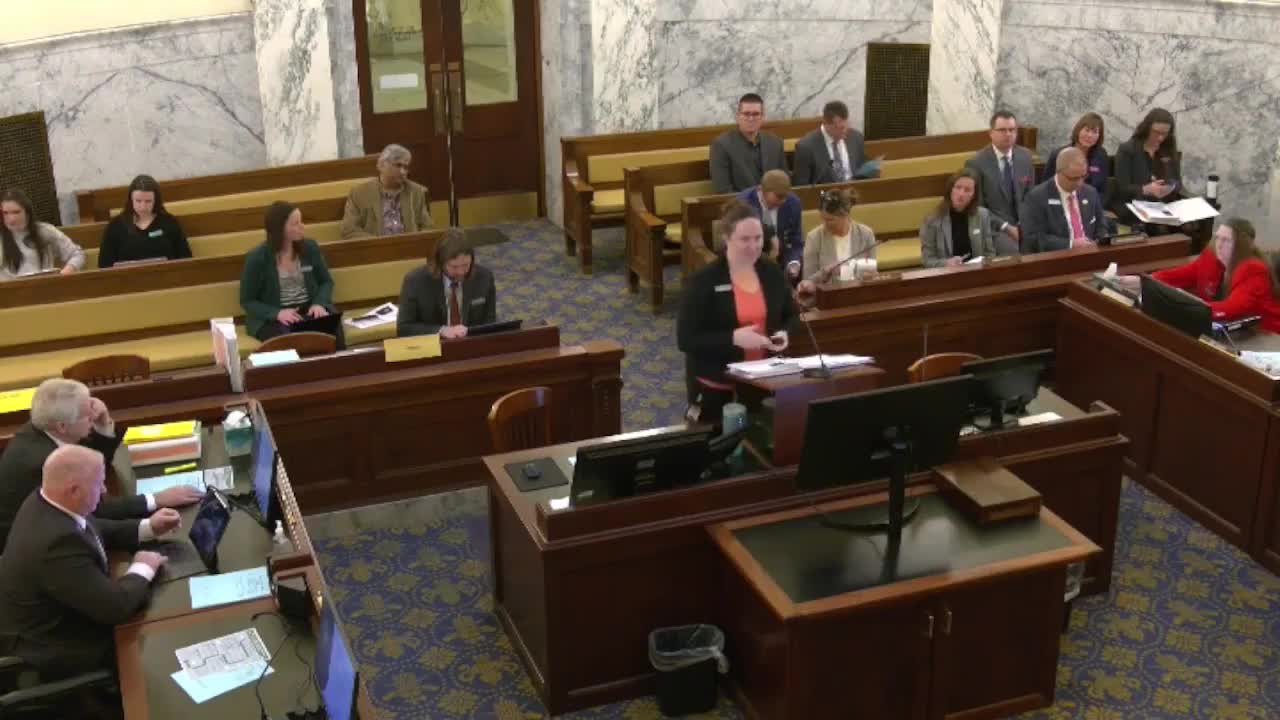
Committee reviews child welfare budget, backs prevention staffing and pauses Payette purchase
Summary
The Joint Finance and Appropriations Committee on Thursday heard a detailed briefing on the Department of Health and Welfare’s child welfare budget — now rebranded as Youth Safety and Permanency — that emphasized adding prevention specialists and clinical staff to reduce expensive congregate‑care placements.
The Joint Finance and Appropriations Committee on Thursday heard a detailed briefing on the Department of Health and Welfare’s child welfare budget — now rebranded as Youth Safety and Permanency — that emphasized adding prevention specialists and clinical staff to reduce expensive congregate-care placements.
Alex Williamson, budget and policy analyst with Legislative Services, told the committee the division (listed in budget materials under the older name "child welfare") has 434.8 authorized full‑time positions and, as of Feb. 10, 45.8 vacancies; about 25 of the vacancies were in the interview stage and nine were posted. Williamson said the division expended about $117.8 million in FY2024, with foster and assistance payments making up roughly 60% of that total.
The director of the Department of Health and Welfare, Alex Adams, told lawmakers the budget package is organized around the goal of placing “the right kid, in the right place, at the right time,” and described prevention and foster recruitment as the most effective levers to reduce reliance on congregate‑care settings, which the director called the most costly and worst for outcomes. “If I keep a kid in their home, in a prevention case, it’s a dollar 80 a day. If a child is removed and placed in foster care, it’s $16 a day. If I don't have a foster bed available, congregate care is $380 a day,” Adams said, noting rising mental‑health and substance‑use needs among youth and a shortage of community‑based placement options as key cost drivers.
Why it matters: committee members and department staff framed the request as an investment intended to lower future supplemental requests by reducing the number of children placed in high‑cost congregate care. Williamson said the department seeks a $14.1 million FY2025 supplemental tied to foster population forecast adjustments and listed several FY2026 requests and recommendations the committee will consider.
Key program requests and governor’s recommendations
- Prevention specialist team: Agency requests 36 new family service worker prevention specialist FTP to increase in‑home prevention capacity from 14 statewide to 50. The combined ongoing and one‑time cost listed in the request was about $3,048,200, of which a portion is ongoing. The prevention specialists would provide weekly in‑home contact to strengthen protective factors for families, the department said.
- Youth safety and permanency clinicians: Agency requested 12 positions; governor recommended 9. These clinicians would conduct needs assessments and assist placements and family searches, including purchase of a family‑find tool (the request and recommendation each included $120,000 for that tool).
- Foster program clinical staff: Agency requested 15 clinicians; governor recommended 10. Those clinicians would support foster families caring for youth with intensive behavioral and mental‑health needs and help stand up a 24/7 support line and a proposed monthly maintenance rate increase averaging about 5%.
- Foster program licensing staff: Agency requested 14 FTP to reduce the average time to licensure (reported at about 80 days) and to fast‑track kinship licensing; the governor recommended 3 of those positions.
- Case management support: The division reported 67 case management workers with an average caseload of 32 youth; the agency’s goal is to reduce that average to 26 and asked for additional support staff (14 requested; governor recommended 3).
- Payette Assessment and Care Center: The agency amended an original purchase request and the governor’s office recommended pausing a purchase. The department will instead continue to use the Payette facility under a lease while staffing it with temporary staff to determine long‑term suitability. Williamson said the adjusted request includes $2.7 million ongoing to operate the assessment and care center under a lease arrangement. Senator Cook asked whether state funds paid for facility modifications; Williamson replied she believed the state paid the modifications, and Director Adams confirmed state funds were used to improve safety and security while community partners also contributed equipment.
Funding adjustments, transfers and FMAP
Williamson told the committee the division is asking for exemption from last year’s maintenance‑bill language that restricted transfers of personnel dollars and trustee/benefit payments; the request would allow transfers under Idaho Code 67‑35‑11. There is also a small budgetary shift noted related to federal‑state matching (FMAP), including a $285,900 shift tied to a FMAP change from 67.59% to 66.91%.
Department rationale and savings case
Adams and deputy director Monty Pro described the department’s strategy as a ‘‘flywheel’’ in which investments in prevention and foster recruitment reduce placements in congregate care and thereby lower long‑term costs and reliance on supplementals. Adams said the supplemental amount requested this year is lower than earlier projections and credited several prior actions (increasing foster placement capacity, allowing reciprocity for out‑of‑state foster families, partnering with faith groups, and paid family‑leave incentives for fostering) with reducing immediate supplemental need. The director said progress has moved foster bed capacity from 74 beds per 100 incoming children to 94 beds per 100.
Questions and concerns
Committee members asked about the Payette facility decision, the source of funds for facility upgrades, the department’s ability to fill dozens of new positions and the recurring supplemental pattern. Director Adams said the vacancy rate in child welfare was roughly 10.5% and that the department expected to fill posted positions quickly; he acknowledged the field is high‑turnover and said the new positions aim to reduce caseloads and burnout. Lawmakers pressed for continued reporting on outcomes, and several members urged faith‑based outreach as part of recruitment drive for foster families.
What the committee directed or decided
No formal committee vote occurred during this hearing. The department paused the purchase of the Payette facility and adjusted the request to operating and leasing costs while the governor’s recommendation reflects that approach. Committee members requested follow‑up details and reports from the department on implementation, hiring progress and program outcomes.
Ending note
Department and legislative staff said they will provide additional slide materials and reports to the committee through SharePoint and the legislature’s public materials; committee members signaled interest in monitoring hiring, prevention outcomes and the department’s plan to reduce congregate‑care reliance over time.