Get Full Government Meeting Transcripts, Videos, & Alerts Forever!
Get email alerts on the Medical Licensure Residents Moonlighting topic
No spam. Unsubscribe anytime.
Senate committee hears bill to allow some medical residents to obtain full Montana license after one year
Summary
Senate Bill 347 would allow medical residents who complete one year of an accredited residency and remain in good standing to obtain a full Montana medical license so they can bill for care while still enrolled; proponents say it would expand coverage in rural areas, while no vote was recorded at the hearing.
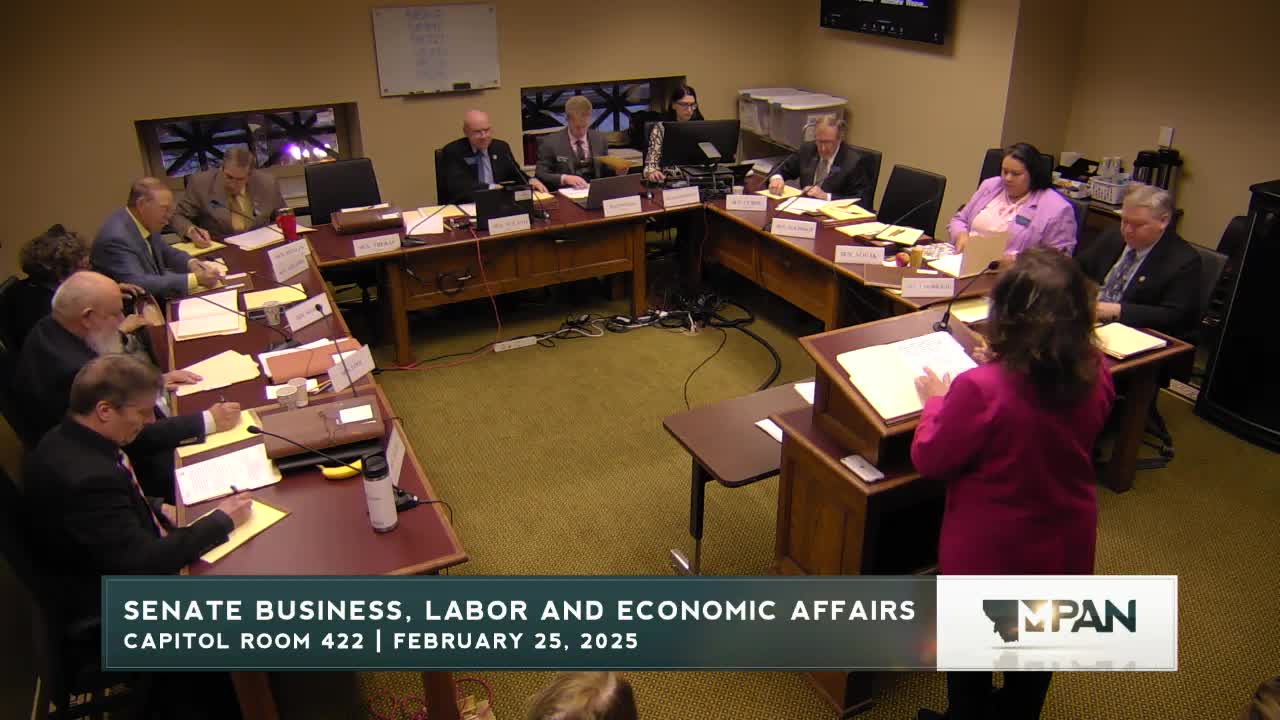
Sen. Sue Vinton, R-Billings, introduced Senate Bill 347 on behalf of a proposal to let medical residents obtain a full Montana medical license after completing one year of residency and while remaining enrolled and in good standing in their program. "Today, I am bringing for your consideration Senate Bill 347," Vinton told the Senate Business Labor and Economics Committee at a hearing where hospital systems, residency directors and the state licensing bureau testified.
Proponents told the committee the change would allow residents to bill insurers when they provide care outside their formal training schedule — commonly called "moonlighting" — and could help fill gaps in rural coverage. JJ Carmody, representing Billings Clinic Logan Health, said his system has more than 50 residents and regularly uses residents to staff rural sites. "The ability of residents to moonlight would go a long way in addressing the shortage of physicians in Montana," Carmody said.
Why it matters: supporters said Montana currently has relatively few physician residents per capita and an aging physician workforce, and that many rural hospitals operate on thin margins that make paying outside clinicians costly. The bill's change would let residents who meet the bill's conditions enroll with payers and have the facility billed for their services, proponents said. Jean Branscum, CEO of the Montana Medical Association, asked the committee to give the bill a do-pass recommendation: "We would ask for a due pass on Senate Bill 347."
Testimony and safeguards: Rob Stenger, family physician and program director of the Family Medicine Residency of Western Montana, and Josh Edwards, chair of psychiatry at Billings Clinic, described program-level safeguards. Stenger said accreditation standards and program directors currently require written approval before a resident may moonlight, and program directors assess whether a resident is competent to take on outside shifts. "This language is very narrow and conservatively tailored to accomplish what we want to accomplish and nothing more," Stenger said.
Regulatory context: sponsor testimony referenced existing licensing categories and rules, noting residents in Montana are currently granted a resident license under MCA 37-3-307 and that administrative rules (ARM 24.1.56.5092) address some moonlighting practices. Kevin Bragg, bureau chief for the Professional Licensing Bureau at the Montana Department of Labor and Industry, told the committee about licensing practice in other states, saying his research shows about 26 states allow licensure after one year of postgraduate work.
Financial and operational concerns: witnesses said the change would address a reimbursement barrier that currently prevents facilities from billing for some resident-provided care. Carmody said Billings Clinic routinely has 70 to 85 open physician positions and sometimes relies on locum tenens; allowing residents to bill could reduce those costs at rural affiliates. Committee members pressed witnesses on who would supervise moonlighting residents and how patient safety would be protected; witnesses said residents practicing under the bill would hold their own license and practice within their competency, but would retain the program connection and access to attending physicians for consultation.
Next steps and outcome: proponents asked the committee for a do-pass recommendation. The hearing record included testimony from multiple health-care organizations and residency program directors, and an informational witness from the licensing bureau answered questions about how other states handle similar licensure. No final committee vote or amendment was recorded in the hearing transcript supplied to the committee.