Get Full Government Meeting Transcripts, Videos, & Alerts Forever!
Get email alerts on the School Enrollment Policy topic
No spam. Unsubscribe anytime.
Committee backs HB 236, allowing school boards to consider convictions, withdrawals-in-lieu-of-discipline and habitual truancy when deciding enrollment
Summary
The committee voted to send House Bill 236 to the House floor with a "do pass" recommendation. The bill would let local school boards deny or condition enrollment for students with certain adjudications or convictions, students withdrawn in lieu of discipline, or students deemed habitually truant, while setting a written due-process procedure.
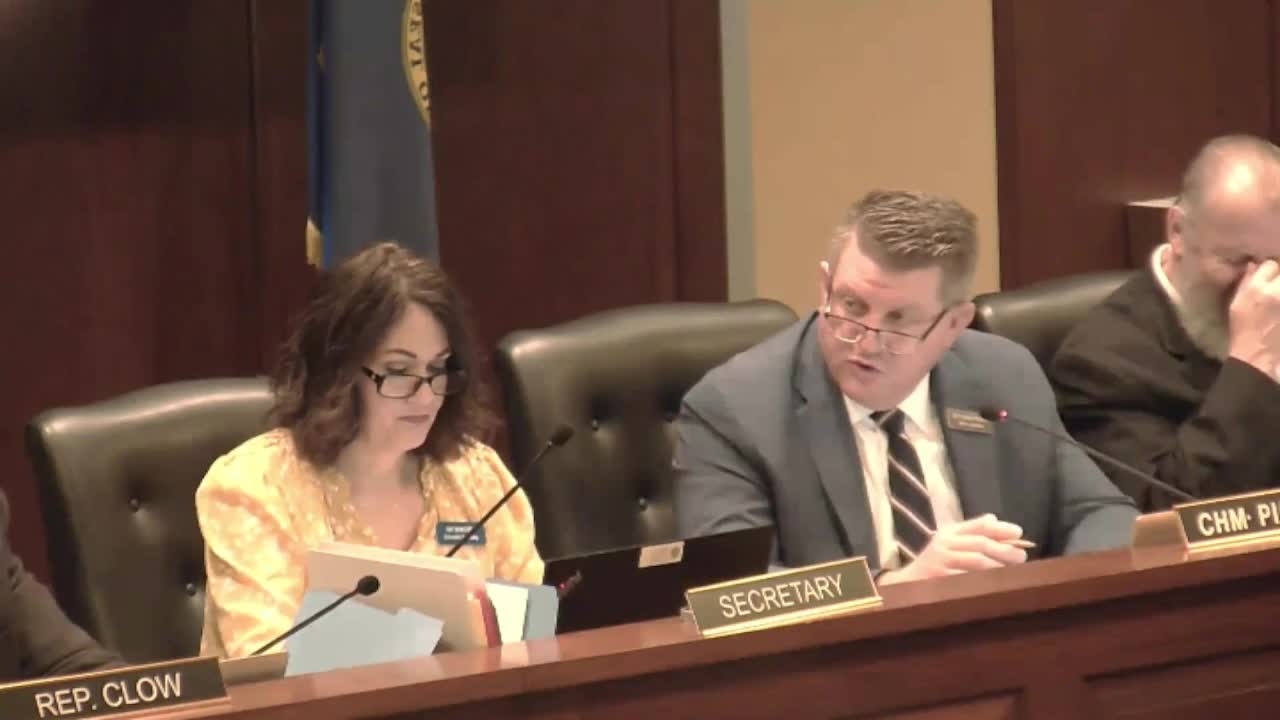
An Idaho House committee voted to send House Bill 236 to the floor with a "do pass" recommendation after a roughly 40-minute hearing in which sponsors, educators and parents debated how the bill would affect students who are adjudicated, convicted, habitually truant or withdrawn in lieu of discipline.
Representative Sean Dygert (District 23) introduced the bill to the committee, saying it "makes it very specific" what school boards may consider when denying attendance and that the measure has "no fiscal impact." Dygert said the bill would allow school districts to record when a student has been "withdrawn in lieu of discipline" so the receiving district can take that history into account rather than allowing what Dygert described as students who would otherwise be up for expulsion to reenroll elsewhere without notice.
Dygert said the bill also requires disclosure of certain crimes and adjudications and uses the juvenile-court term "adjudication" where relevant. He pointed committee members to the statute language providing written due process (page two, lines 7–30), saying parents would receive written notice and could contest district decisions before the board and submit evidence or witnesses.
Supporters included Quinn Perry, deputy director of the Idaho School Boards Association, who said the association "is in support of House Bill 236" and that school boards take exclusion from public school seriously; the association has urged that boards follow due process so families cannot simply move a student to another district to avoid a pending expulsion.
Multiple public witnesses opposed the bill on equity and disability grounds. Britney Shipley, a social worker and parent, testified that HB 236 "allows schools to deny enrollment based on truancy" and warned that the language could exclude children who miss school for medical reasons, citing federal protections under Section 504 of the Rehabilitation Act and the Individuals with Disabilities Education Act (IDEA). Aida Samantha "Sam" Moore, founder of Elevate Empire and a former foster youth, said the bill "disproportionately harms Idaho's most vulnerable children" and urged investment in alternatives such as restorative practices and behavioral-health supports.
Committee members pressed the sponsor on who the bill targets and how it interacts with federal protections. Representative Dygert and other members repeatedly stated the bill is intended for serious, completed adjudications and convictions—not routine classroom disruptions—and does not prevent enrollment in virtual programs. Dygert also said that expunged records would not be reportable: "if it's been expunged, then it's no longer there, so there's nothing to report."
Representative Hawkins moved that the committee send HB 236 to the House floor with a "do pass" recommendation. The committee approved the motion by voice vote; there was no roll-call vote recorded in the transcript and the motion "carried."