Get Full Government Meeting Transcripts, Videos, & Alerts Forever!
Get email alerts on the Geologic Survey topic
No spam. Unsubscribe anytime.
Idaho Geological Survey asks for stable funding as grant support for database manager runs down
Summary
The Idaho Geological Survey told the Joint Finance-Appropriations Committee it needs additional state support to maintain a database manager position previously funded by grants; the agency warned losing the position would hinder core data programs and jeopardize federal match opportunities.
Kevin Campbell, Legislative Services Office analyst, presented the Idaho Geological Survey (IGS) budget and noted that IGS consistently spends its appropriations while relying heavily on personnel funding.
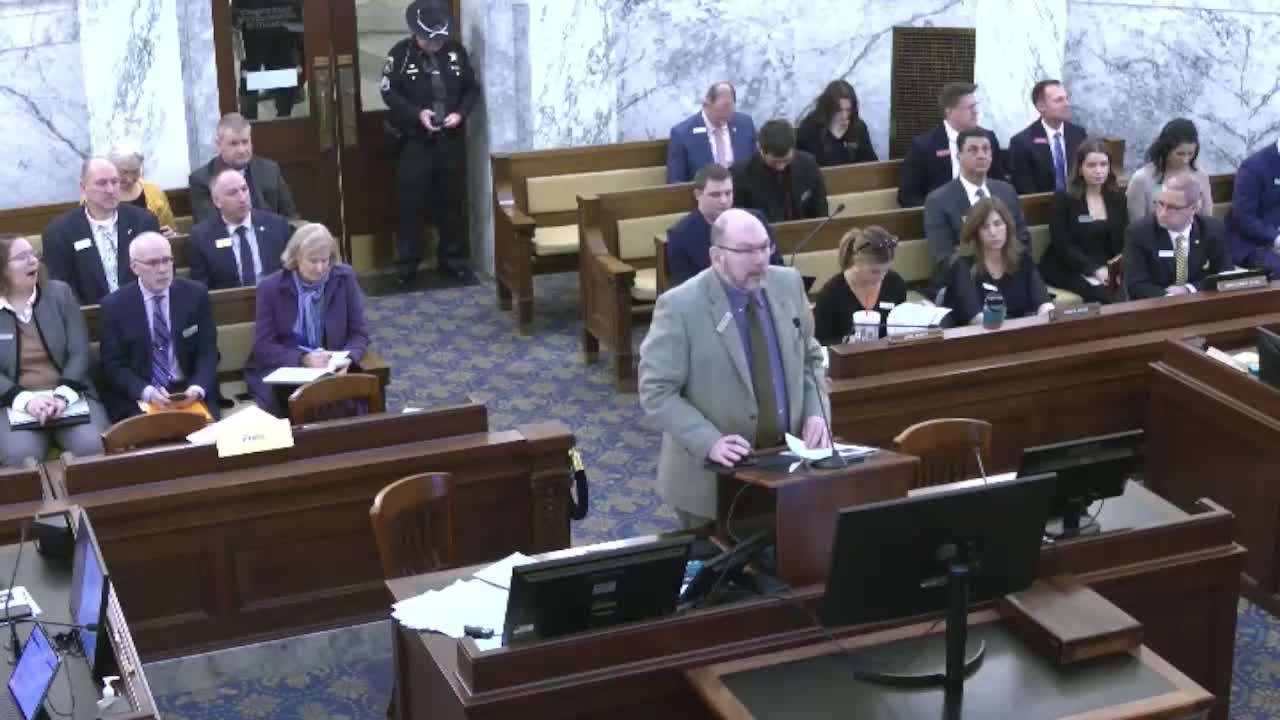
Claudio Berti, director and state geologist, told the committee the database manager role has been grant funded but that grant funding is ending. “This position has been with us for several years now,” Berti said. He said grant support — including abandoned mine lands funds administered by the Department of Lands — has been used to match federal grants 2:1 and that losing the position would be “catastrophic for the survey.”
IGS is budgeted with 12.47 authorized FTEs; personnel made up about 76.5% of expenses in 2024 and capital outlays included purchases such as a seismometer and research microscopes. The survey asked for an additional 0.13 FTE in FY 2026 to continue work maintaining Idaho’s geologic data systems; the analyst said prior database support had come from grants and that federal grant funding is winding down.
Committee members asked about the survey’s interaction with private‑sector exploration and physical core repositories. Berti said IGS does not work for mining companies but provides publicly available geologic mapping, data and interpretation that help private and public stakeholders understand resource potential. He said Idaho lacks a physical repository for drill cores and physical samples and that building such a repository and expanding data preservation would help avoid duplicate permitting and re‑disturbance of sites.
Representative Miller asked whether the agency collects data from exploration firms; Berti replied that corporate data shared with the survey becomes part of the public record when provided. He said IGS’s data‑preservation work is the survey’s most used public program and that expanding preservation to physical cores would be an investment with clear benefits for future exploration and permitting.
Ending: The Geological Survey asked the committee to fund the database manager position in the base budget to protect data continuity and to preserve federal matching capacity; no formal appropriation action was taken at the hearing.