Get Full Government Meeting Transcripts, Videos, & Alerts Forever!
Get email alerts on the State Board Budget topic
No spam. Unsubscribe anytime.
State Board budget review highlights $15M workforce grant proposal, staff growth and centralization
Summary
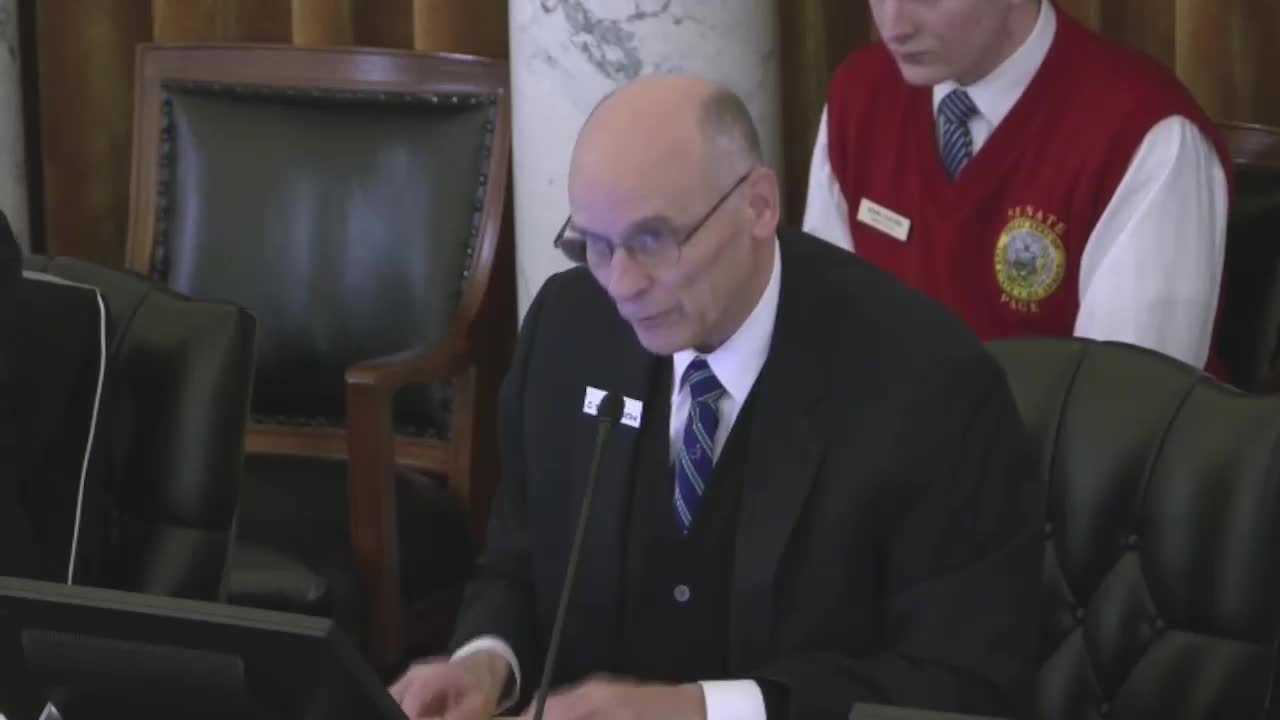
Kevin Campbell, a Legislative Services Office analyst, presented the Office of the State Board of Education budget to the Joint Finance‑Appropriations Committee, highlighting a proposed one‑time $15 million public‑private workforce capacity grant, recent transfers of IT and audit staff into the Board, and continued growth in authorized staff.
Kevin Campbell, a budget and policy analyst with the Legislative Services Office, presented the Office of the State Board of Education budget to the Joint Finance-Appropriations Committee, describing staff growth, recent transfers into the office and the major enhancement proposals for FY 2026.
Campbell said the Office of the State Board (OSB) now has 84.25 authorized full‑time‑equivalent positions with eight vacancies and a five‑year average authorized FTE count of 55.95, a figure he called “skewed a bit low” because several positions were recently transferred into OSB from other entities. He told the committee that over the past five years roughly 90% of appropriated personnel dollars have been spent on staff costs and that trustee and benefit payments make up the largest share of OSB’s budget.
The most prominent new request in the FY 2026 budget is Governor Little’s proposed one‑time $15,000,000 public–private workforce capacity grant. Campbell summarized the proposal: “This grant will allow institutions to build infrastructure capacity if it relates to workforce training and in demand careers and incentivize institutions to partner with local community members to raise funds for the projects.” He said awards would require private matching at a 1:1 ratio for Boise State University, Idaho State University and the University of Idaho, and a 1:2 ratio for Lewis‑Clark State College and the four community colleges.
Joshua Whitworth, OSB executive director, told the committee the board’s approach since he took the job has emphasized removing “siloed activity” and seeking “systemness” — centralizing certain functions so resources are used more efficiently across institutions. “One of the primary motives of the board’s directive is to look at system inefficiencies where that might exist,” Whitworth said. He described recent transfers into OSB of IT and data management staff, internal audit and risk‑management positions, and the school safety and security program, noting the board now supports IT services and school safety work for K‑12 and higher education partners.
Committee members pressed OSB on several subjects. Representative Pesky asked why the central office had grown from roughly 60 FTE previously to over 80 and whether funds might be better used at institutions. Whitworth replied the majority of recent growth resulted from specific transfers (internal audit, risk management, school safety and IT) intended to produce systemwide coordination and efficiencies and to support districts — “we were talking cyber and all the other components of security” for roughly 300,000 students, he said.
Members repeatedly asked for more details the committee can use to evaluate requests. Senator Cook asked for contractor versus employee cost comparisons and for clearer performance metrics for IT enhancements and backlog reductions. Whitworth agreed to provide plans and additional documentation on IT needs and maintenance backlogs. Representative Tanner and others requested detail on which FY 2026 requests would require new legislation; Whitworth said the behavioral threat assessment teams request is the only one he identified as needing legislation and that it “has a sponsor and is sitting in committee now.”
Independent Study Idaho, a long‑running program described by Whitworth as a flexible delivery option for nontraditional students, was also questioned. Whitworth said most of the program is supported by student fees (about $160 per credit) and that fee revenue has not kept pace with costs in recent years; the board is asking the committee to consider whether a base appropriation is warranted to maintain program quality and outcomes.
Members also sought clarity about the board’s posture on diversity, equity and inclusion‑related services. Whitworth and board members told the committee that most services tied to DEI or historically focused centers are funded through student fees and opt‑in processes; he said any changes would require additional review and that staff are evaluating indirect costs and fee structures.
Campbell also reminded the committee that OSB’s school safety and security assessment fund is funded by a $300,000 annual transfer from the public school income fund and that miscellaneous revenue streams tied to OSB include fees for registering private degree‑granting institutions and, unusually, proceeds from the sale of unclaimed livestock directed by statute to higher education programs that support livestock and agriculture.
The presentation closed with committee chairs and members asking OSB for follow‑up: an IT plan with current contractor expenditures and backlog metrics; a refined list of programs eligible for the workforce grant and related expected outcomes; and a clearer inventory of transfers into OSB in recent years so the committee can see corresponding funding changes in originating agencies. Whitworth and Campbell agreed to provide those materials for the committee’s work groups.
Ending: The committee did not take formal action on OSB’s requests during the hearing; members directed staff and OSB to supply additional documentation and performance data before budget decisions.