Get Full Government Meeting Transcripts, Videos, & Alerts Forever!
Get email alerts on the Historic Preservation topic
No spam. Unsubscribe anytime.
Biltmore steward recounts landmark’s history, stresses preservation
Summary
Tom Prescott, president of Seaway Hotels Corp., described the Biltmore Hotel’s history and his stewardship of the Coral Gables landmark, noting its original golf course, 1926 opening, 1926 hurricane damage, and use as a military hospital in 1942; no formal action was taken.
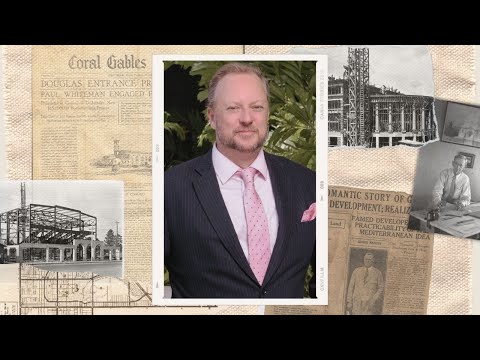
Tom Prescott, president of Seaway Hotels Corp., described the history of the Biltmore Hotel and his stewardship of the Coral Gables landmark during remarks at a Coral Gables public meeting.
Prescott said the hotel — a longtime city landmark surrounded by its own golf course — “is one of the crown jewels of our portfolio.” He described the site’s evolution from its conception in 1924 to its opening and later uses. “My name is Tom Prescott, and I have the fortunate, benefit of being the president of Seaway Hotels Corp, where one of the crown jewels of our portfolio is the Biltmore Hotel, the iconic landmark,” he said.
The Biltmore’s early history, Prescott said, began with a vision in 1924; about five months later, in March, ground was broken, and less than a year afterward the hotel opened to a grand gala on Jan. 14, 1926 and then opened to the public the next day. Prescott noted the hotel was built before Miami International Airport existed and that the surrounding golf course originally comprised 36 holes, part of which later formed the Riviera Golf Course while the remaining 18 holes are the Donald Ross championship course around the hotel.
Prescott recounted challenges the hotel faced: a major hurricane in September 1926 and the Great Depression that followed. He also noted the hotel’s role during World War II, saying that in 1942 the Biltmore became the Army Air Force Regional Hospital, later known as Pratt General.
Describing his personal connection to the property, Prescott said stewardship of the landmark is “something that’s a great honor.” He added that the hotel “can be held as a beacon by which to look at and judge the rest of the broader community to preserve it in that fashion.”
The remarks were historical and advocacy-oriented; the meeting transcript records no formal motions, votes, or direction tied to the statements.