Get Full Government Meeting Transcripts, Videos, & Alerts Forever!
Get email alerts on the Unemployment Insurance topic
No spam. Unsubscribe anytime.
Idaho Department of Labor asks JFAC for dedicated-fund authority as federal UI grants decline
Summary
The Department of Labor told the Joint Finance-Appropriations Committee it needs $7.33 million in dedicated-fund spending authority to sustain unemployment insurance operations as federal pandemic-era funds decline and explained how Idaho's UI trust fund is managed.
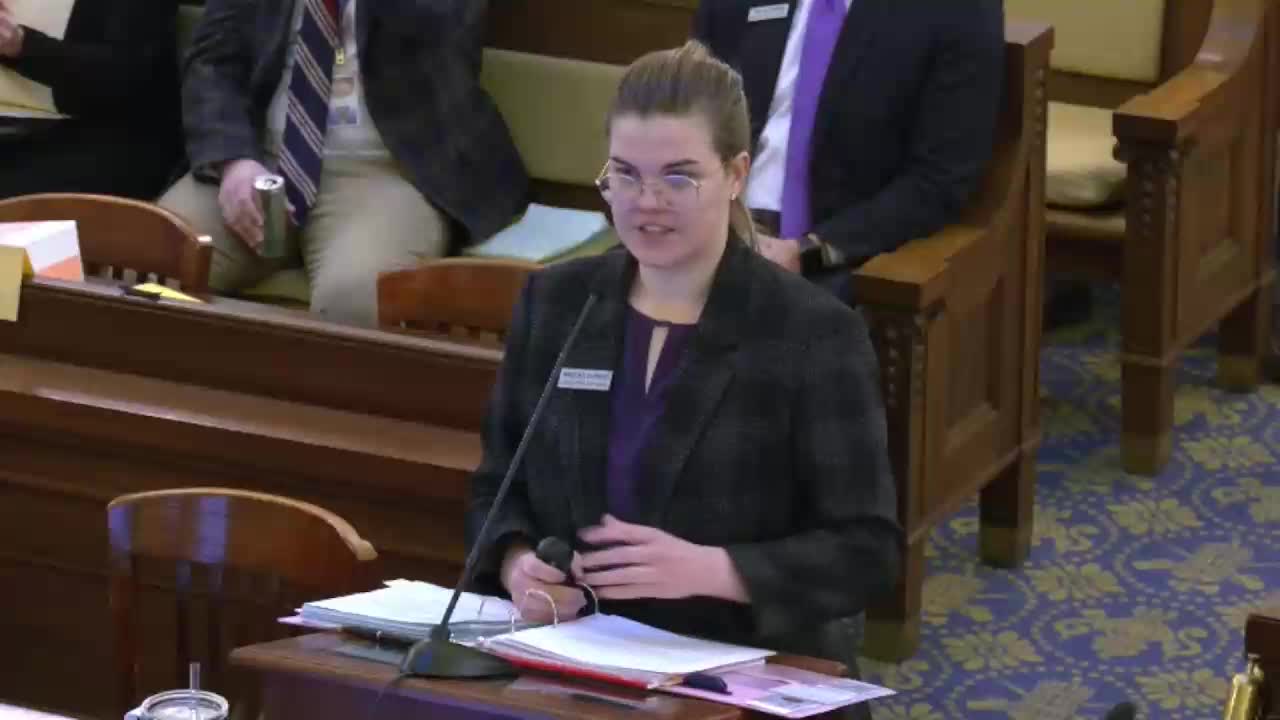
The Idaho Department of Labor told the Joint Finance-Appropriations Committee on Thursday it is requesting $7,330,000 in increased spending authority from dedicated funds for unemployment insurance operations for fiscal year 2026.
"During the pandemic, the department got a significant increase in federal grants," Director Janie Rivera said. She told the committee federal grant funding to administer the unemployment insurance (UI) program has declined as unemployment has fallen and that the department needs additional dedicated-fund authority to maintain core operations until federal grant levels are again known.
Rivera said the Department of Labor administers the UI program as a federal–state partnership and that federal grant amounts vary; the department cannot rely on steady year-to-year federal funding. "We would shift the staff from our federal grant to [dedicated funds] until we have another recession," she said, explaining that the requested $7.3 million is an estimate to avoid staffing instability.
Brooke Dupree, the Legislative Services Office analyst, told the committee the department is also requesting a cash transfer of $4,868,600 from the unemployment penalty and interest fund to the employment security fund to correct prior accounting overcounts. The transfer would reduce that fund’s ending balance by roughly $4 million, Dupree said.
Lawmakers asked for clarification about how the UI trust fund is set and what happens if payouts exceed the fund balance. Rivera described the state's trust-fund approach and options if the fund is exhausted: federal loans or bonding. She said Idaho's trust fund was "very healthy" and, following post-great-recession statute changes, has a solvency target that makes it less likely the state would need to seek general-fund support.
Representative Gladys Handy and Senator Galloway asked for staffing numbers to show baseline staff, recent increases and the department’s capacity to scale during downturns. Rivera said she would provide more specific staffing numbers and noted the department had hired more than 100 people during the pandemic for claim adjudication and call-center functions, and that a portion of current staffing increases is long-term work supporting a growing employer base.
The committee also discussed continuity of operations and whether the department’s existing FTP (full-time positions authorized) provide sufficient flexibility; analysts noted the department historically receives an appropriation that leaves room to fill additional FTP quickly during economic downturns.
No formal appropriation vote occurred during the hearing. Committee members requested follow-up materials from the department showing detailed staffing counts, the department’s spending history of federal UI grants, and scenario data showing how fund balances and tax-rate mechanisms would respond in downturn scenarios.