Get Full Government Meeting Transcripts, Videos, & Alerts Forever!
Get email alerts on the Special Education Funding topic
No spam. Unsubscribe anytime.
Committee Introduces Proposal to Help Cover Costs for High-need Special-education Students
Summary
The House Education Committee introduced RS 32437, a proposal to create a fund that would reimburse school districts for very high special-education costs above set thresholds. Lawmakers said the measure is a first step to address an approximately $80 million statewide gap.
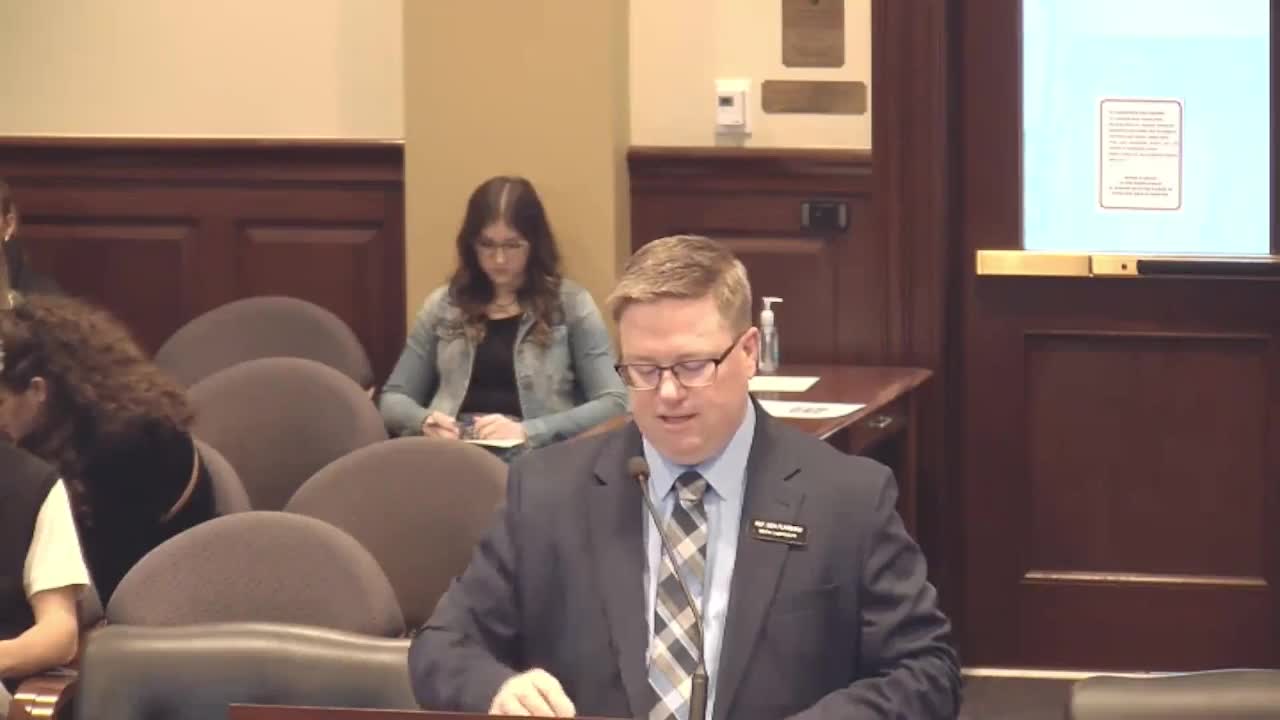
Representative Ben Furman, R‑District 30, introduced RS 32437 to create a state fund aimed at reimbursing school districts for exceptionally high special‑education costs.
The bill targets students described by Furman as “high needs” — pupils who require a full‑time aide or intensive medical or therapy services. Furman said the measure would begin reimbursing district expenses after the first $15,000 spent on an individual student, provide a different cost‑sharing arrangement after $65,000, and limit district exposure with a per‑district cap of roughly $150,000. He said the proposal is intended to begin closing what he described as an “over $80,000,000 gap” in special‑education funding.
Why it matters: Committee members and education officials said some individual cases can cost districts in the tens of thousands of dollars and that smaller or rural districts face higher per‑student contract costs. Supporters framed the RS as an initial, targeted response while urging a fuller hearing and analysis.
Representative Furman said for the record that the fund would "help anything after the first 15,000 dollars of expenses" and called the proposal "a good chance to see if there's things that we can do at the state level to help with this large gap in Special Education." China Hirasaki, director of special education at the Idaho Department of Education, explained that while many typical special‑education services are relatively inexpensive, "we do have cases of students that require a full time nurse to accompany them" or medical care such as tracheostomy or G‑tube feeding that "can run upwards into the hundred thousand dollar arena." State Superintendent W. Cutchfield told the committee the $3,000,000 appropriation in the RS was an estimate based on current statewide data about students who require full‑time accompaniment or similarly intensive services.
Committee members pressed for details. Representative Tanner asked how the $3,000,000 figure was calculated; Superintendent W. Cutchfield said the number was an estimate based on available enrollment and needs data and that actual costs could vary with enrollment. Representative Church and others asked for comparisons between typical special‑education costs and the highest‑cost cases; Hirasaki reiterated that intensive medical or communication supports (for example, ASL interpreters) can produce very high per‑student costs and that rural districts often face higher contracting costs because of travel and limited provider availability.
The committee discussed Medicaid coordination. Hirasaki said the proposal would require districts to pursue other funding sources first, including Medicaid, but that Medicaid does not fully cover school‑based costs — noting a typical match gap “which hovers typically right now about 30%.” She gave an example that if a district fronts $10 in Medicaid‑eligible costs, it may receive about $7 back through reimbursement, leaving a gap of roughly $3 on each reimbursable dollar. She also noted services that are typically not Medicaid‑reimbursable, such as ASL interpretation.
Representative Sauter moved to introduce RS 32437 for a full hearing, describing district burdens when full‑time staff must be committed to a single student. The motion passed on a voice vote; Representative Harris asked to be recorded as opposing the introduction. The committee chair said the motion carries and the RS will be set for a hearing.
The RS would not automatically disperse money: officials said districts would apply for reimbursement after a qualifying student is enrolled, and any unexpended appropriation would remain in the general fund. Supporters urged a fuller hearing to address coordination with Medicaid and to refine program details before a substantive committee vote.