Get Full Government Meeting Transcripts, Videos, & Alerts Forever!
Get email alerts on the Veteran Services Budget topic
No spam. Unsubscribe anytime.
Veteran services seeks staff solution and presses federal VA on Build America, Buy America waiver for home rebuilds
Summary
The Division of Veteran Services told JFAC it plans a pilot to move contracted nursing roles into a temporary state employee pool to reduce reliance on higher‑cost contracted staff, and it described delays in federal grant funding for rebuilding and renovating veterans homes caused by Build America, Buy America compliance and waiver issues.
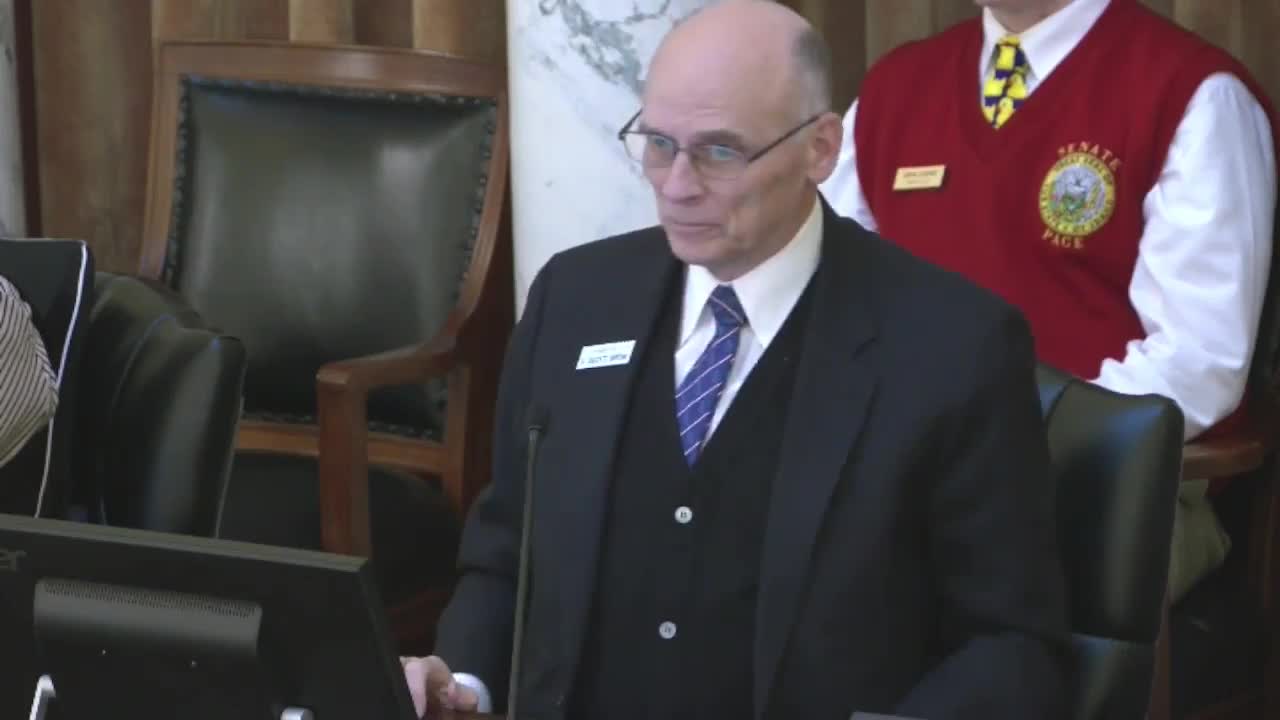
Frances Lippett, budget and policy analyst, summarized the Division of Veteran Services’ appropriations and dedicated funds before Administrator Mark Shample and staff responded to committee questions about staffing, federal grants and construction projects.
Lippitt emphasized that the division operates four state veterans homes and two state veterans cemeteries; the presentation noted substantial federal grant funding for state home construction that the division had not yet received, partly because the division had not secured a waiver under the Build America, Buy America Act (BABA). She also flagged a declining miscellaneous revenue fund balance and explained that some consolidated fund declines in the budget are overstated because the consolidated analysis uses full appropriation amounts rather than projected revenues.
Administrator Mark Shample described staffing challenges and a proposed net transfer of $1.2 million from operating to personnel to create a pool of 22 temporary, benefited state positions intended to replace part of the division’s higher‑cost contracted nursing staff. Shample said the division estimates a material cost savings and expects many nurses to accept intermittent or part‑time state work even if they will not come on full‑time. “We think this temporary pool will help us push over the edge,” Shample said.
Committee members asked about turnover, pay competitiveness and whether the staffing shortfall had affected resident access. Shample said the division had a roughly 35% turnover rate for skilled nursing staff in FY2024 but that the agency’s turnover compares favorably to national averages; he said all four veterans homes were near capacity and that contracted staff had been used to maintain service levels while recruiting continued.
On construction, Shample explained that the federal VA requires Build America, Buy America compliance for projects that include 65% federal funds; the state must show components are U.S. made or obtain a waiver. He said the division had pursued a waiver because many building components are not presently available solely from U.S. manufacturers and that the VA had delayed approval despite finding that many parts could not be procured domestically. “We’ve literally been fighting with them for over the last year to try and get a waiver,” Shample said.
The division’s FY2026 requests also include ongoing IT maintenance and licensing ($120,600), one‑time requests (about $588,400) for site equipment and replacements, $354,700 for other replacement items (vehicles, medical equipment, kitchen appliances, building equipment) and $100,300 for IT hardware replacement per ITS recommendations. The governor recommended the requested enhancements, Lippitt said.
Shample highlighted other program performance items: the Office of Veterans Advocacy filed roughly 13,000 claims last year and helped secure about $1 billion in benefits for Idaho veterans; the state veterans cemeteries are expanding Boise by 15 acres to increase capacity.
Committee members asked for salary comparisons between contracted nurses and state staff; Lippitt estimated contract labor can cost roughly 40% more than state staff and agreed to provide market comparison details on follow up. The administrator said the division had used targeted geographic market analysis to remain competitive where possible.